
Postscript
While this book was under preparation for its publication UNESCO drew up official conclusions resulting from a joint UNESCO-IUCN mission of experts at the 28th session of the UNESCO World Heritage Committee. Their conclusions related to Belovezhskaya Pushcha exceeded our expec-tations!
The experts ascertained that 5,000 hectares of the Wilderness Pro-tection Zone (or 7 percents of the entire area of Belovezhskaya Pushcha) meet all UNESCO's criteria of protection and that no economic activities are being conducted there. They shared the public concern that the World Heri-tage Site is just a small patch inside a bigger forest complex used for eco-nomic purposes. According to them the World Heritage Site is very sensi-tive to negative changes in natural processes in the surrounding areas. They also drew great attention to other areas of the relic forest outside the World Heritage Site (although they primarily focus their mission at the World Heritage Site). In their view these are not less valuable, but the management methods adopted there contravene environmental science and it threatens to destroy vast invaluable areas of reserved nature. This is exactly the point about which ecologists have been speaking for many years.
The UNESCO's experts accepted the arguments of public representatives about the necessity of preservation of all relic forests of Belovezhskaya Pushcha. The enlarge-ment of the Wilderness Protection Zone and the World Heritage Site are the appropriate measures to reach this goal. They also pointed to the danger of large-scale cuttings con-ducted on the area within the relic forest (outside the existing World Heritage Site). They recommended to reconsider the forest management practice and to make it more eco-logical friendly in order to include the area officially into the World Heritage Site in the future.
Thus the experts of UNESCO confirmed the conclusions on the protection of Be-lovezhskaya Pushcha made by ecologists and public activists, who have been speaking about this matter in recent years.
In August good news was received from the Ministry of Natural Resources and Environment Protection and the Belovezhskaya Pushcha National Park: the area of the Wilderness Protection Zone will be enlarged from 15.700 hectares to 30.000 hectares. Simultaneously the separate patches of this zone will be joined into a single forest unit thanks to this measure. The Ministry recommended the World Heritage Committee to include the enlarged area of the Wilderness Protection Zone in the World Heritage Site as the whole.
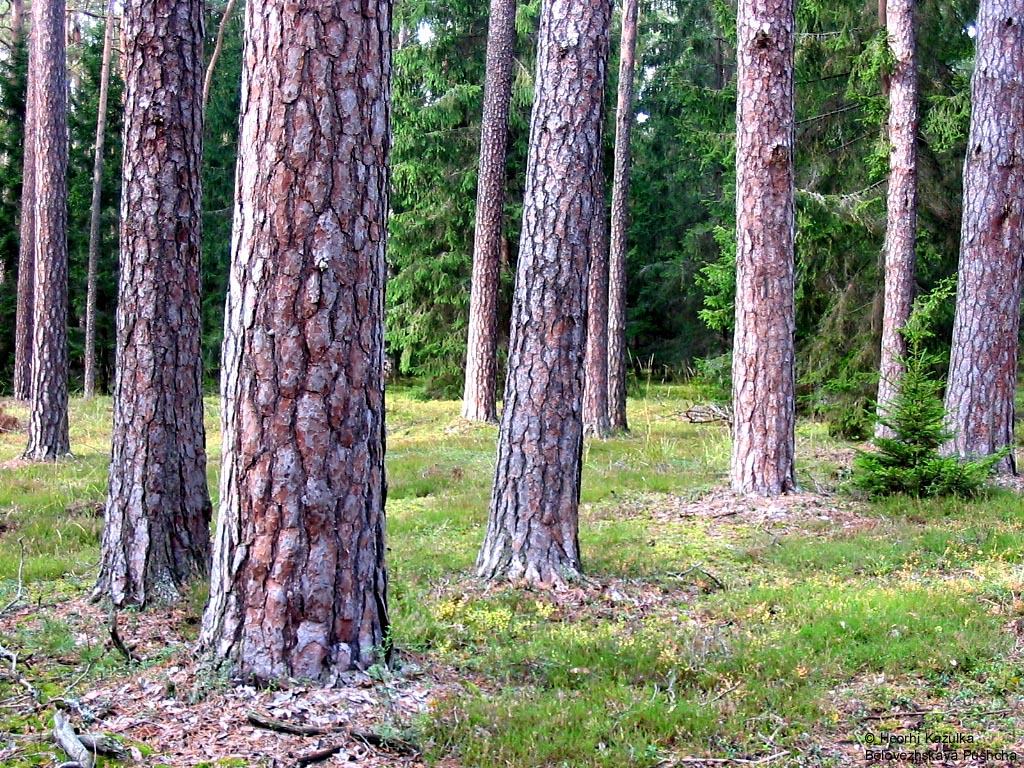 |
| A moss-pine forest of the old age |
Figure 6 demonstrates the scheme of the newly enlarged Wilderness Pro-tection Zone and the World Heritage Site, compared with our proposal of maximal extension indicated with the red line.
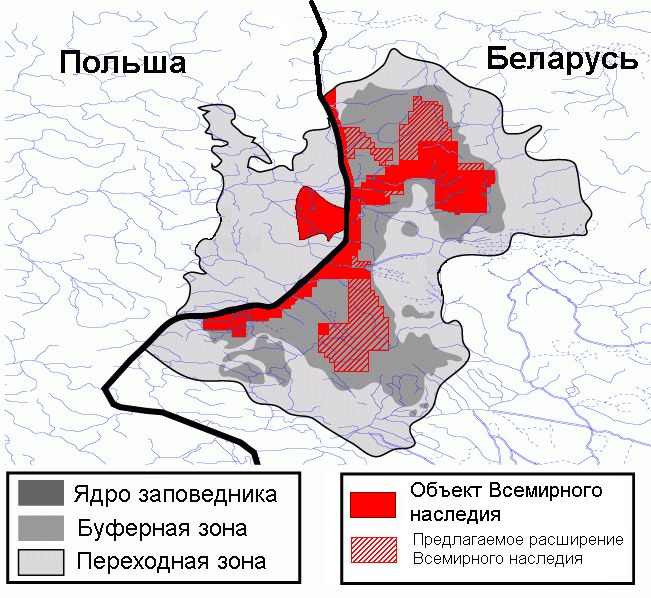
Figure 6. The scheme of the newly enlarged Wilderness Protection Zone and the World Heritage Site compared with their maximal extension proposed.
 |
 |
 |
 |
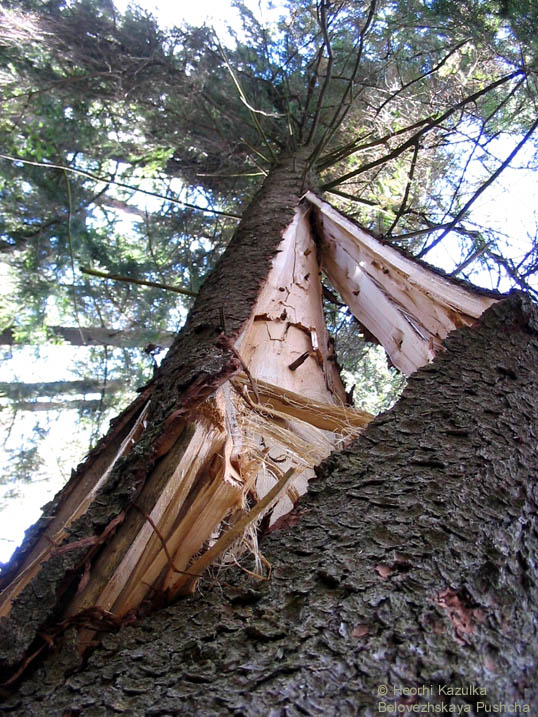
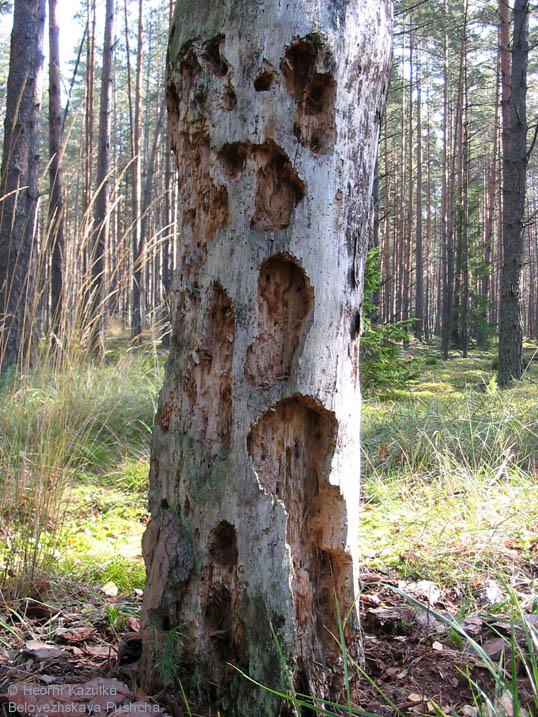
| Surprising shapes of the protected forest | |
 |
 |
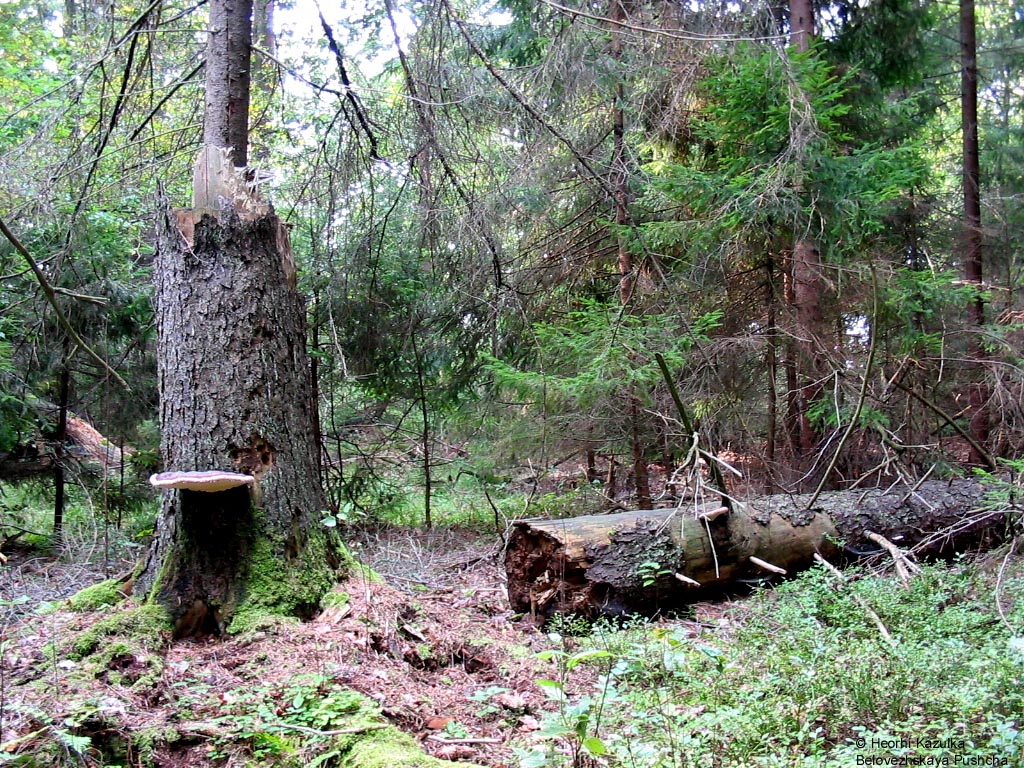 |
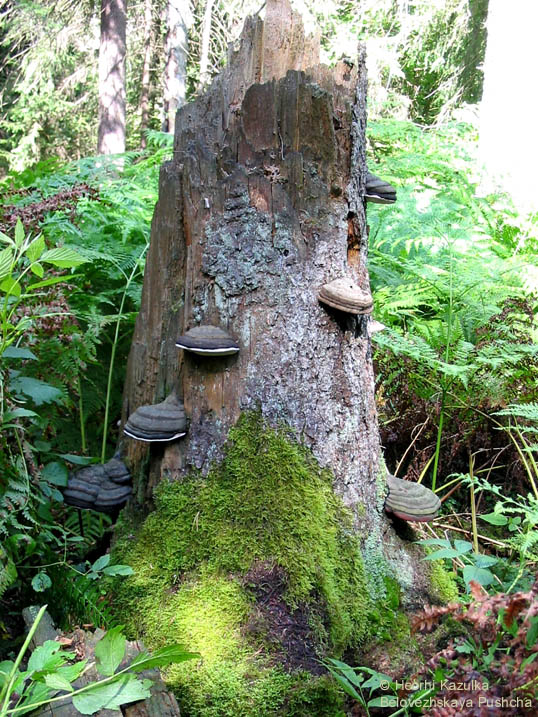
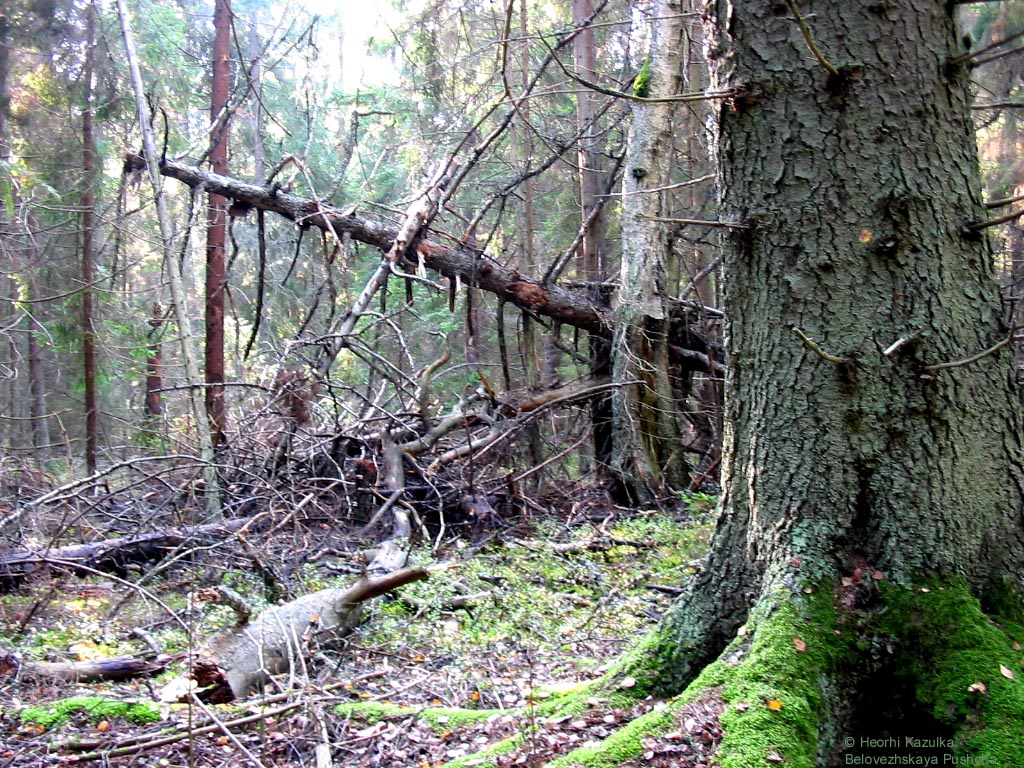
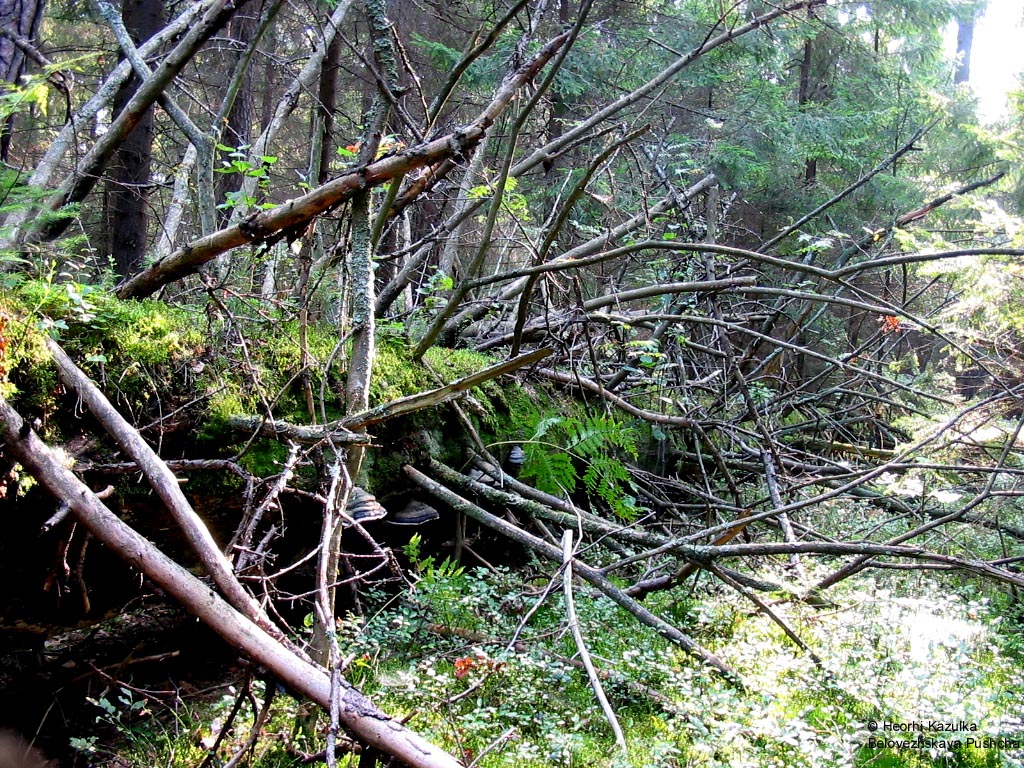
| A dead wood is a part of primeval forest | ||
The area of 30,000 hectares is smaller than the 50,000 hectares we desire for protection. The larger half of the newly protected surface is located within the so-called neutral frontier strip between the state borders of Poland and Belarus and the protective barb wired high tension fence, where the scale of cuttings already is minimal, and on wetland river valleys. However, the fact that the Wilderness Protection Zone and the World Heritage Site have been expanded has to be considered a small victory on behalf of the conservation of Belovezhskaya Pushcha! This certainly is good news. It is necessary to work out this good idea further and to achieve the expansion of the Wilderness Protection Zone to 50,000 hectares, by which the largest part of the surface of our unique relic forest will be put under reliable strict protection as well!
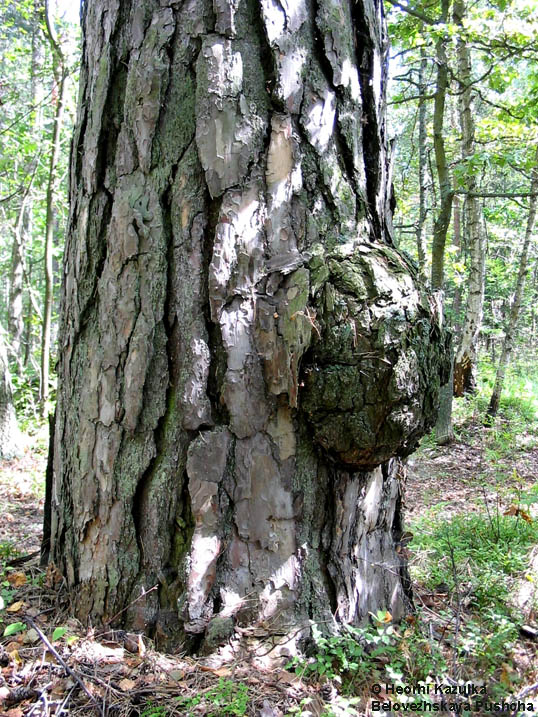 |
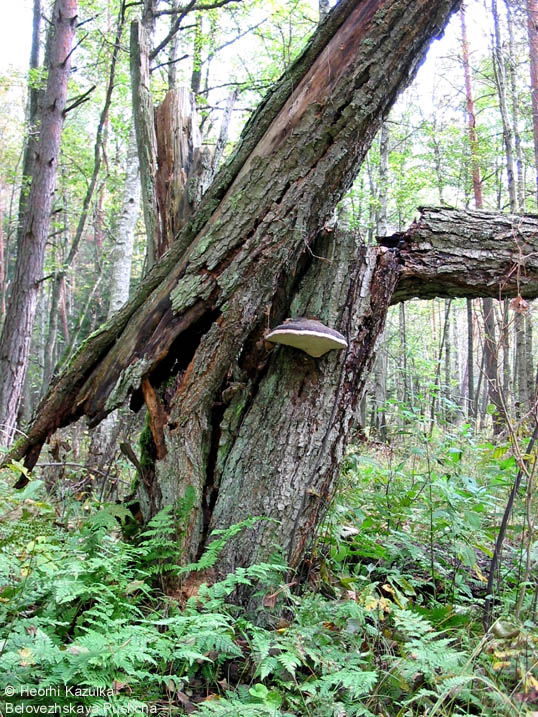
| A cancerous tumour on the old pine tree |
(Photos made by the author)