
Problems of tourism and ecological education in Belovezhskaya Pushcha
Stefan JAKIMIUK, Heorhi KAZULKA, Specially for the Website "Belovezhskaya Pushcha – 21st Century", April 27, 2007
An interview-dialogue by Heorhi Kazulka [HK] (Belarus), coordinator of the Project "Belovezhskaya Pushcha – 21st Century" with Stefan Jakimiuk [SJ] (Poland), "Bialowieza National Park" Project Leader (WWF Poland) and coordinator of the project "Pushcha for Bicycles" about problems and prospects of development of tourism and ecological education in the Bialowieza Forest / Belovezhskaya Pushcha.
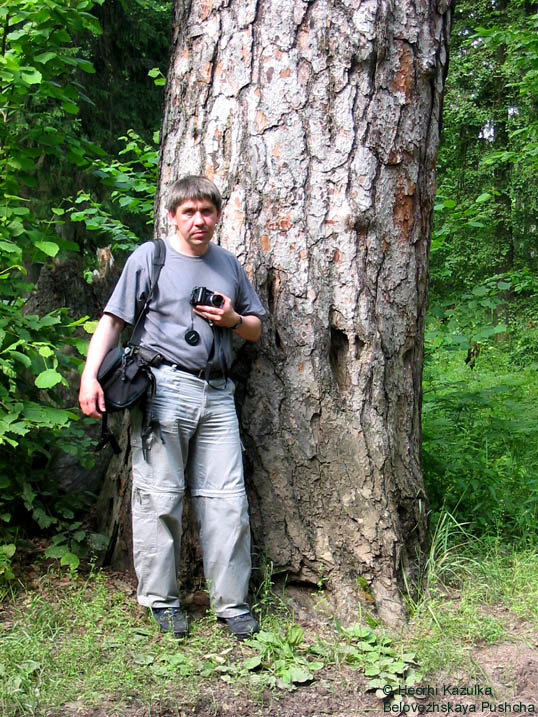
Stefan Jakimiuk
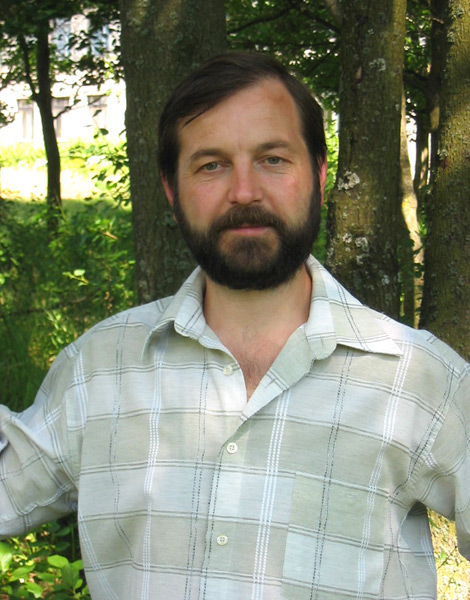
Heorhi Kazulka
(This interview with Stefan Jakimiuk, a leader of the WWF Project (the International nature protection foundation), was taken 10 months ago. It is about tourism and ecological education in Belovezhskaya Pushcha, about how they develop today in the Belarusian and Polish parts. Unfortunately, because of a number of reasons, it was not published at that time. Nevertheless, taking into account insignificance of changes in the tourist sphere of the National Park "Belovezhskaya Pushcha" made since that time, this interview remains to be topical and we have considered useful to publish it. The BP-21 Century website editor's note.)
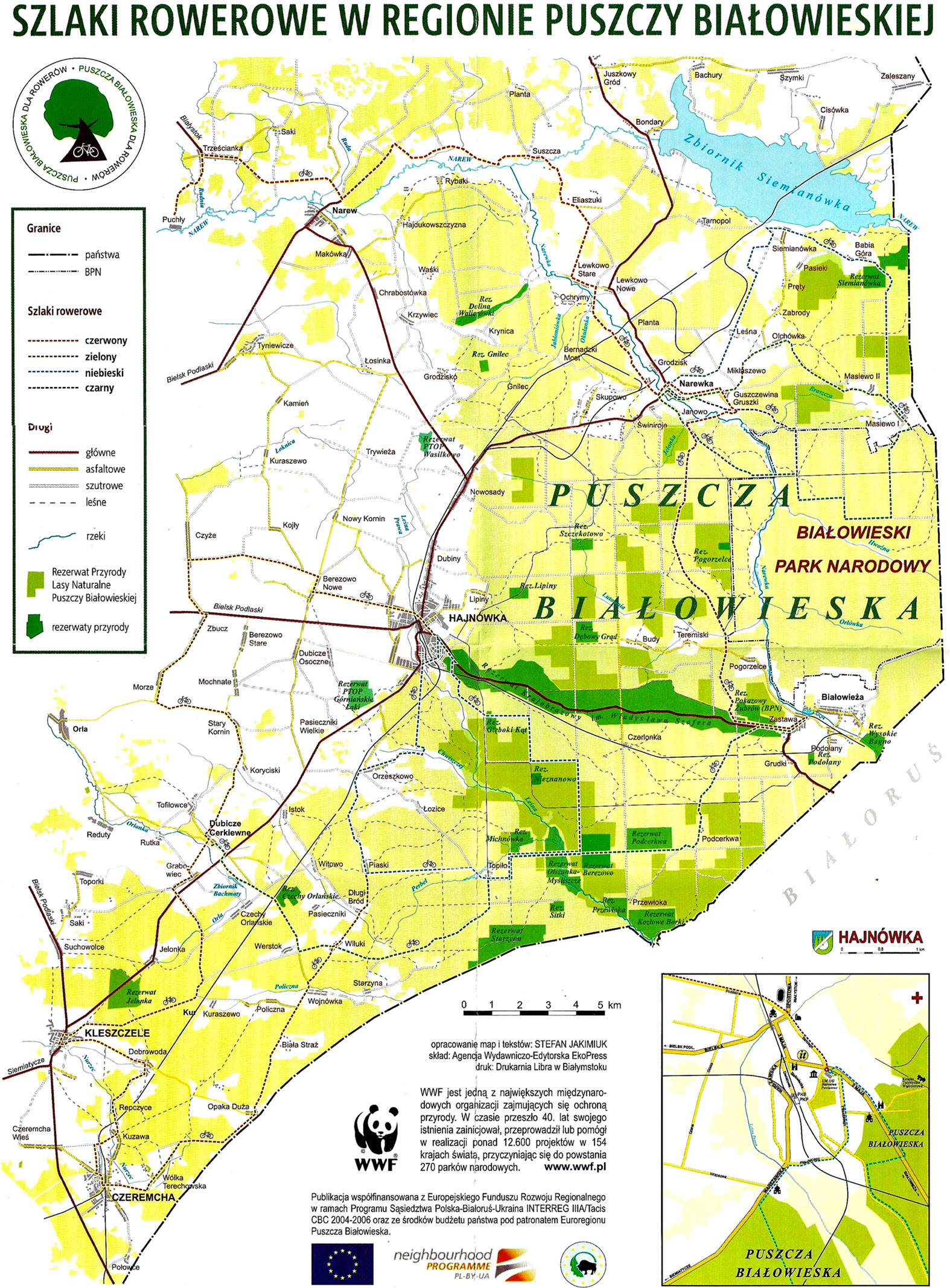
The map of Polish part
of Bialowieza Forest
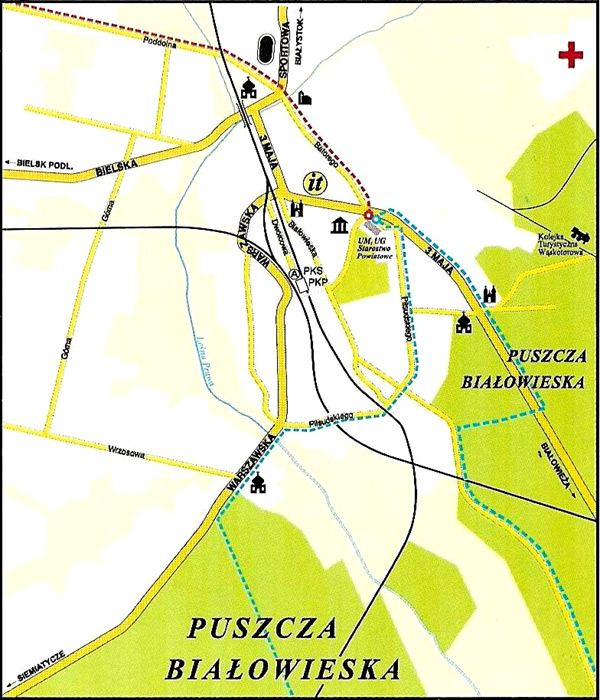
The map of the district
center of Hajnowka
in Polish part of
Bialowieza Forest
[HK] - So, the second spring-timed series of excursions within the framework of the project "Pushcha for bicycles" has come to the end. A Polish group of tourists has visited the Belarusian part of the Bialowieza Forest while a Belarusian group has seen the Polish part. It would be good to hear from you, Stefan, about impressions you got after visiting the Belarusian Bialowieza Forest. Is there any difference in the tourism field of the National Park "Belovezhskaya Pushcha" if to compare it this year and a few years ago?
[SJ] - I think that this tour, to spend first two days in the Polish Bialowieza Forest and the next two days in Belarus that means to compare the both sides, gives good grounds for general comparison. If to compare my fillings now and last year, I have made the earlier impression that the Forest looks much worse this year. This means the common situation concerning the protected forest has worsened. Stumps got more numerous. This creates depressed expression for tourists who come to see protected nature. We appeal to protect the Forest on Polish side as a whole and we also do want to get the protected forest on Belarusian side. This is not only because of a natural heritage. The Bialowieza Forest also keeps the history of the previous human generations of this area. If nothing will be changed to the best on the Belarusian side, this means that this region and these people will lose much more and they will be unable to make their future harmonizing it with the local nature.
[HK] - You are talking about the awful and depressed impression from the shape of the Forest. Maybe this grows from the features of the last visit which took place in the other season, in August, a month when the forest is full of green leafs to cover all of these ugliness. The spring is now and there is no this grebe "screen" hindering to look far in the forest. I don’t think that the Forest got so very depredating for some recent half a year.
[SJ] - I agree. The forest has another shape when leafs are absent. However, this kind of impression is not only mine. Many Poles noted the same. We visited the same places last year and this year and we see that today the number of trees got less and stumps have become more numerous.
[HK] - So, the contradiction is obvious. On the one hand, the National Park develops tourism and arranges tourist routes, on the other hand, the Park services tourists with visiting these routes and showing them … the ecological disaster instead of the primordial nature of Belovezhskaya Pushcha. In this way the Parks makes the image of its management line which is difficult to call nature protection. Actually all should be on the contrary.
[SJ] - From the point of view of ecological tourism which grows from nature protection values, this might be called anti-tourism. This is because a tourist doesn't obtain what he wants. He goes by bus on asphalted roads and has no proper contact to the reserved nature. Secondly, using even these routes the tourist gets simply dreadful impression - cutting down areas, stumps, logs and fire wood are around. And I can imagine to myself what is going on in the depth of the forest, not visiting by tourists.
[HK] - It's true the routes are chosen in order to show the best. However, it seems to me that now the situation is everywhere the same. The people from the management of the National Park did not think and do not think of it. I would say they simply do not understand of it. And, therefore, they continue cuttings close to the tourist routes as much intensively and ugly as in the depth of the forest. The Park's administration explains this by ecological troubles which came down upon Belovezhskaya Pushcha. Bug beetles have appeared, spruce trees were lost and there was no other way except for cutting them.
[SJ] - However, we witness from the Polish side that the way is available. I realize that areas covered with spruce forests are more numerous on your side and the situation differs a bit. Nevertheless, we see in Poland that some forest sites attacked by bark beetles were not under cutting within the protected territory and nothing terrible has happened. Tens of trees, even not hundreds, were lost in these sites and both the protected shape of the forest and the protected forest in itself were conserved. Dead trees stay there, then they fall down and a new forest will grow in few years there. One can see natural life-cycles on the forest sites, such as these. We call it "The Pushcha's heart is beaten following this rhythm". Somewhat comes into being, then is growing up, dieing, decomposing and then is again arising. This is a cycle of the life which was under evolution for hundreds of millions of years before the appearance of human being. All components are balanced in this cycle. However, the cycle of death, not the cycle of the life, is dominating today on the Belarusian side. This conclusion goes from the fact that we see only cuttings, only death, and we do not see how this primordial life is restoring.
[HK] - In general I agree, although cutting sites on the Belarusian side are also covered with the young forest. This process makes rather difficult because wild ungulates which consume young trees are too numerous in the Pushcha. Their number is specially kept at a high level for commercial hunting to earn currency. On the other hand, the technology in which cuttings are conducted in the protected forest conflicts with ecological standards. That's wrong. Today this issue is not topical for many forest enterprises of the country! Trust me. I as an auditor on the FSC-certification (in the field of forest management) working for the Danish company "NEPCon" have an opportunity to visit forest enterprises in different corners of Belarus and I can officially declare that the National Park "Belovezhskaya Pushcha" represents one of the worst examples of the forest management. And please, note, this is a National Park! A nature protection institution! An ideal case, a model of nature protection, an etalon and an order should be there! And what do we see? We see the antipode.
All of these is because there is no ecological education and understanding of how to conserve wilderness. Managers and employees of the Park consider dead wood as something hostile. They do not understand their role to create the environment, the habitat for thousands of species of animals, plants and fungi. To remove out dead wood from the forest means to deprive these kinds of their home that will cause their death and extinction.
[SJ] - It's correct. This kind of knowledge is already a standard for the civilized world. Even the staff of forest enterprises, despite of the fact that their purposes are absolutely another, are aware of the fact that a part of dead wood must be left for the forest. And in this case we deal with the National Park, nature protection purposes of which are connected with conservation of natural processes.
[HK] - There is one more important thing. When a tourist goes on a route and sees a dead forest, he should acquire appropriate information and knowledge about the natural processes and about wilderness protection management. What is your impression from the ecological lecture given by the guide after you have passed the long ecological route within one and a half hour?
[SJ] - I think the excursion given by the Polish guide for the Belarusian group when visiting the strict reserve in the Polish National Park might be an excellent example. I shall say that we are all time unsatisfying of the insufficient level of education of the majority of our guides. However, as regards what we have heard on your side … All of them (the guides) are good people. They try to be good guides. However, their knowledge and understanding of ecological processes are almost nothing. During the excursion they basically pay attention to some petty details or to issues which are meaning nothing concerning the importance of conservation of Belovezhskaya Pushcha. And they tell nothing concerning important issues, for example, concerning unique features of Belovezhskaya Pushcha distinguishing it from other forests. All of this creates a sad impression. If there is no concept about what is the most valuable, how can one protect and what can be given to teach tourists?
[HK] - It is easy to explain this. In the course of the last ten years the Museum of nature was headed by those people who are not experts, who as specialists had nothing to do with ecological science, wilderness protection and museum business. They were so-called casual people. Naturally, what kind of ecological professionalism could such chiefs give to their staff? The pitiable results we see come from this. Unfortunately, this vicious line of management present is still in progress.
I see that the situation like this which is already lasted for many years generates a social phenomenon which I express as the following "A spirit of the Bialowieza Forest vanishes in this area". The spirit of the local people who were born and have grown on the Bialowieza land is degenerated.
For example, during your excursion (I was one of participants together with the Poles, the note by H.K.) when I was alone in the bus at some stop on the route, one of the employees working in the Museum of nature asked me a question by expressing in this way her dissatisfaction - why I look for and make photos only seeing bad things in the Pushcha and seeing nothing of good. And the employee added that she when looking at the Pushcha is seeing only good and nice things. Do you understand what does this mean from the point of view of psychology? It is few to say that the woman is simply adapted not to pay attention to awful things going on in the Pushcha. This means that this woman has already agreed in soul with the management on destruction of Belovezhskaya Pushcha, the wild primeval forest, and she has begun actively to help realization of this management line.
This also means that serious deep changes in consciousness of some locals have already happened. I remember well the spirit and consciousness of this woman many years ago when she was given an employment in the National Park. And I see that a tragedy has come. This is because it was said to may face, moreover after my book " Will Belovezhskaya Pushcha become a true world heritage site?" with hundred of most beautiful photos about the Bialowieza wild nature was published and after official presentation of this book for the local population under the motto "Let's conserve the beauty and divinity of wild nature" was given. It just means that this woman has got spirit and intellect blindness and has lost morality and conscience. The people like this woman become more and more numerous in the Pushcha every year. And this is terrible.
By the way, the National Park all time advertises that its service for tourists is permanently improving. Is your group satisfied with the service? How is this business in comparison with abroad?
[SJ] - The service makes a base for tourism. Of course, service is different depending on which kind of tourism we deal with. As to ecological tourism, a good guide is a key element. He provides with the knowledge. He creates an atmosphere for dialogue. Yes, we read and hear that tourism is under development in the Belarusian Belovezhskaya Pushcha. However, if it is so we are at a loss. That what we sow is not the ecological tourism in the true sense of this word. And in general we doubt that it actually develops in the right direction. In general, the services we get in the Pushcha are of a low quality. The every-day working service system is absent. All things need to be agreed beforehand. In Poland, if a tourist comes, he gets all services. Probably, he will be waiting a bit for a guide to call him. But cases like here when a tourist has come being without prior notification and he therefore has got no services are absent. As to your side, moreover, even this system to make preliminary records is badly operating. The permission is given, the permission isn't given. There are no clear rules. Why is possible to get permission through a fax and impossible to do it through a phone? One cannot exchange the currency being here.
If we want to get tourists from abroad, a good service is necessary. Tourists come to have a rest, not to struggle with problems. If a visitor liked the service, he will come back and will leave his money there. However, we are surprised with a level of your prices. Although your salaries are much lower, prices do not differ from the Polish ones, being quite often even higher. It turns out that the quality is worse while prices are higher.
[HK] - How do you like that routes are closely connected to the car service. Bicycle, walking and horse-drought routes are advertised, however, a tourist comes and he often cannot get these services. Routes for cars are also under very limitation. For example, you, the Polish ecologists, come to look at a wild nature but you are answered from the Park's staff that this is impossible because it's forbidden to visit this route, whereas a Grandfather Frost's entertainment is only possible for visiting. However, an ecologist is not interested in visiting the Grandfather Frost. On the other hand, timber lorries, full of harvested wood, are driving very easy on a road, both along and across the strictly protected Wilderness Protection Zone. But ecologists are forbidden for visiting to be close to this area!?
[SJ] - This is not clear to us too. A tourist coming to see and to get feelings from wild nature and to listen to songs of wild birds, where can he do this? The feeling of nature doesn't go only through intellect and knowledge, from a lecture of a guide. The feeling of nature goes, first of all, through emotions. A smell, sound and shape are, therefore, very important. How can one feel the nature if being in a bus where stink of benzene and a noise of working engine are only present, and trees and stumps from a window are just glimpsed fleetingly? Therefore, a tourist amazing and living for a beauty of nature gains almost nothing from visiting the Belarusian Belovezhskaya Pushcha. A tourist who doesn’t need a beauty of reserved nature also gains nothing from this visit because he doesn't need it. As to foreigners, they will go only for visiting wild nature in the reserved forest. They will not be interested in the Grandfather Frost entertainment either, at least, to look at it once. The protected Belovezhskaya Pushcha can only attract a tourist and give him ecological education.
I also would like to pay attention to the Museum of nature. In the Polish Bialowieza Forest, a modern museum, of a meddle standard for Europe or maybe even of a highest level, was built and we are not ashamed of it. It has expositions made according to the last engineering achievements. There are many things adapted for ecological education. The Belarusian Museum of nature in the National Par is of a traditional style. Perhaps, it is not poorly, however, hunting management creates the bases of the Museum, instead of nature protection. If the history of the Bialowieza Forest is closely connected with hunting management from the times of princes and kings, it does not mean that today this tradition should further be following. The hunting theme should not replace the image of the National Park. National parks are created to protect wild nature and to serve ecological and spiritual requirements of the people, not for hunting purposes. In this sense your Museum of nature follows modern ecological and educational functions to a minim extent.
[HK] - It is true. What do we see if entering the fist hall of the Museum? On the left, the photo-exhibition "Royal hunting in Belovezhskaya Pushcha" with pictures of killed animals covers the whole wall, from top to bottom. Historical scenes of hunting of crowned persons are straight. A shop selling common souvenirs and skins, and chopped off and stuffed heads of killed wild animals which hang on the wall are on the right. However, where is a spirit of wild protected nature? It is absent in the entrance hall at all. There is the spirit to murder this nature. And this is the first what tourists can get and feel after entering the Museum. Inside of the Museum, nature protection is also mixed with hunting management.
Although, I must note that there is a scanty progress. The ecologists from the city of Gomel visited the Pushcha two years ago. They were also indignant of the same things and have written a series of criticized publications (read the publication by A. Savarin "Belovezhskaya Pushcha: a way to the scientific and moral degradation..."). In particular, a big old photo on which a hunter holds a killed lynx, a rare animal listed in a Red Data Book was in the Museum. And the fact is that this photo is now absent through removing from there. This is, surely, the small change compared with those what should be done in general. However, this example demonstrates that the Park's administration, despite of bearing grudge and dissatisfaction, has got reaction to the criticism. This also shows a very low level of ecological education of managers of the National Park if they cannot hit themselves upon this little thing. No one properly manages the Museum already for a long time and, therefore, it still keeps hunting ideology. Directors of the Park, managers of the Museum and other employees are changed but no one really thinks about a nature conservation image of the National Park. Non-professionalism and casual managers are all around.
[SJ] - We also see earth-excavation works in the area of Pushcha's lakes for many years - they are under reconstruction to make them deeper and larger, to build beaches. This is disappointment to a big extent. Of course, if reservoirs such big as these exist, they should provide a certain recreational service. However, what kind of recreation can one talk about if this area is close to the state border where free access to enter is banned? Secondly, but maybe this is the main, what is the purpose to do all of these? What is the matter? From the point of nature protection view, this brings only harm. The area is located in the core of the Pushcha and we should not make anthropogenic pressure stronger there. Belovezhskaya Pushcha should be a model of a wild and original nature, being protected from human influence. Our task is to create a system, such as economic activity around the Pushcha should not negatively influence on its natural ecosystems or could minimize damage. The Pushcha is a laboratory for creation of such kinds of nature protection models. And I do not understand why all is doing the wrong way round. In my opinion roots of this management policy go far beyond the borders of the National Park.
[HK] - What is your vision of prospects of cooperation between Belarusian and Polish societies in the region of Belovezhskaya Pushcha?
[SJ] - The main is to develop a philosophy of such the cooperation. The philosophy is a mother of sciences. Nothing will be achieved ignoring it. Unfortunately, many people do not understand this fact. How should it be? How should the Park be managing? How to organize this? Everything else is of less importance. And while the people will be engaged in things of minor importance with ignoring things of high priority, we will constantly make big mistakes. Those things which we see in the Belarusian National Park grow from rotten roots. Independently of good planning, the good will be at fault and everything will be resulting in harm for Belovezhskaya Pushcha. If tourist routes will even be created everywhere, because of rotten roots, it hardly will bring good fruits for the Pushcha. Everything will be bad if routes will be created without an idea that they should serve nature protection in the National Park. It is necessary to think, first of all, what we will show, how it will be carried out and how to prevent possible damage to nature. And if such the understanding is absent, everything what we will make can prove to be against the nature. As a figurative example, a knife serves to cut bread. But the knife can be used to kill a man. This means that the key element is consciousness of that man who takes the knife in hands, not the knife itself. The same approach should be applied regarding the tourism. It can be developed in two ways, for good and for harm. I shall be repeating the main is the philosophy, the concept. It often happened to be hearing "Ah, this is the philosophy and that is not interesting to me". However, this is the main. This is from which is necessary to start and only then to go further. I should tell that the understanding of this matter is yet poorly advanced on the Polish side. As to you side, this is absent at all. That is why the result of the public participation in preservation of the Pushcha is too tiny there. No one needs to ask the public opinion.
[HK] - Moreover, it's wrong to say that this opinion is simply ignored. It's right to say that the opinion is blocked in every possible way and is interfered. I know that there are serious problems even in the field of cooperation of the administration of the National Park with local and regional authorities, some sort of the state in the state, with own interests, plans and orders.
Radical changes in the management line of the National Park are therefore necessary that to turn it to wilderness conservation and nature protection. The National Park shall create positive relationships with the public and independent experts. This is very topical because the Park today is not able to provide the modern, proper and professional management regarding wilderness conservation and nature protection. This is because there is no one of the managers to make it proper there. And if the Park might consider the public as a partner, it could bring benefit for Belovezhskaya Pushcha from this. But since the Park is actually in the situation of the war against the public and the society, both the Park's image and its nature suffer.
Thank you< Stefan, for the interview.
It was written on April 27, 2007 in the village of Bialowieza, the Bialowieza Forest, Poland
Write Your opinion / comment / idea to the Website's Forum or to the Website's email: pushcha-xxi@tut.by