
Belovezhskaya Pushcha Must Be a World Heritage Site
Some readers may say the title of this chapter contains a strange statement. Af-ter all, Belovezhskaya Pushcha was inscribed in the World Heritage List over ten years ago! Belovezhskaya Pushcha was awarded this honour on December 14, 1992. The Site was listed as Belovezhskaya Pushcha / Bialowieza Forest (Belarus / Poland), object number 627, criteria N (iii). An interesting fact to mention is that it was the first World Heritage Site on the territory of the former Soviet Union which was included on this List; even the Baikal Lake was only later adopted as a World Heri-tage Site.
It is a true fact that Belovezhskaya Pushcha has officially been included in the List of World Heritage Sites in 1992. This situation does not seem very appropriate however, since there is a serious contradiction between the definition of Be-lovezhskaya Pushcha as World Heritage Site and the practice of its allocation. Let us explain the problem.
If we look at a dated map of the Belarusian part of Belovezhskaya Pushcha after ten years of prescription, we discover that its area is made up of 87,400 hectares. The entire territory of the Pushcha has been divided into four functional zones in which the level of protection varies (Figure 2):
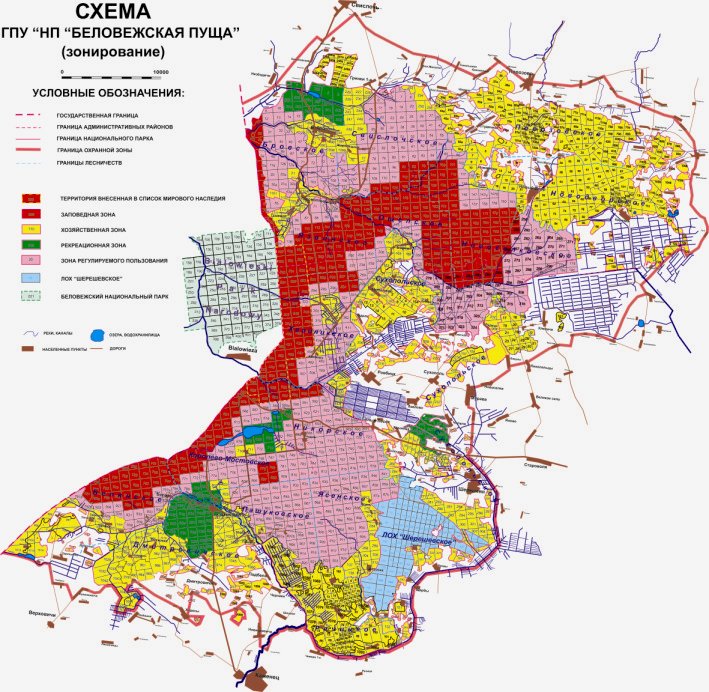
Figure 2. Zoning scheme of the National Park "Belovezhskaya Pushcha" (since 2004)
The scheme was prepared in the National Park "Belovezhskaya Pushcha"
1. Wilderness Protection Zone (Core zone) - 30,000 ha or 18.3% of the territory (15,677 ha or 16.3% before 2004). This Zone strictly protects all areas of intact, wild natural communities. The Wilderness Protection Zone is provided to serve as a zone of reservation of genetic resources (a gene pool) of plants and animals and as a completely natural area. As such this zone is a reference to full natural circumstances and fully natural growth. The area is managed in such manner as to create conditions which allow the natural development of complexes and their components. This Zone primarily consists of indigenous old-growth coniferous and deciduous forests. Except for scientific research and protection no activities (commercial, economic or other) are allowed within this Zone.
2. Regulated Nature Zone - 52,780 ha or 32.3% (65,175 ha or 67.8% before 2004). This Zone serves as a site for study, preservation and restoration of ecosystems that are characteristic within the Belovezhskaya Pushcha complex, as well as for reproduction and rational use of natural resources. All ac-tivities within this Zone should provide optimal conditions for sustainable development of natural communities, while scientifically-oriented nature conservation arrangements are be-ing implemented. Within the Regulated Nature Zone it is allowed to execute the following activities: scientific research, monitoring, activities aimed at restoration of disturbed natural complexes and the reproduction of natural resources, measures for prevention of fire, sani-tary woodcutting, forest maintenance, clearing of dead wood for forest sanitation and affor-estation in order to restore primary forest stands, protection of the forest against vermin and diseases (basically by biological methods), elimination of animals in order to regulate the number of their populations and for the purpose of selection, artificial feeding of wild animals in exceptionally unfavorable seasons, veterinarian, prophylactic and biotechnical measures applied to wild animals, restricted ecotourism, haymaking, harvesting of berries and mushrooms, cattle pasturage, amateur fishing as well as several other uses serving the needs of the National Park and its employees on specially selected sites. Natural resources are being exploited in limited quantities. Ecotourism is allowed under guidance of guides employed by the National Park.
3. Regulated Recreational Use Zone - 6,140 ha or 3.8% (10,732 ha or 11.1% before 2004). The purpose of this area is to encourage tourism and recreation, to implement activities connected to cultural aspects, leisure and improvement of man's health as well as to study the impact of recreational pressure upon ecosystems. Nature conservation and economic activities are being aimed at preservation and, to a limited extent, reconditioning of the forest landscape and water bodies for recreational and educational purposes. When recreational services are being set up specific rules in order to prevent degradation of natural complexes should be followed and measures for the preservation of landscapes, water, vegetation and wildlife should be arranged. The activities allowed within the Regulated Nature Zone are permitted in the Regulated Recreational Use Area. Besides this on designated places within the forest it is allowed to park cars on parking lots, to camp using tents and to make camp fires. There are specially designated places for relaxation and experiencing rest within the forest. The Regulated Rec-reational Use Area is recognized as a part of the National Park where landscapes, natural ecosystems and individual objects have recreational, cognitive, cultural, educational, aes-thetic, ethnographic, archeological, historical and other values while they do not require the measures of protection stipulated for the Wilderness Protection Zone or the Regulated Na-ture Zone. Admittance may be free or based on guided visits.
4. Economic Activity Zone - 74,580 ha or 45.6% (4,614 ha or 4.8% before 2004). This Zone has been designated in order to locate administrative, productive and recreational staff and operating facilities, for hosting and serving tourists, for residential purposes and for the economic activities of the local population. Selected cuttings, agriculture, forage supplying, cattle pasturage, wood processing, berry and mushroom harvesting and amateur regulated fishing is permitted here. There are no restrictions of access within this Zone.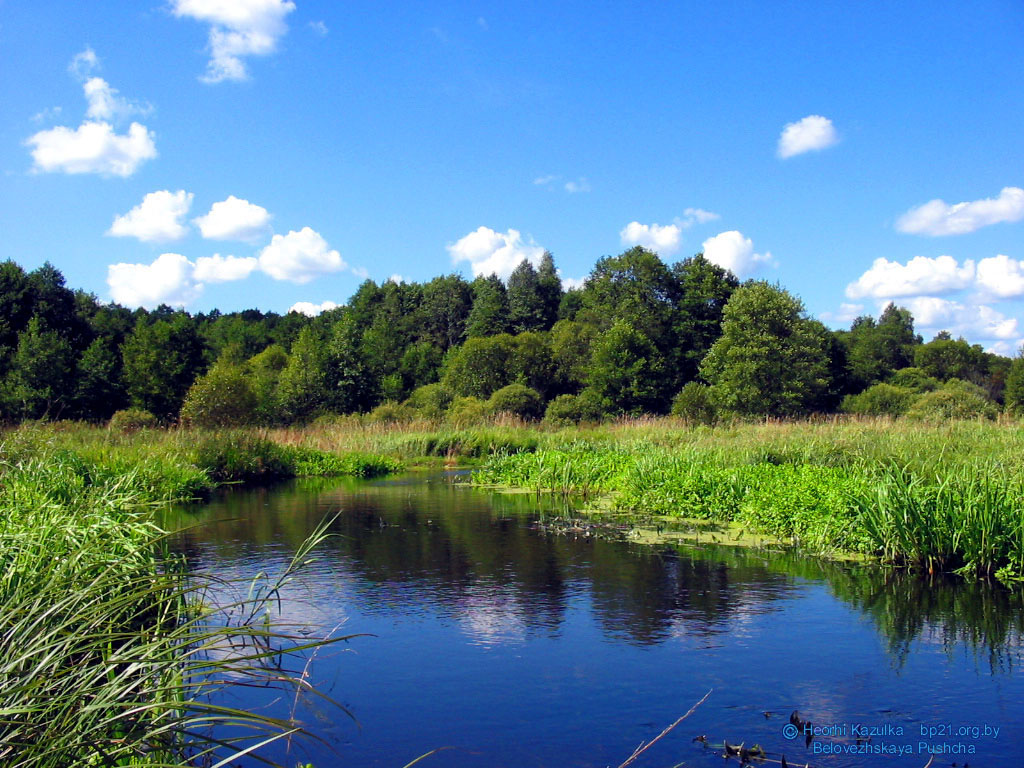 |
| The Lesnaya Pravaya River |
In addition to the four previous zones a Support Zone (or Transition Zone according to the classification for Biosphere Reserves) has been established. This Zone encircles Belovezhskaya Pushcha and covers about 90,000 hectares (Figure 3). The lands concerned are in possession of private and collective users as well as of the state, while their use is subject to a number of limitations on economic activities. This Zone is designated to mitigate possible damage caused to nature complexes and sites of the National Park by economic activities executed on these adjacent lands.
Forest enterprises and collective farms have a major share in the lands within the area of this Zone. During the last decade over 70,000 hectares of land were added to the National Park. These grounds were handed over by timber enterprises and collective farms. These lands are principally covered with monotonous plantations of Pine which represent low value from the ecological point of view. However, several ecologically valuable objects are situated in this Zone. Among these is the hydrological Reserve "Dikoie Bog", a fen mire of European importance which covers 7,539 hectares. The forestry administration Sher-shevskoie (14,845 hectares) in the Pruzhany District is another important part of the National Park. Shershevskoie is a base for Forest-Game Grounds. Its main objective is to provide tro-phies (wild mammals) for hunters permanently.
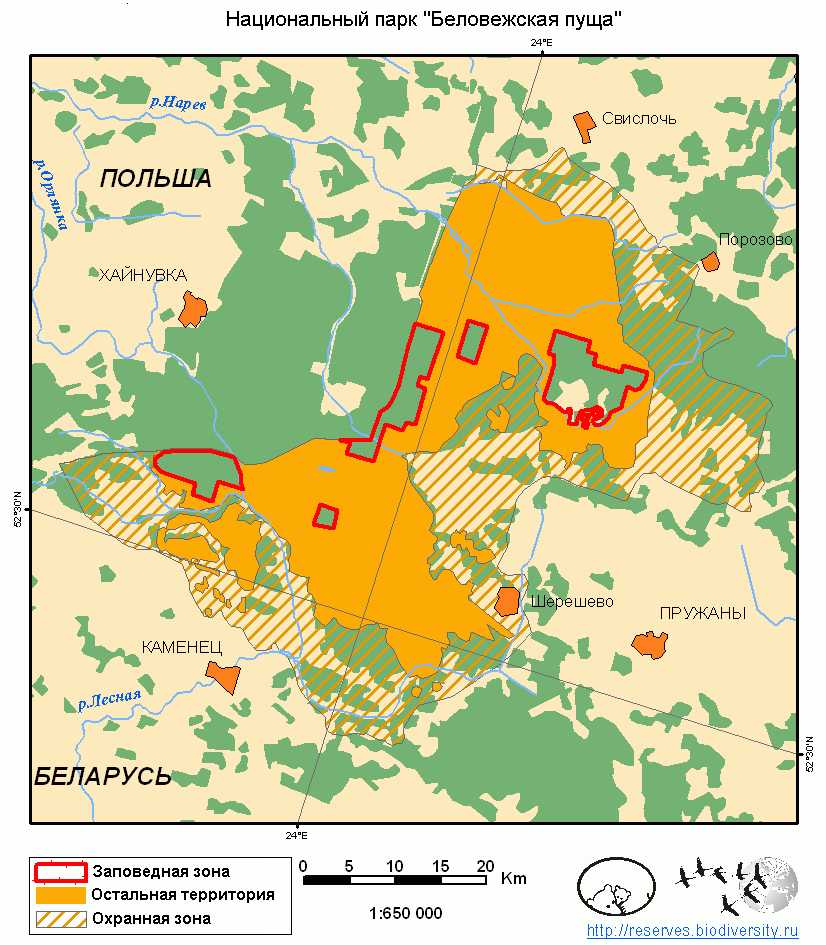
Figure 3. Location of the Transition Zone encircling Belovezhskaya Pushcha (1998-2004)
(Scheme was prepared by the Centre of Wilderness Protection in Russia)
 |
 |
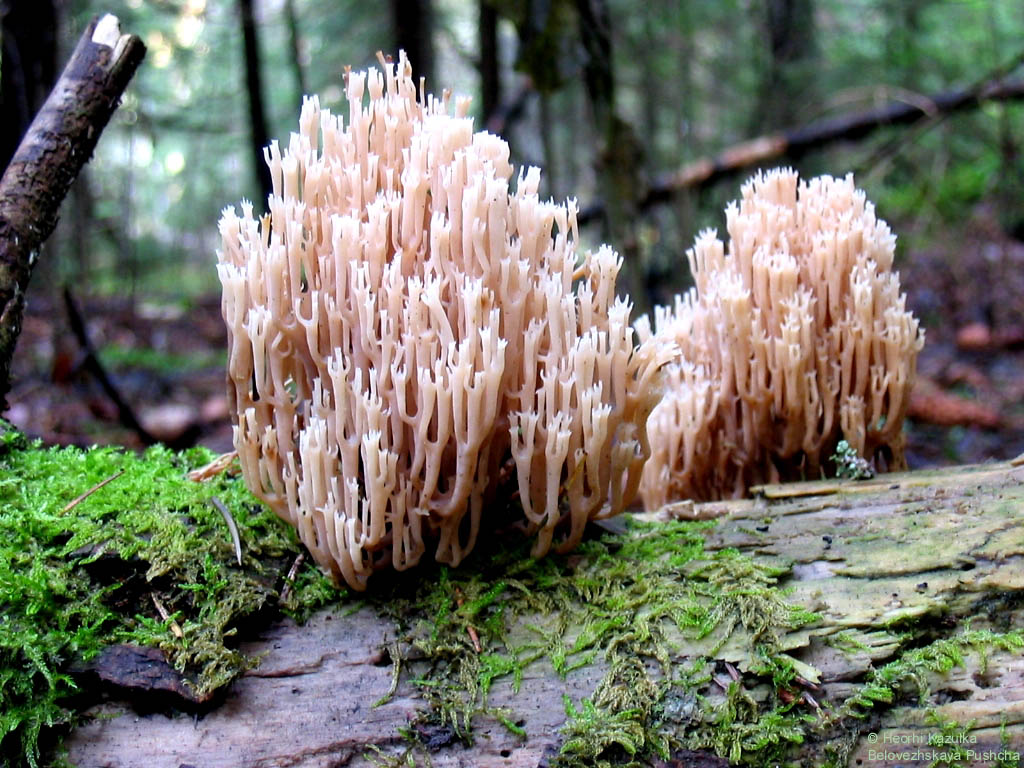 |
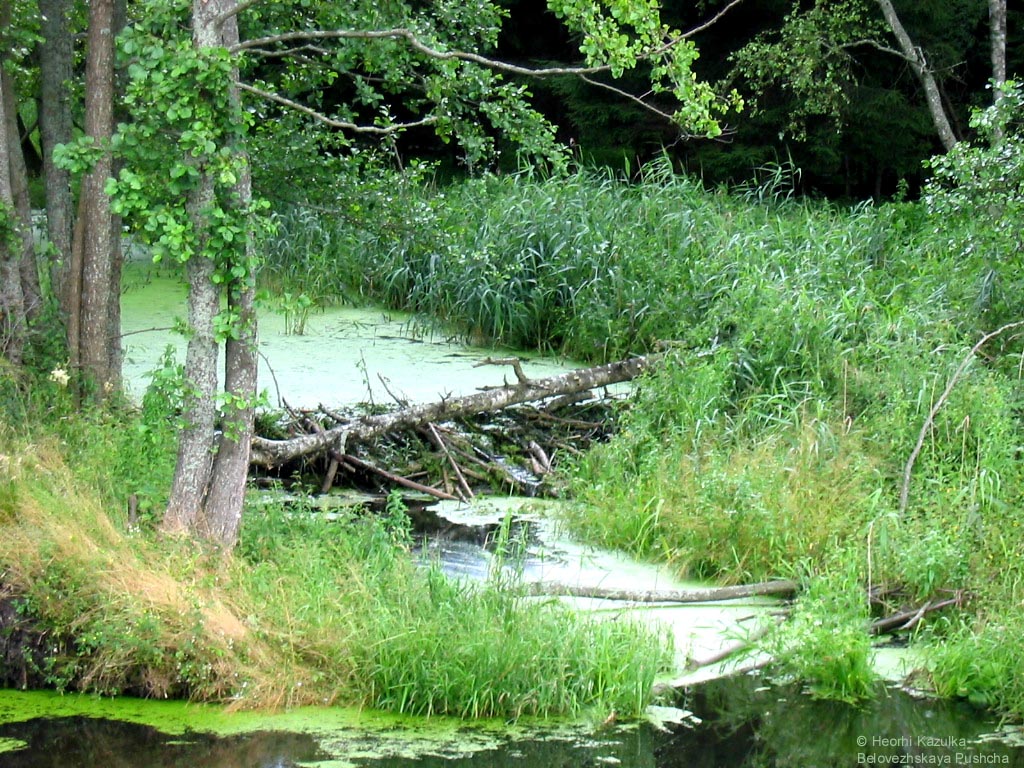
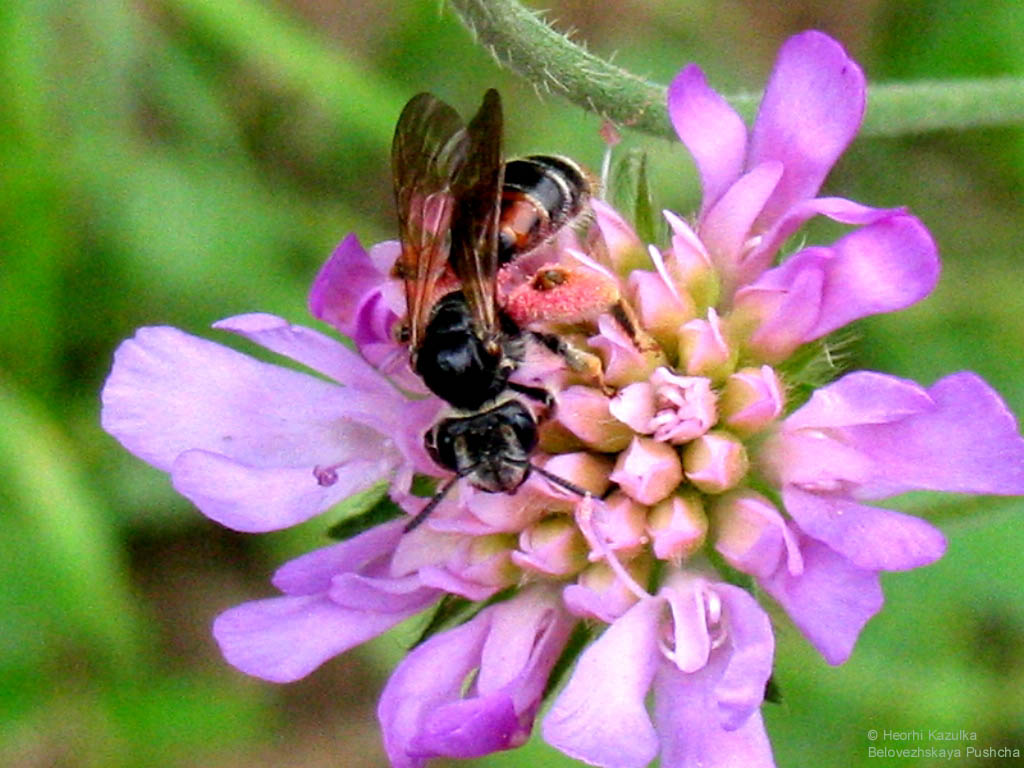
| A Beaver weir | A wild bee | A Clavicorona Fungi |
 |
||
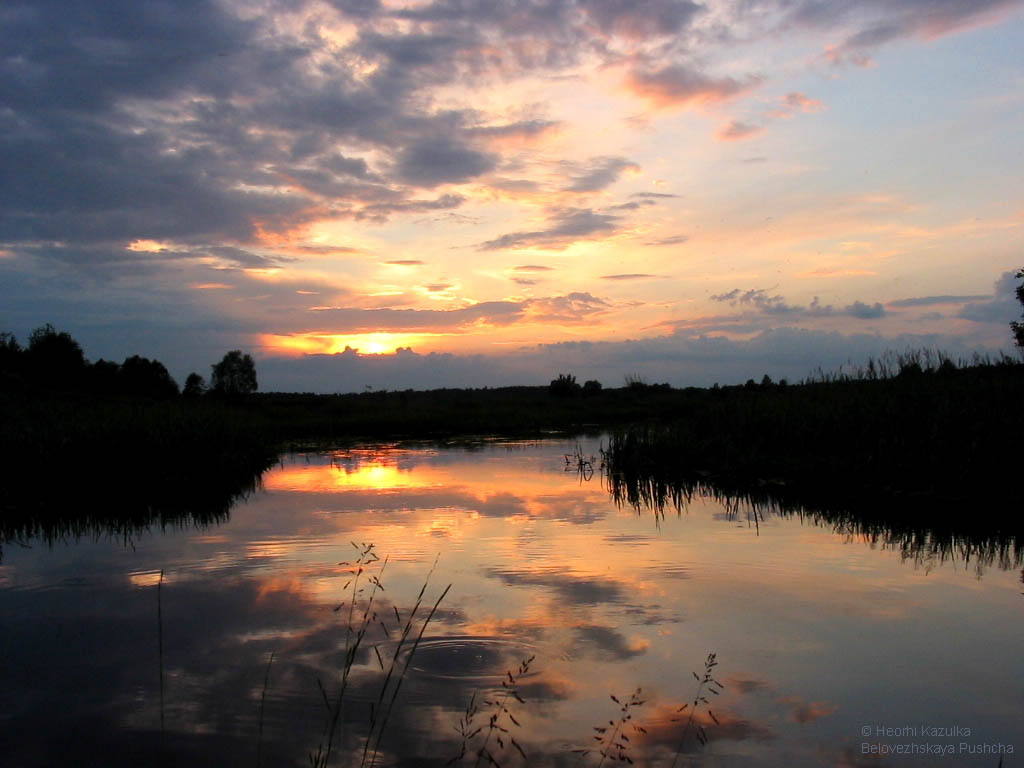
| A sunset at the Pravaya Lesnaya River |
The basic contradictions of the situation of Belovezhskaya Pushcha as a World Heritage Site are easily pointed out with a basic mathematical analysis.
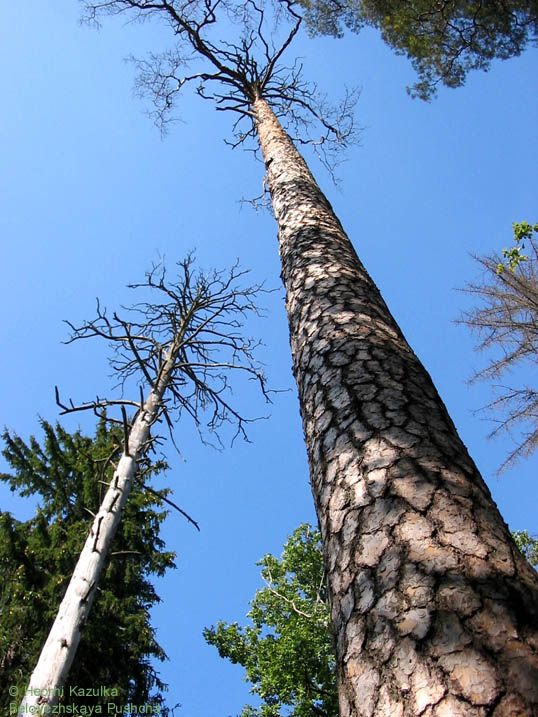 |
| Huge dead Pine trees |
Nowadays the World Heritage Site Belovezhskaya Pushcha consists of two parts: Bialowieza National Park in Poland (4,747 hectares) and the core of the Wil-derness Protection Zone of Belovezhskaya Pushcha National Park in Belarus (5,500 hectares). In total the World Heritage Site in both countries covers 10,247 hectares while the whole area of Belovezhskaya Pushcha comprises approximately 150,000 hectares of which 62,500 hectares are situated in the Polish part of the Pushcha (fig-ure 1).
If we look at a dated map of the Belarusian part of Belovezhskaya Pushcha after ten years of prescription approximately 4,120 hectares less were covered by forests at that time. Unafforested land services agricultural activities and provides room for villages, administrative facilities and enterprises. The afforested area accordingly makes up 83,280 hectares. When we leave out about 9,500 hectares of artificial young aged forests, planted on former clear cutting sites, 73,770 hectares of "PURE" vegetations of the primary character remain in Belovezhskaya Pushcha, including bogs. This area is referred to as the relic and primary forest which endured modest human disturbance. This is the area which is specified in the List of World Heritage Sites as a theoretical property of mankind. The presented calculations were based on a forest-inventory GIS database of Belovezhskaya Pushcha. But, according to statutory documents of UNESCO just 5,500 hectares, or just a part of the Wilder-ness Protection Zone contiguous to the Polish National Park, makes up the actual World Heritage Site.
The Belovezhskaya Pushcha is valuable on a worldwide scale. However, just 7 % of the area of the unique primary forest is under jurisdiction of UNESCO while a much larger territory of 93 % is not included on the List of World Heritage Sites. Is it true that national interests do always meet the long-term program of preservation of unique sites of global importance, such as Belovezhskaya Pushcha?!
The situation of the World Heritage Site in the Polish part of the forest is more or less clear. In 1979 the Polish part of Belovezhskaya Pushcha was included on the World Heritage List. All forest stands within the former borders of the National Park, including many stands of old and very old age, were adopted in the World Heritage Site Bialowieza Forest. The National Park was extended to 10,502 hectares in 1996. The remaining territory of Bialowieza Forest, which covers about 52,000 hectares, does not belong to the National Park (figure 4). The Polish State Forestry Service (Lasy Panstwowe) owns these lands. The owner named the area Bialowieza Forest Promotional Forest Complex and practices a method of "sustainable" forest man-agement, in which commercial exploitation is an important motivation.
According to the statuses of Polish Promotional Forest Complexes the objective of its owner is to conduct ecologically sustainable forestry and to conserve biodiver-sity. Recently large-scale industrial clear cuttings of the living forest have been car-ried out on the territory of this Complex and artificial plantations have been created on many cleared sites. At a later stage a so-called moratorium was ratified in order to stop the cutting of forest stands aged over one hundred years. However, presently renewed felling of these valuable woods is a problem again. Today this area is being cut down to greater extents. The prospect of further preservation of the Polish rem-nants of primary wood of Bialowieza Forest as a World Heritage Site situated outside the National Park is uncertain and rather doubtful.
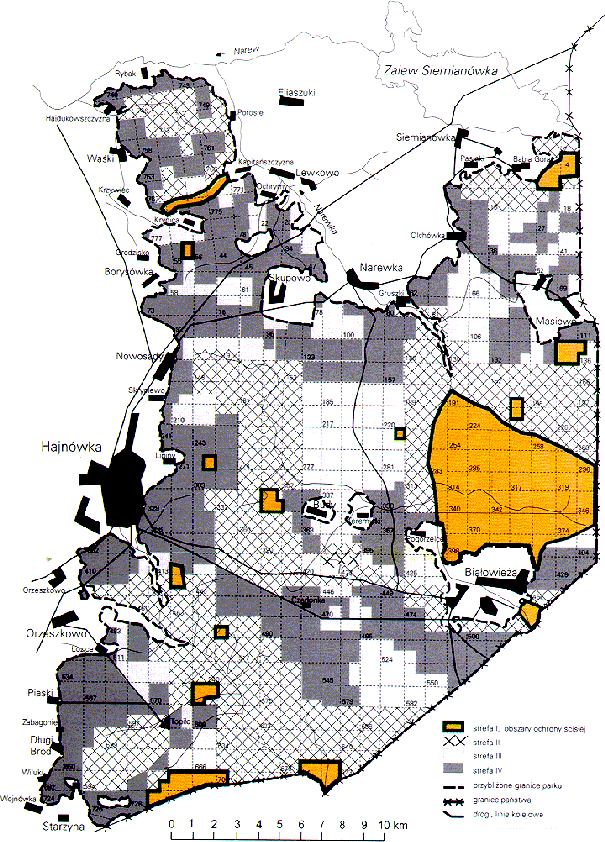
Figure 4. Zoning scheme of the Polish part of Belovezhskaya Pushcha (Bia-lowieza Forest) (1998 - 2004)
(This scheme was borrowed from the book "The Bialowieza Forest in the third mil-lennium", 2002)
Light green colour marks the territory of the Promotional Forest Complex "Bialowieza Forest"; green colour indicates specially protected sites and forest under partial protection within the bor-ders of the Promotional Forest Complex
As a response to public requirements, the government of Poland created a new Reserve called "Natural Forests of Bialowieza" (2003) covering almost 8600 hectares in order to improve the protection of the Polish part of Belovezhskaya Pushcha. Al-though this decision is a step in the right direction, it is not sufficient to save Be-lovezhskaya Pushcha as a whole.
 |
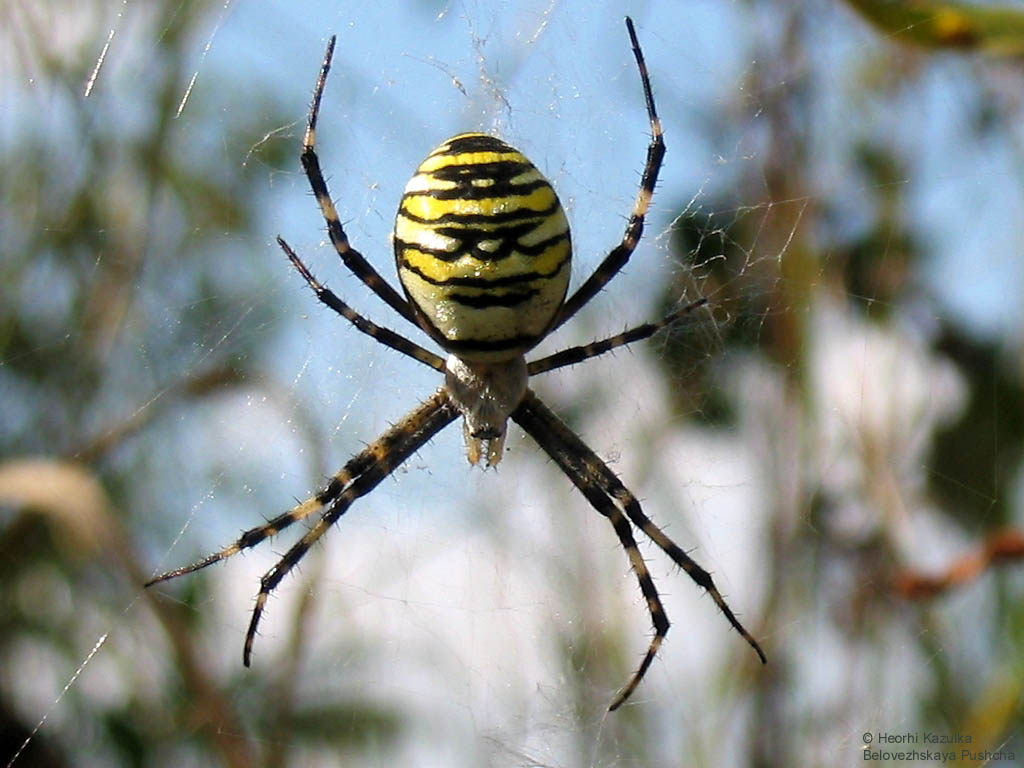 |
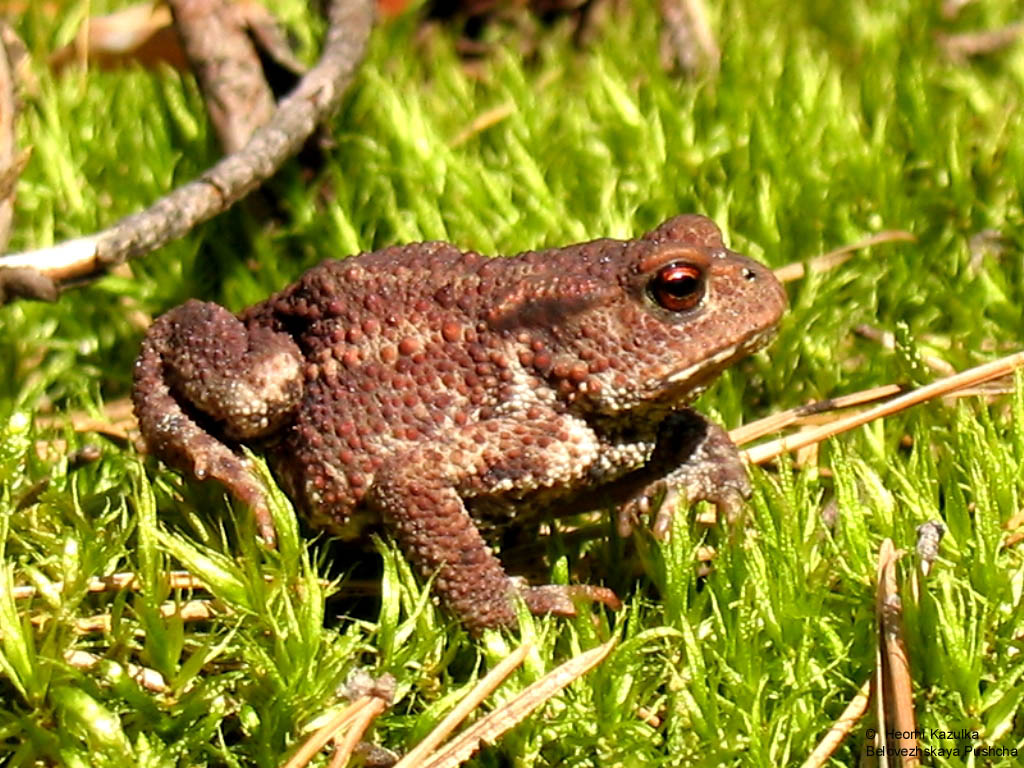
| A Toad | A Rare Spider |
Concerning Belarus the situation is more complicated. The whole territory of Be-lovezhskaya Pushcha at the Belarusian side of the forest, covering 87,400 hectares, was under protection after the Second World War (figure 2). Clear cuttings within the protected area were forbidden. Only dead wood in specific zones with an appropriat-ive regime of protection was subject to felling, while management allowed only selec-tive sanitary fellings. The area of the zones concerned, the Regulated Nature Zone and the Regulated Recreational Use Zone, accounted 75,907 hectares. This equals 78.9 % of the whole territory of Belovezhskaya Pushcha. The Wilderness Protection Zone covers 15,677 hectares, being 16.3 % of the territory of Pushcha. The remain-ing area of 4,614 hectares or 4.8 % of the territory makes up the Economic Activity Zone. The Wilderness Protection Zone currently consists of 5 separate patches. Just one of these, the central core, situated contiguous to the territory of Polish National Park, is listed on the World Heritage Site (figure 1). In spite of the fact that other patches of the Wilderness Protection Zone, and many parts in the other zones, are of no less value they have not gained the status World Heritage Site.
A long-term practice of selective sanitary cuttings outside the Wilderness Protection Zone allowed to reserve nature and the relic forest on the entire area of Be-lovezhskaya Pushcha to a certain extent. The adopted measures actually consisted purely of cleaning and harvesting of dead wood. The systematic application (or tradi-tion) of a careful attitude to reserved nature was a specific type of science which was applied in the Belarusian part of Belovezhskaya Pushcha since the end of the Sec-ond World War. "Not a single living tree should be cut down!" was the main unwritten rule in the framework of this system. Any tree should live until its natural death, even if it had just one living branch left. Old trees in the forest do shape a spe-cific environment which allows a great number of rare and unique species of plants and animals to live in the forest. Such trees serve as a home for a rich natural biodi-versity. Such trees have the specific shape characteristic of a primeval wood. Be-sides that, those old trees bear unique genes. Belovezhskaya Pushcha has kept its primeval character thanks to the fact that man has refrained from felling its living trees and limited himself to cutting dead wood. The volume of harvested wood was comparatively small until recent years: about 60,000 to 70,000 cubic meters of tim-ber per year were logged.
 |
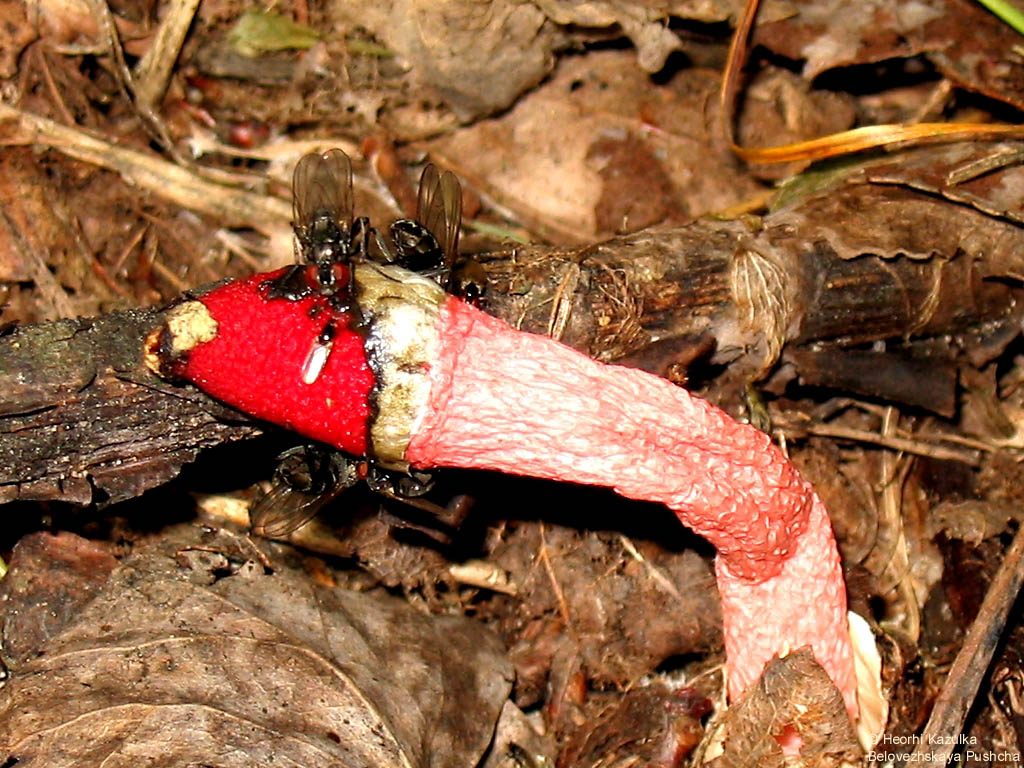 |
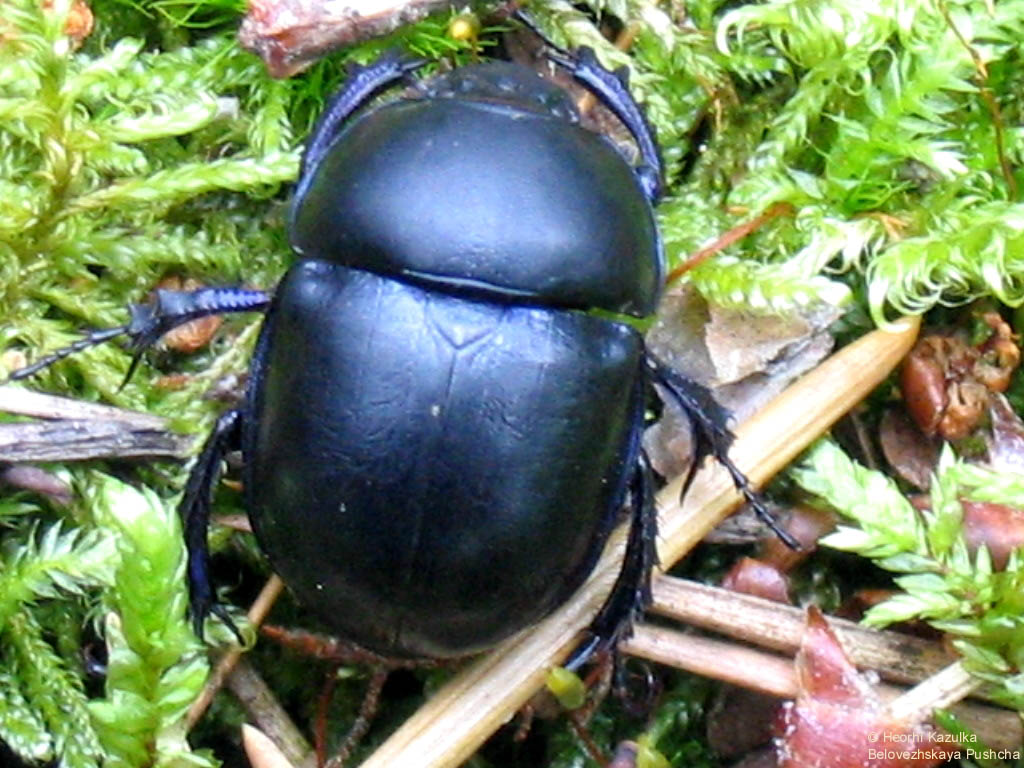
| A Dung Beetle | The fungus from the Mutinus-Genus |
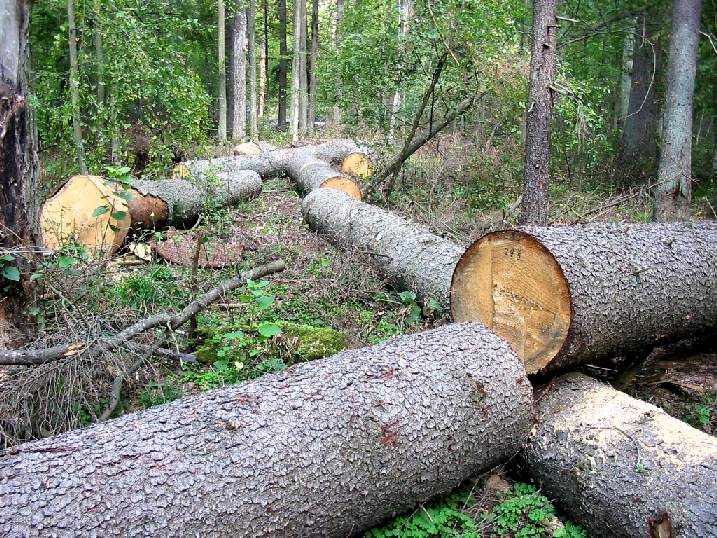
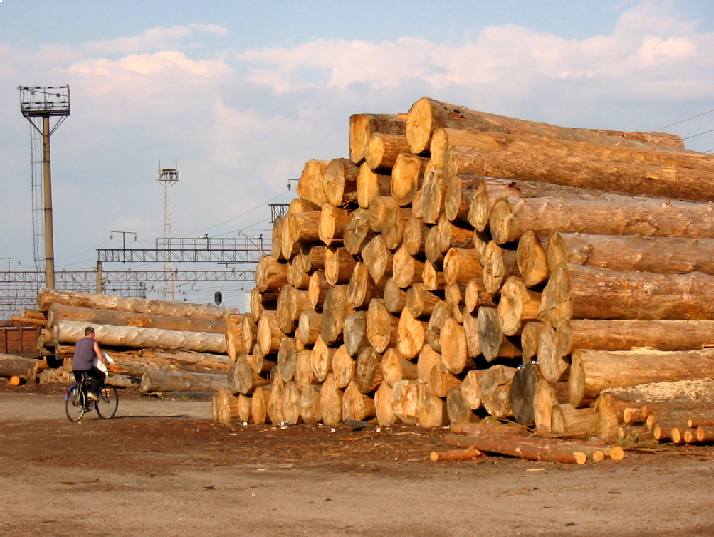
Since 2001 however, and unfortunately, large-scale cuttings were started in Belovezhskaya Pushcha. The volume of harvested wood currently reaches up to 250,000 cubic meters per year. Recent mass multiplication of Bark beetle affected Spruces forests and an absence of conception and methodology to realize ecologi-cal-friendly cuttings on the protected territory have lead to a dramatic intensification of woodcuttings in Belovezhskaya Pushcha.
 |
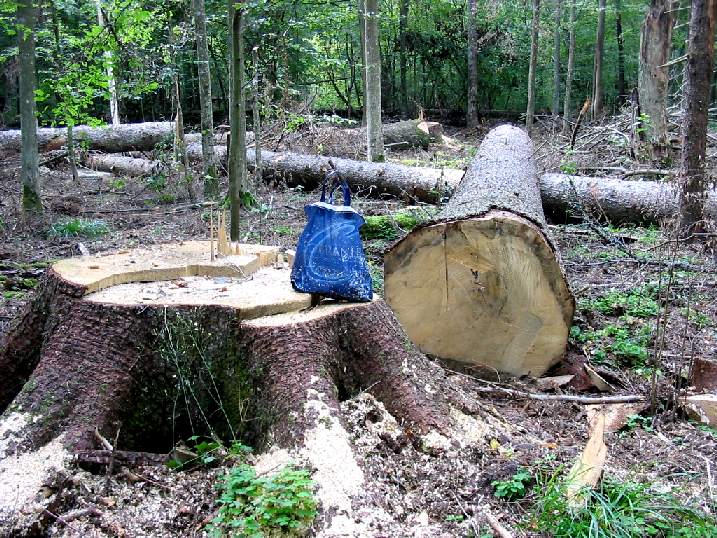 |
| The felling of huge old-age trees within the protected forest |
|
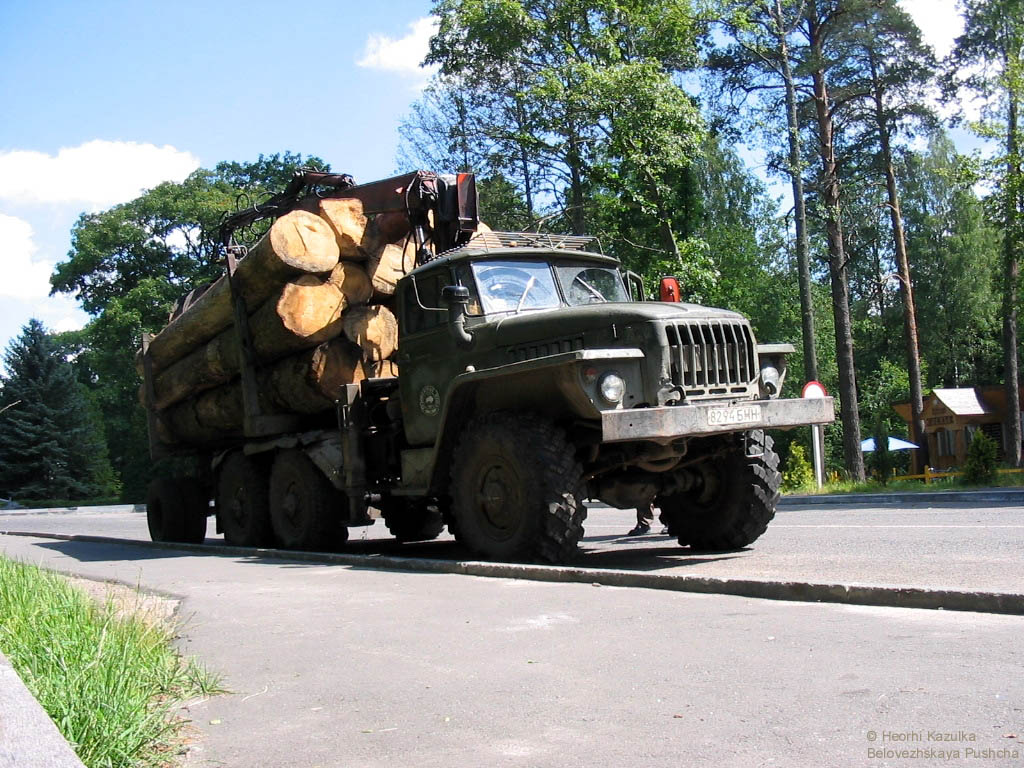 |
| Heavy timber lorries remove the valuable wood from Belovezhskaya Pushcha |
 |
| This wood is delivered to a sawmill further or. |
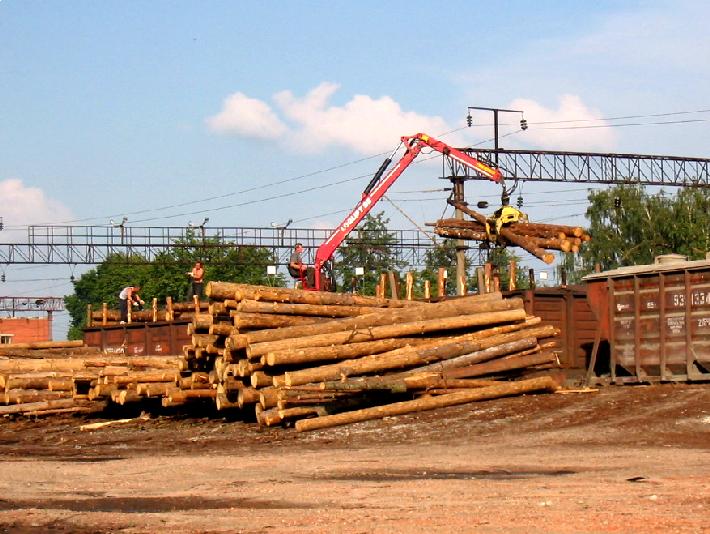 |
| . goes to export in foreign countries |
The classical sanitary method adopted by timber enterprises to reduce the impact of Bark beetle is to cut down infected trees. In the words of commercial foresters this is the most effective measure. However, on reserved territories such cuttings greatly harm the pro-tected natural character. This contradicts the main goals of such natural reserves: to pre-serve natural complexes and their biological diversity. As cuttings are conducted, enemies (predators and parasites) of pests (Bark beetles and other "harmful" insects) which hide in trees are taken out of the forest together with the feared Bark beetles. Please note that the concept "pest" is a relative one when it is applied to reserved territories. Those intensive cuttings negatively affect the sustainability of stands. This is because the forest communi-ties are perfectly adapted to the local soil-hydrological conditions. Sudden disintegration of forest stands resulting both the activity of Bark beetle and further "sanitary" cuttings sharply change the local environment and it adapts the structure of the forest. The conduc-tion of woodcuttings in such sites in number of ways influences remaining living trees me-chanically. In this way fellings stimulate the process of disintegration in the forest as well. Mechanical kind of impact include damage made to the bark on trunks (while the logs are dragged they hit the trunk of the remaining trees), breaking off branches while falling trees hit the remaining ones adjacent to them, damage to the roots of trees and to the under-growth and the youngest forest generation because of mechanical dragging of wood logs and damage made when wood-cut rests are being burned. During dragging the also the litter on the forest floor is being scratched off and "wounded" thereafter, as the print of tractor wheels and clear traces of the dragged logs remain present on (and in) the ground. Trees which have been removed from the forest will not feed the layer of humus in future times, as this humus would be the product of decomposition. The humus is essential for the forests soil. The trees which remain after fellings aimed at reducing the impact of Bark beetles have been completed do suffer an influence of increased solar radiation, atmospheric drought and hydrological stress. These trees are strongly weakened as a result and so they are a prime object for attacks by pests. They are more sensitive to diseases.
Large scale cutting has an extremely negative impact on biological diversity within a primeval forest. Such cuttings result in a decline of the number of rare species and they break down the ecological balance of a primeval forest. Within protected territories, where the regime forbids large scale felling or where the conduction of such cuttings is subject to conditions set by the sciences of environmental and wilderness protection, these changes of the environment are much less serious. This is because dead trees remain elements in the center of stands infected by "pests" or the volume of trees cut is strongly limited. Therefore the variety in number of species is greater on protected territories. Natural afforestation of glades is often a more quick process in modestly or unmanaged stands.
 |
 |
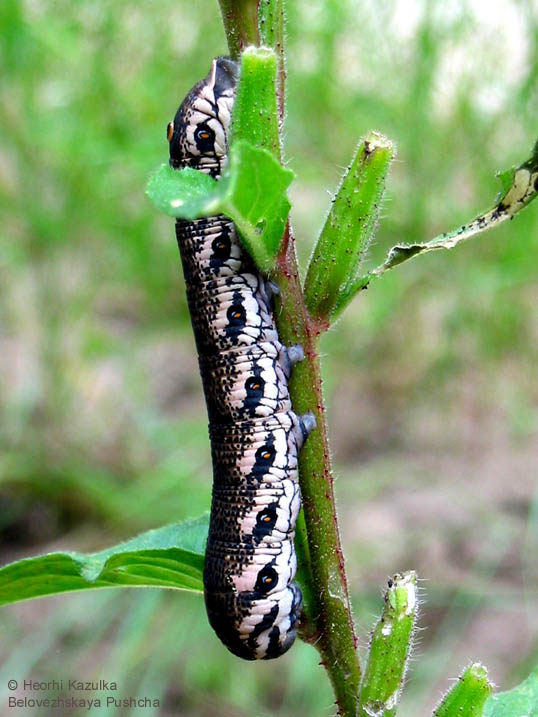
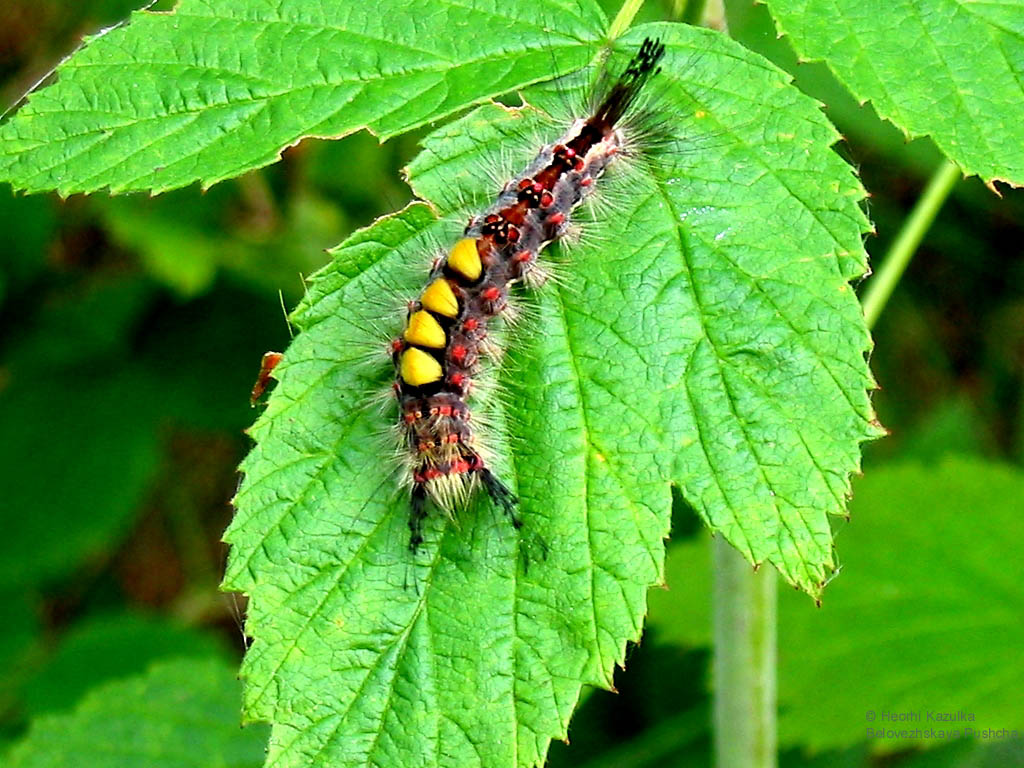
| A Moth Reveler caterpillar |
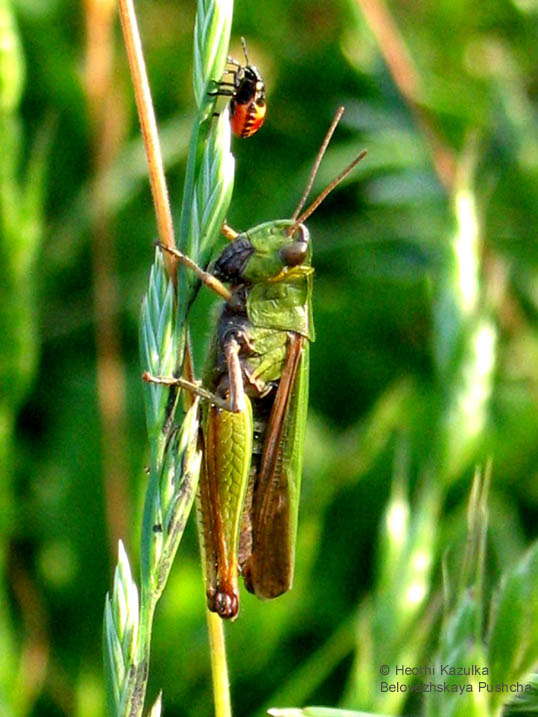
Orhtoptera and Bedbug larva |
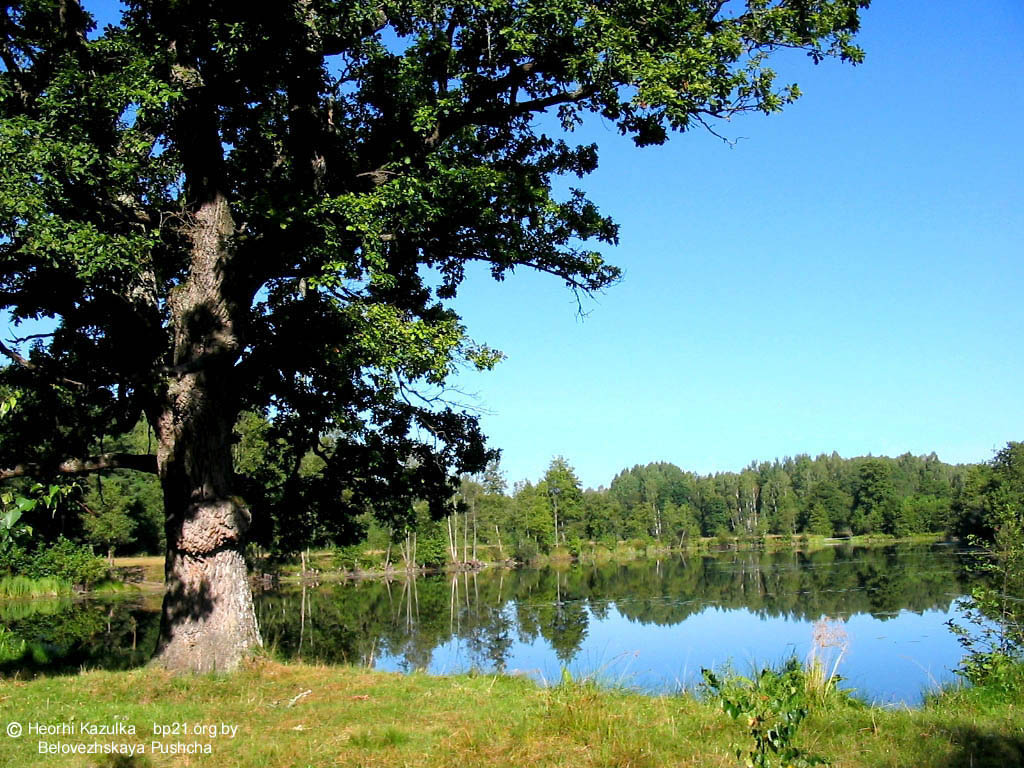 |
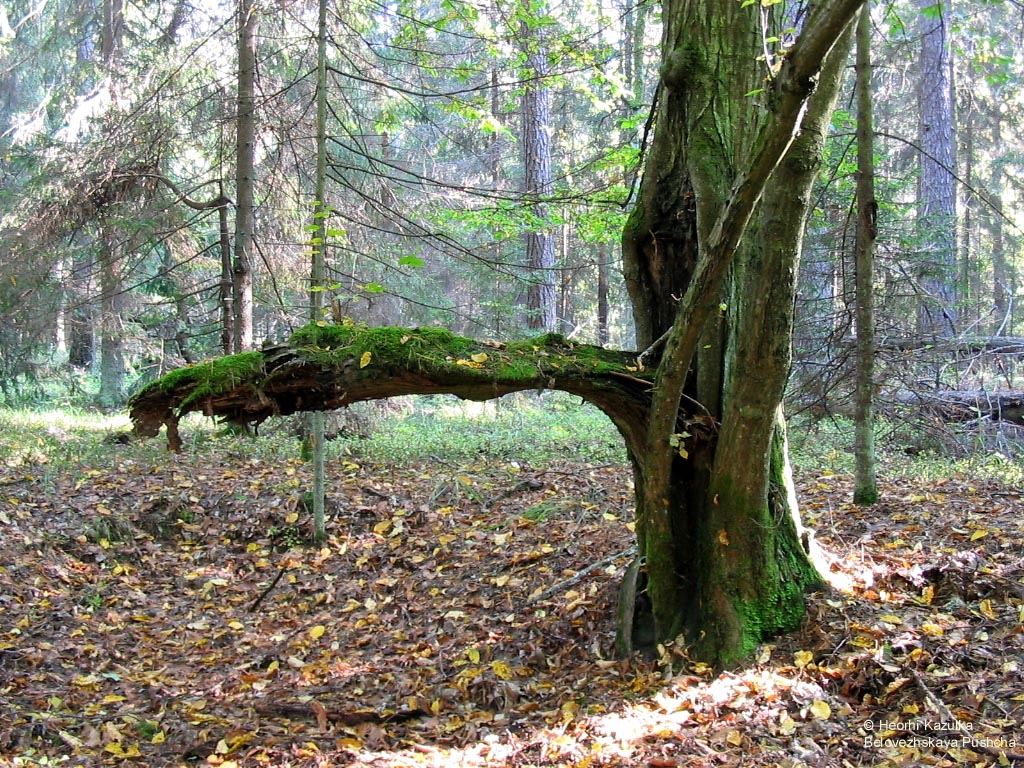 |
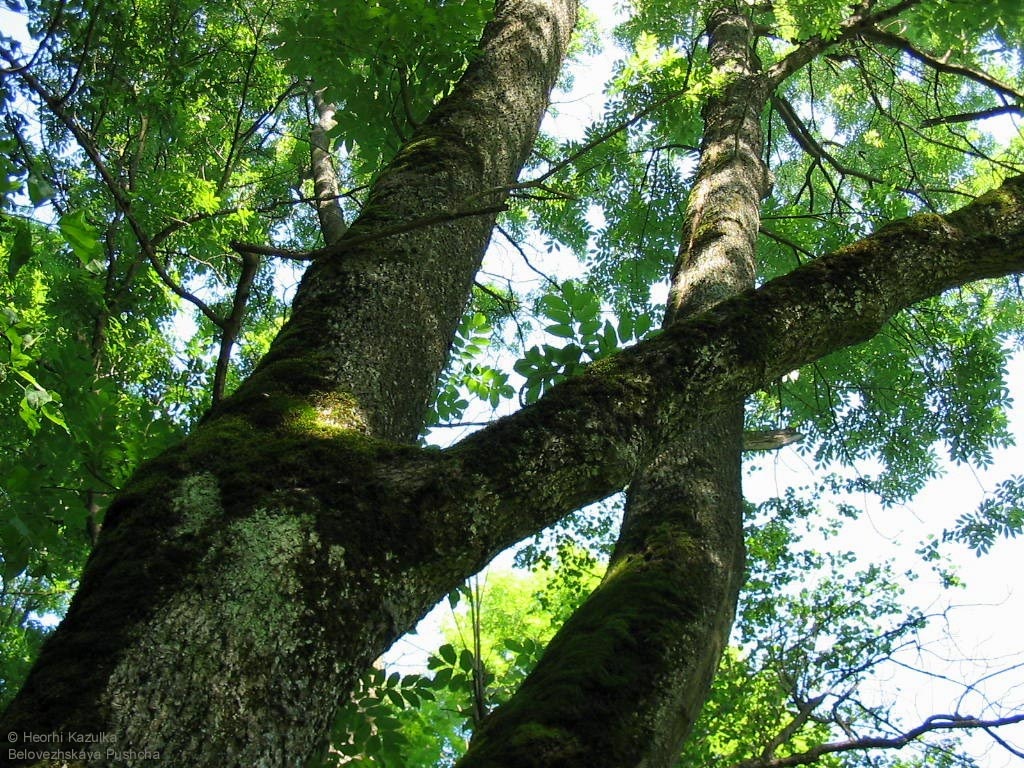 |
| An old Oak tree at the Plyanta pond |
A forest fairy-tale | An old Ash forest |
Any method of intensive and large-scale cuttings conducted within the protected areas of Belovezhskaya Pushcha will bring significant harm to reserved nature. Such fellings do strongly break natural processes in protected wood. They greatly damage the unique and valuable biological diversity of the relic forest of Belovezhskaya Push-cha. In fact, through realizing this type of cuttings the ecosystems of the relic forest are lost for a period of at least some hundreds of years, if not forever. If we follow this way we destroy the unique relic forest, our heritage which former generations handed over to us. What will we leave to our decedents?
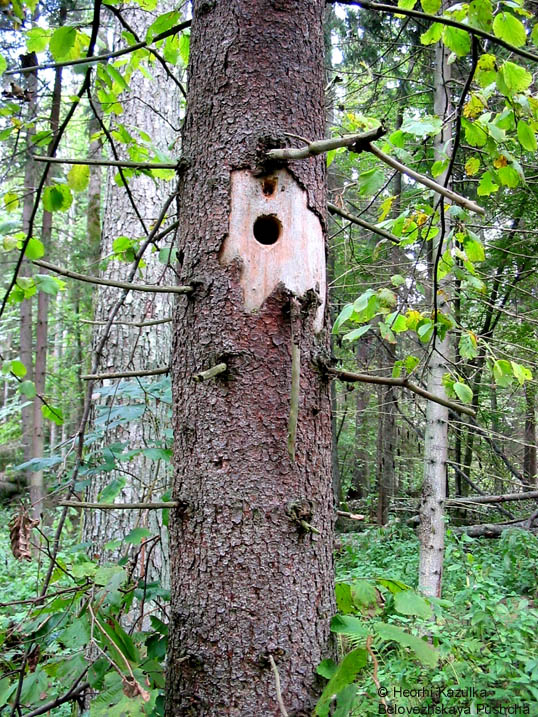 |
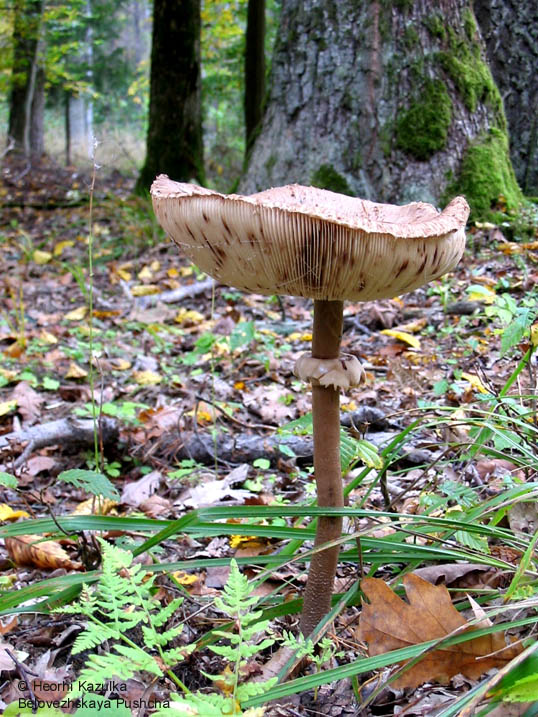 |
| A Woodpecker hollow | An Umbel mushroom |
In 2001 Mr. Charles Zimmer, an expert of the Council of Europe, visited the Be-lovezhskaya Pushcha to control the implementation of the recommendations made for the European Diploma, an exclusive distinction for exceptionally important natural areas. The diploma was granted to Belovezhskaya Pushcha National Park in 1997. At an excursion aimed at making an estimation of the way how the protected forest is preserved Mr. Zimmer saw unique sites in the old, wild forest, which has been in-fluenced only a little bit from fellings. Many times he exclaimed "Why don't you change the regime of protection of this site to strict reservation, look at the beauty which we can see here!". Many people from Western Europe, Belarus and Russia have often spoken with such praising words while they visited primeval and more or less intact parts of the forest situated outside the Wilderness Protection Zone.
Just 6 % of the Belarusian part of Belovezhskaya Pushcha and 7.5 % of its unique primeval forest are currently protected as World Heritage Site. As mentioned before, the global value of Belovezhskaya Pushcha as a World Heritage Site is defined by UNESCO to cover 73,776 hectares, or 84 % of the territory of the forest within the borders of the National Park (1991). At this moment (2004) the Na-tional Park covers 161,000 hectares of which 81,276 hectares (or 51 %, including the added bog "Dikoie") are potentially part of the property of the World Heritage. What is the logic in this? Why is it that just a small part of Belovezhskaya Pushcha enjoys the highest international status of nature protection?
 |
 |
|
 |
 |
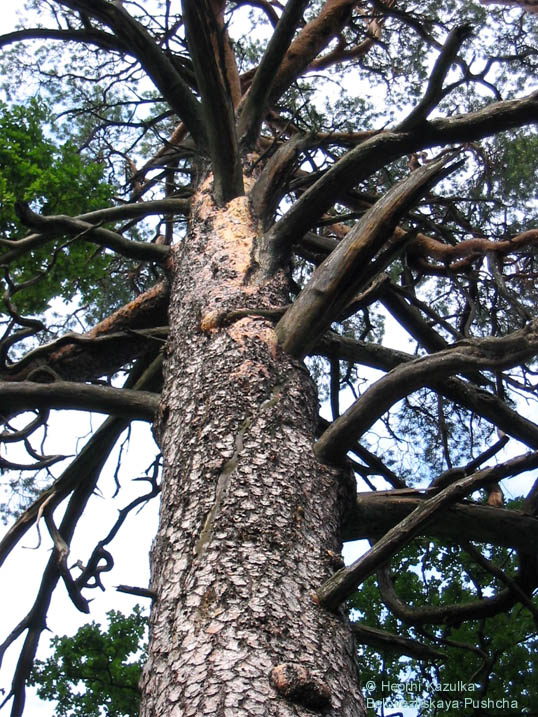 |
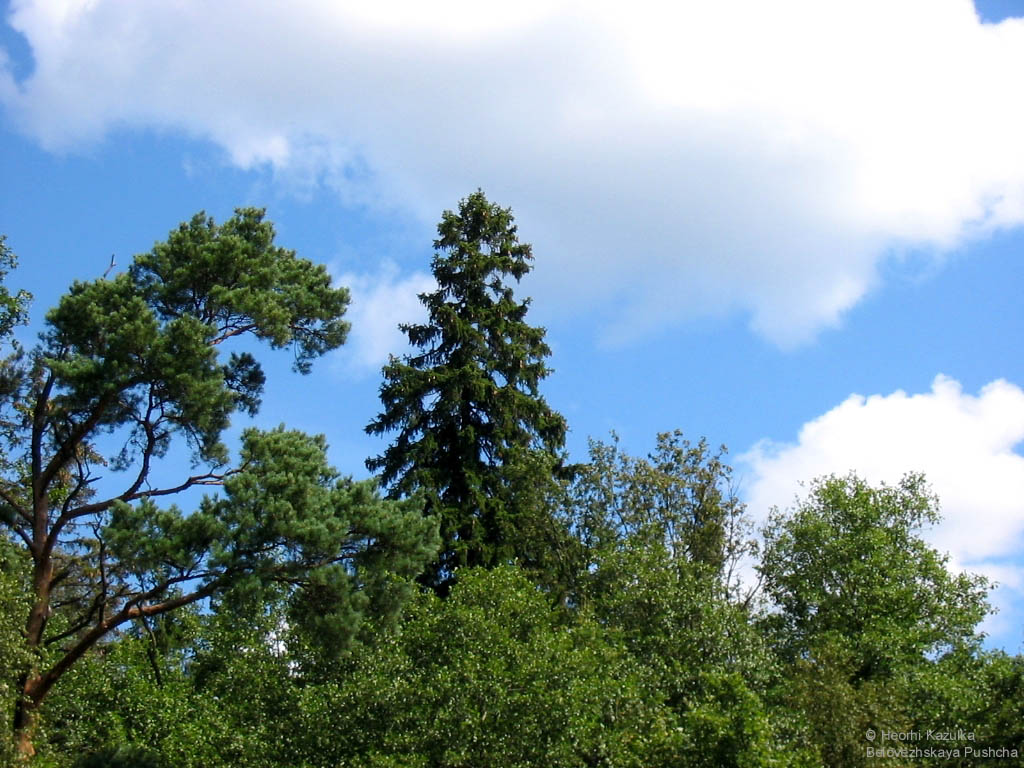
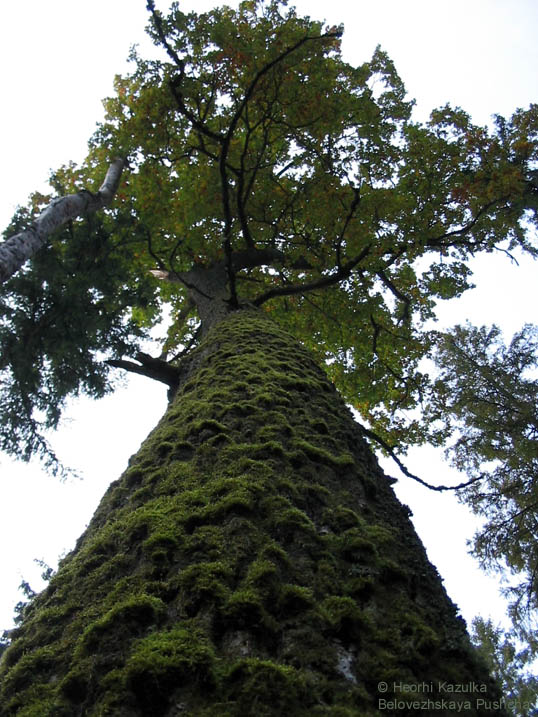
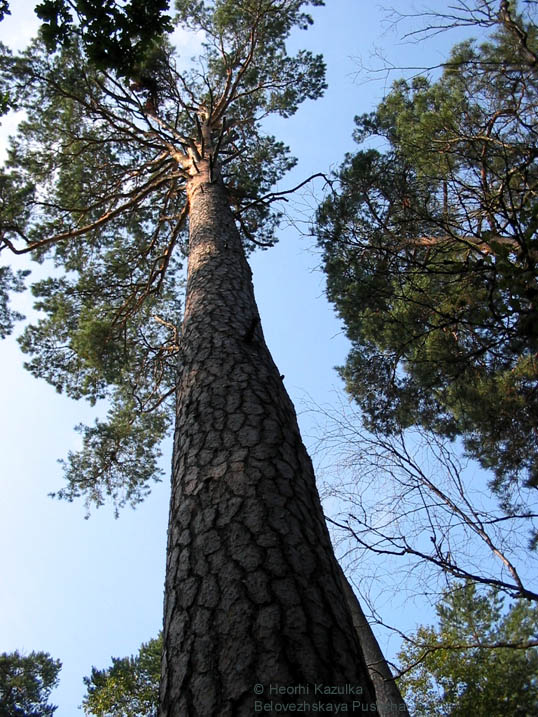
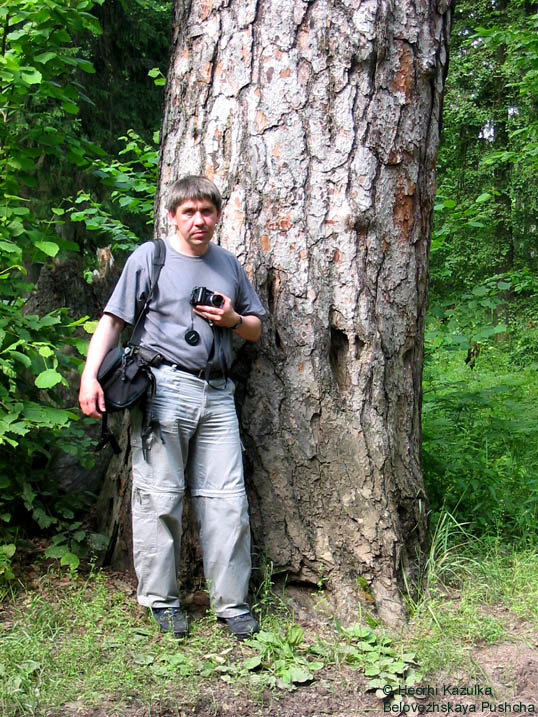
| Giant Spruce, Oak and Pine trees | ||
 |
 |
|
 |
 |
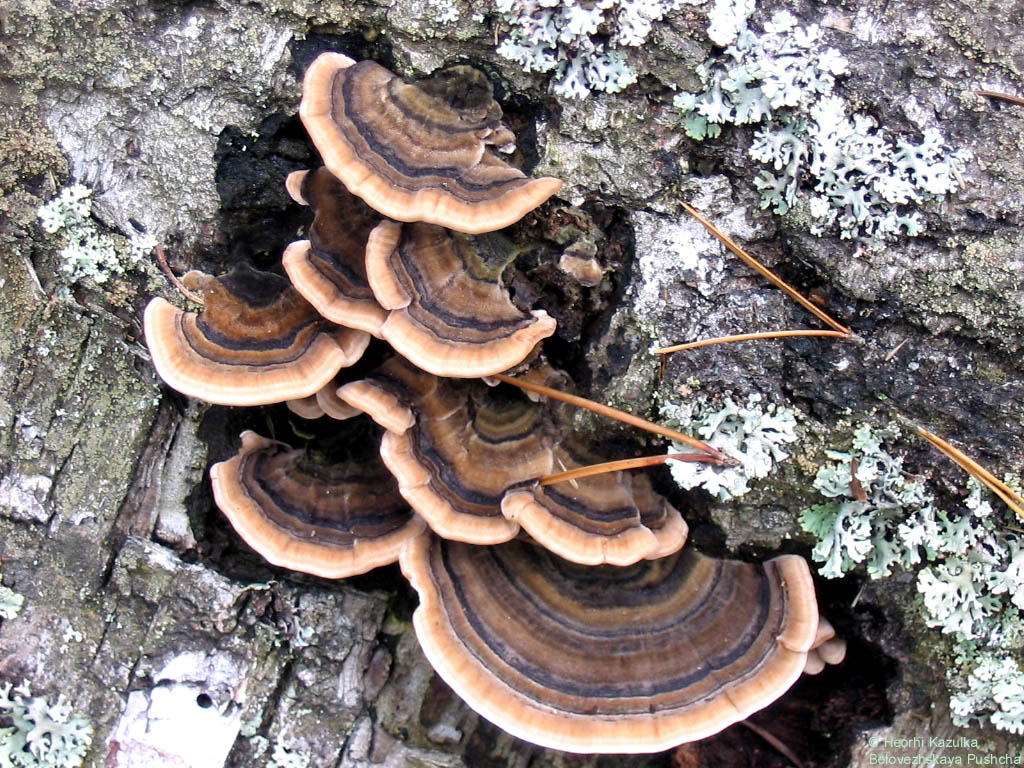 |
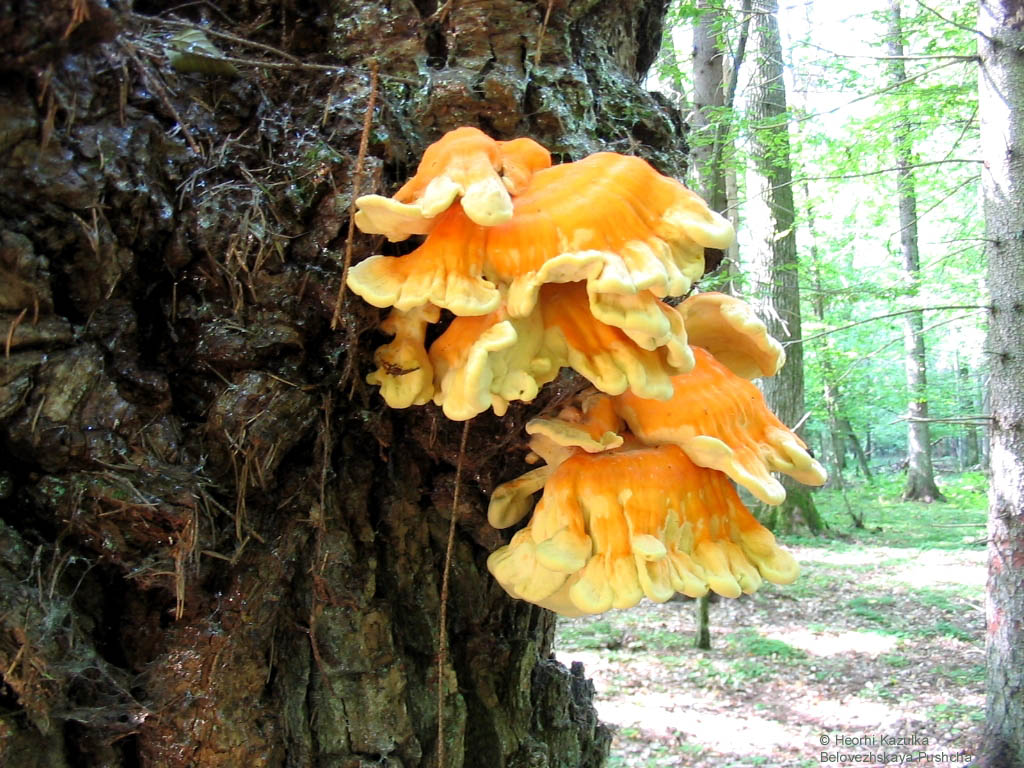
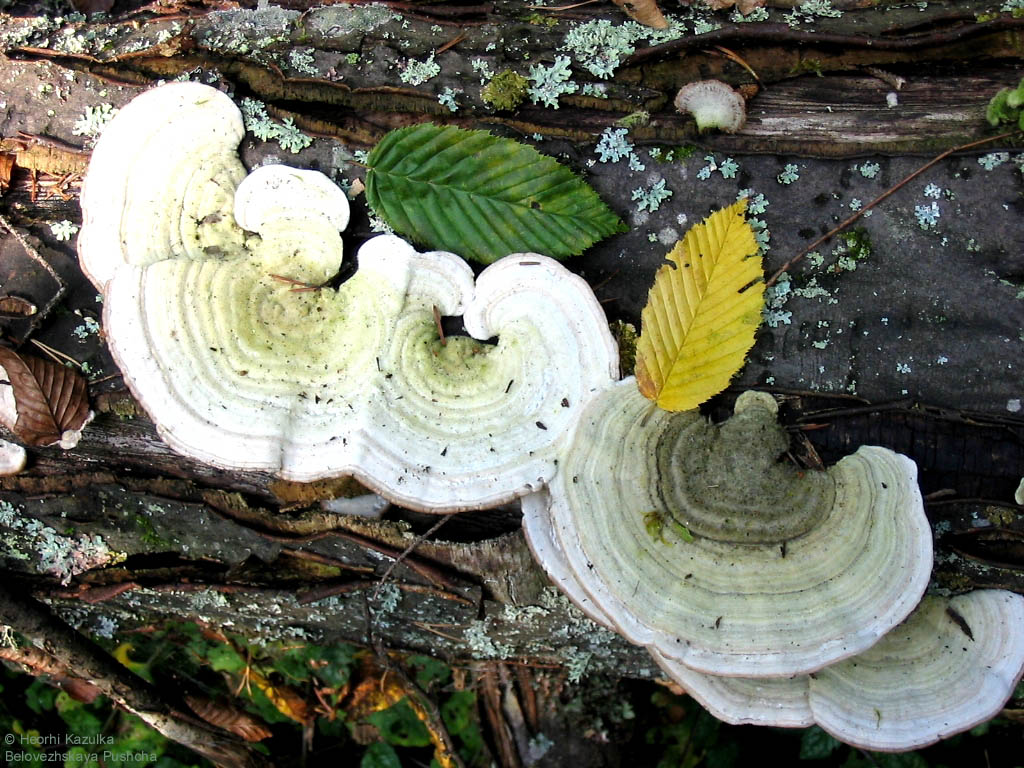
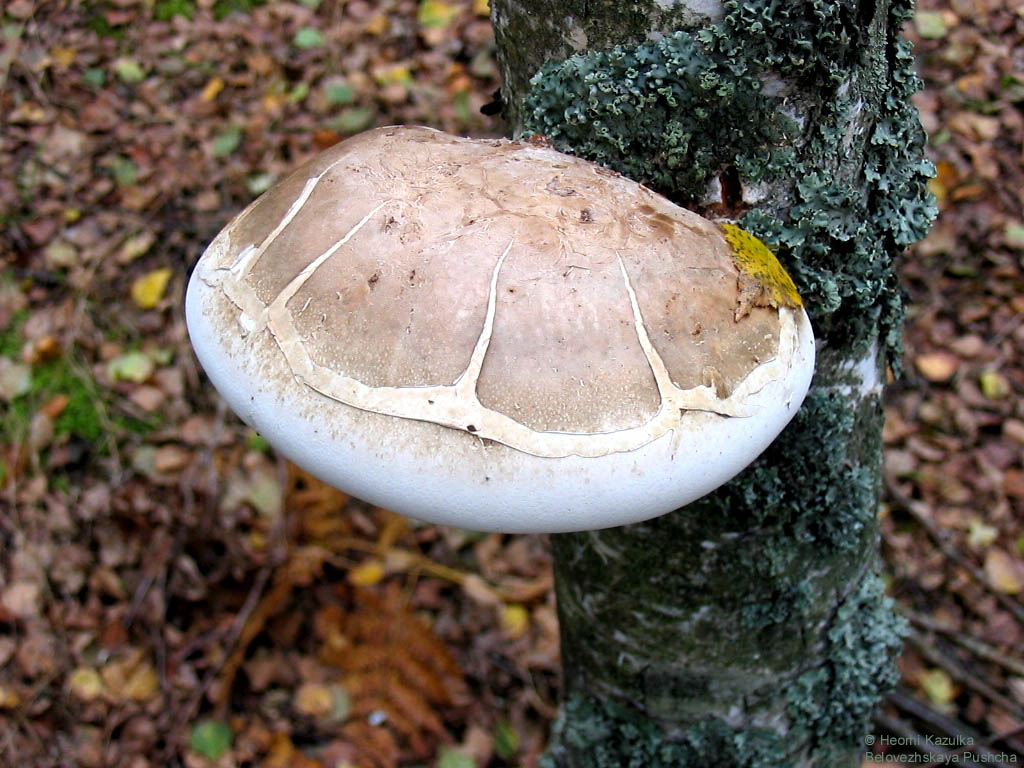
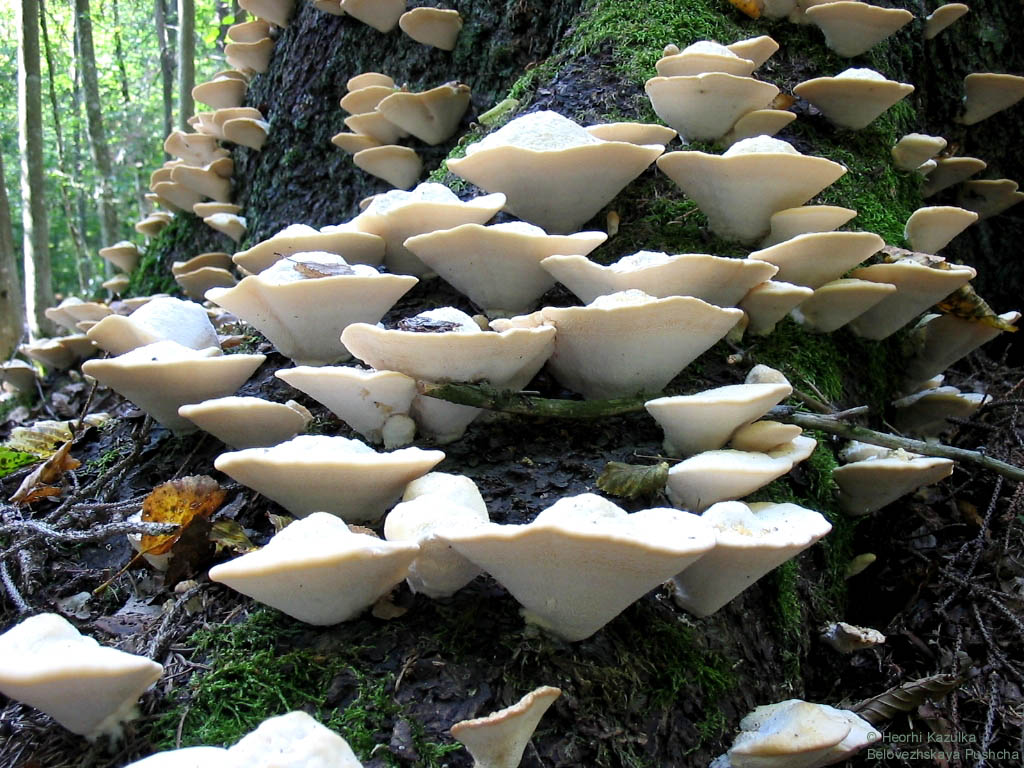
| Polyporus funguses are numerous in a wild forest | ||
The answer: it is the result of a historical process and there are several reasons for it. Polish experts nominated the Polish Bialowieza National Park, a part of the Polish Bialowieza Forest the status of World Heritage Site in 1979. This was during the "peak" of socialism. The Belarusian part of Belovezhskaya Pushcha was granted the status of World Heritage Site in 1991, but only after the disintegration of the USSR and after the announcement of the independence of the country. In that year Belovezhskaya Pushcha was reorganized. It gained the status of National Park. Be-fore this event its official status was State Hunting Game Ground (SHGG). One of the main objectives of SHGG was to service the hunting passions of leaders of the Communist Party.
Why is it that only 5,500 hectares were listed as World Heritage and why not (at least) the whole Wilderness Protection Zone? It is certainly possible to refer to the fact that this patch was conserved the best, while other lands of Belovezhskaya Pushcha were partially damaged by cuttings. Stumps are abounding attributes in many sites of the Pushcha's forest and this does not match with our imagination of the most ancient wood on the European continent in any way. Another explanation can be as the former zoning of Belovezhskaya Pushcha differed from the present one and in the past the Wilderness Protection Zone was smaller. So the enlargement of this Zone together with the inclusion on the list of the World Heritage was considered satisfactory.
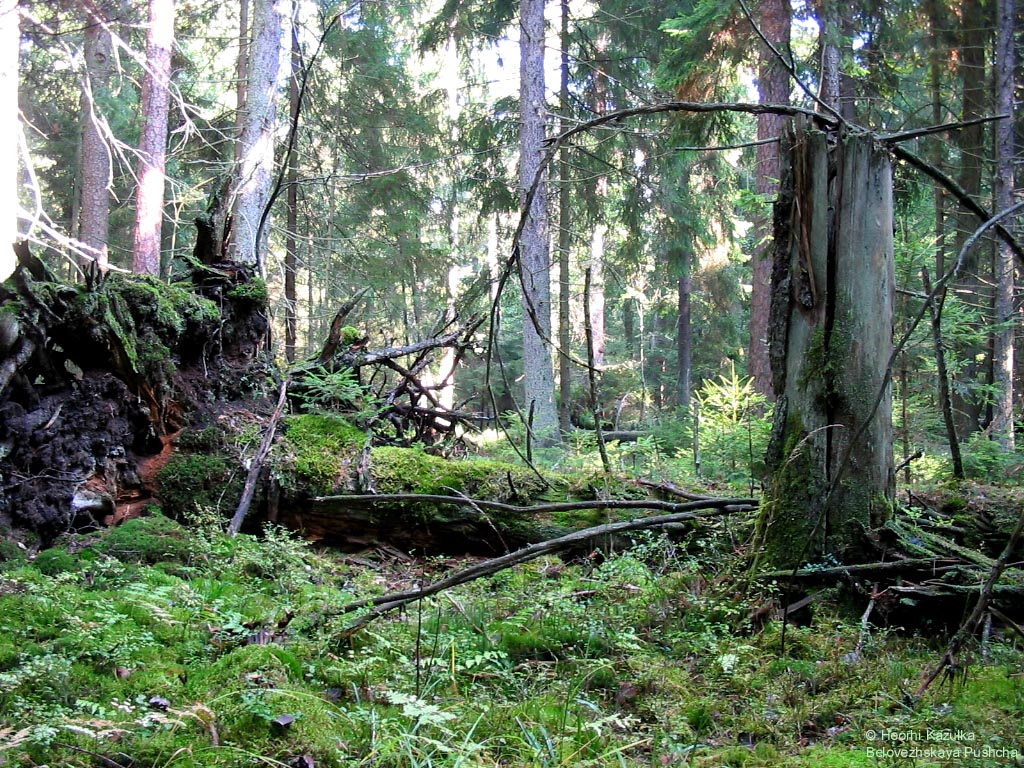 |
| A wild forest of Belovezhskaya Pushcha |
 |
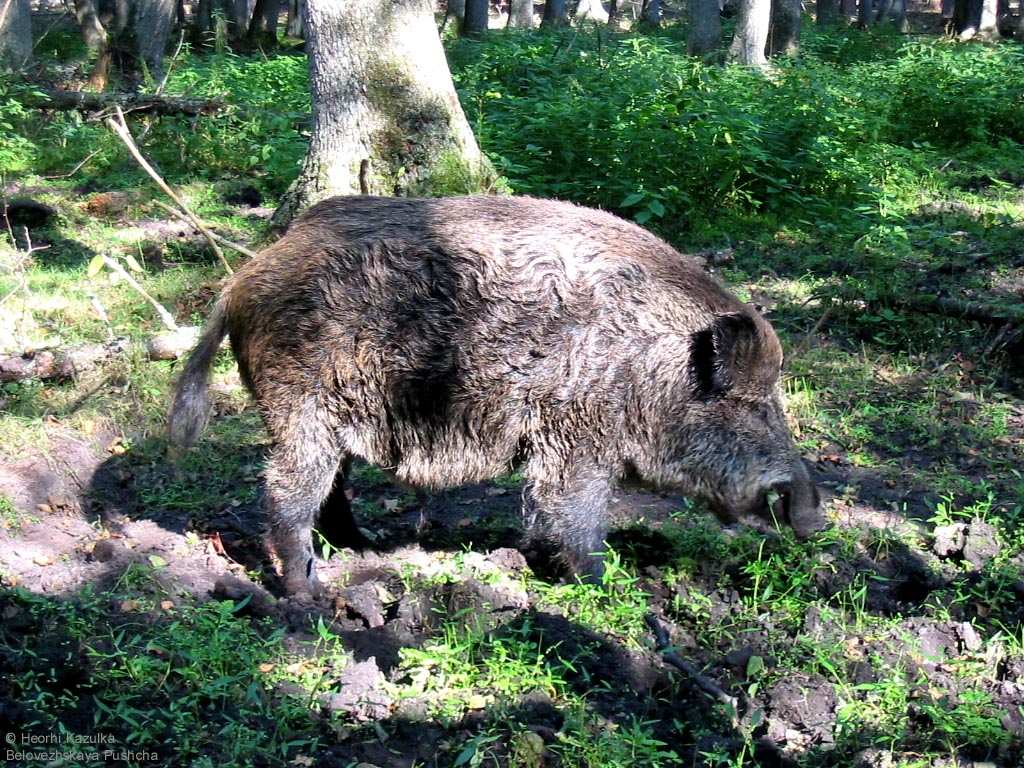 |
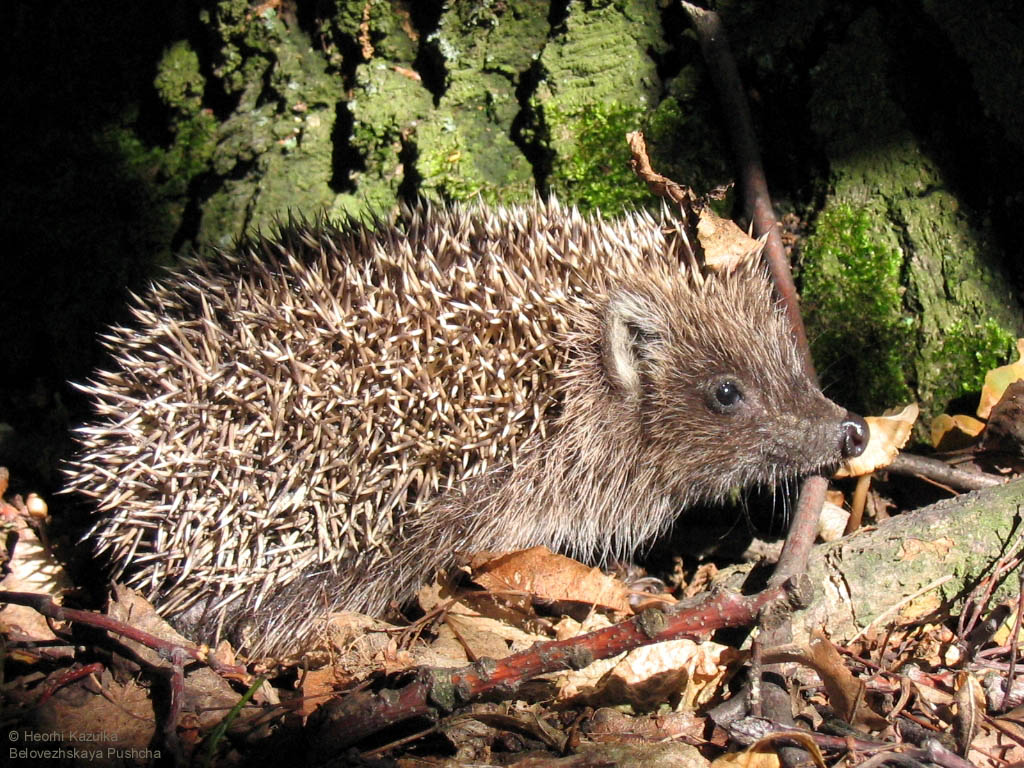
| A Hedgehog | A Wild Boar |
 |
 |
 |
 |
 |
 |
 |
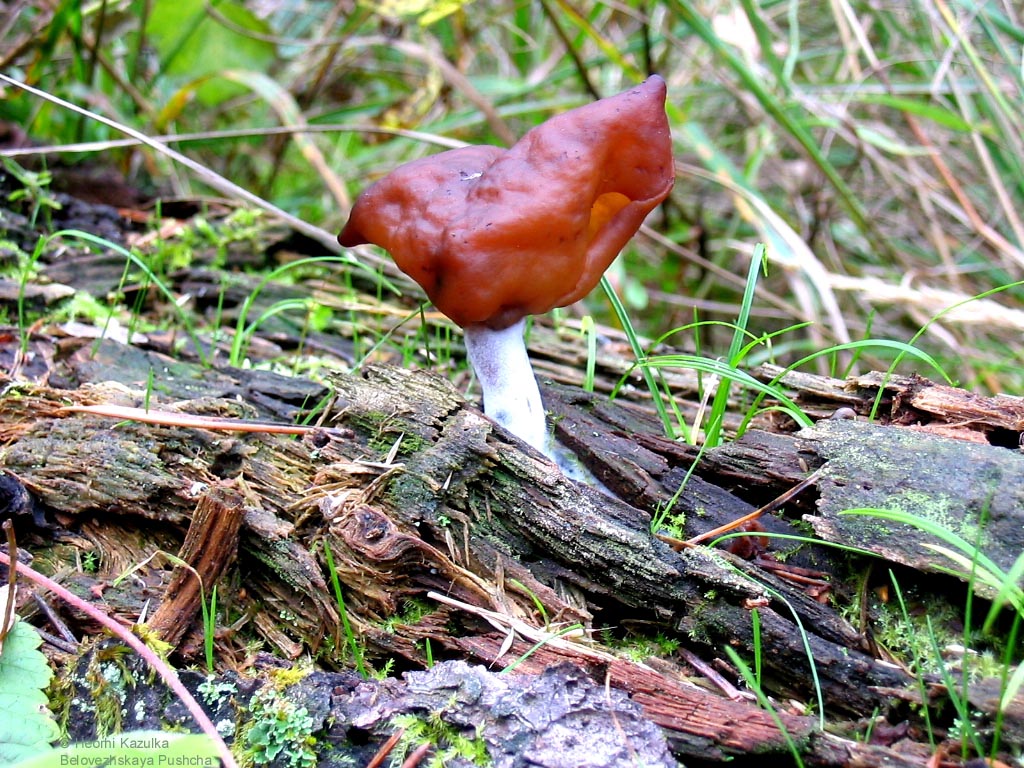 |
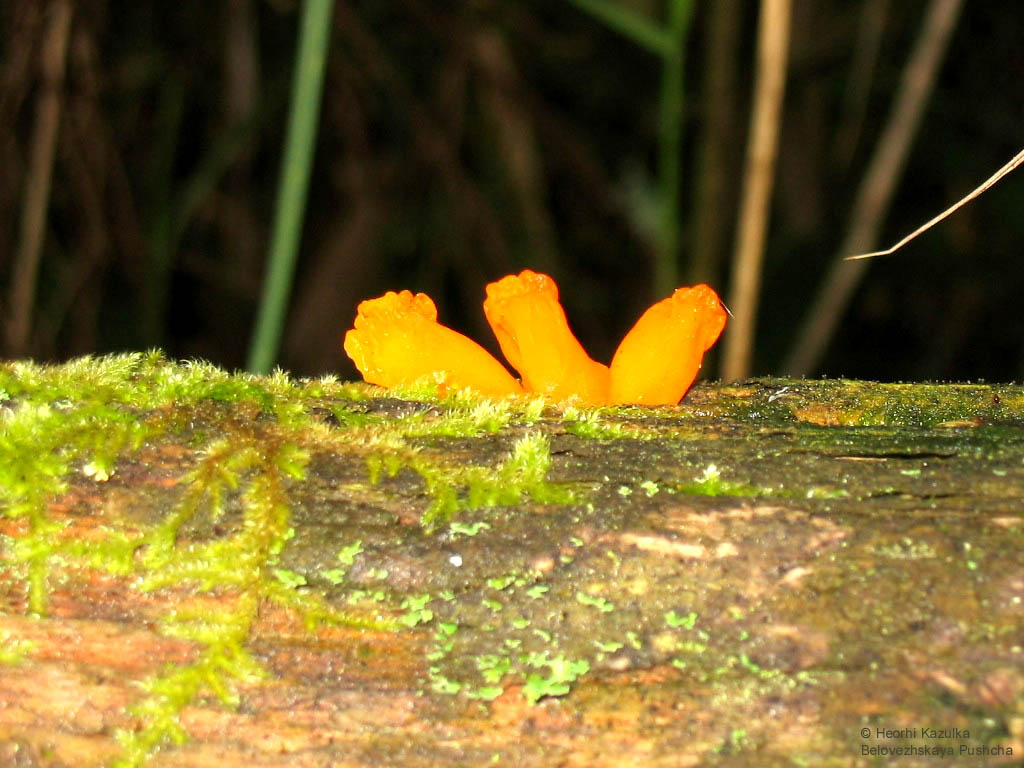
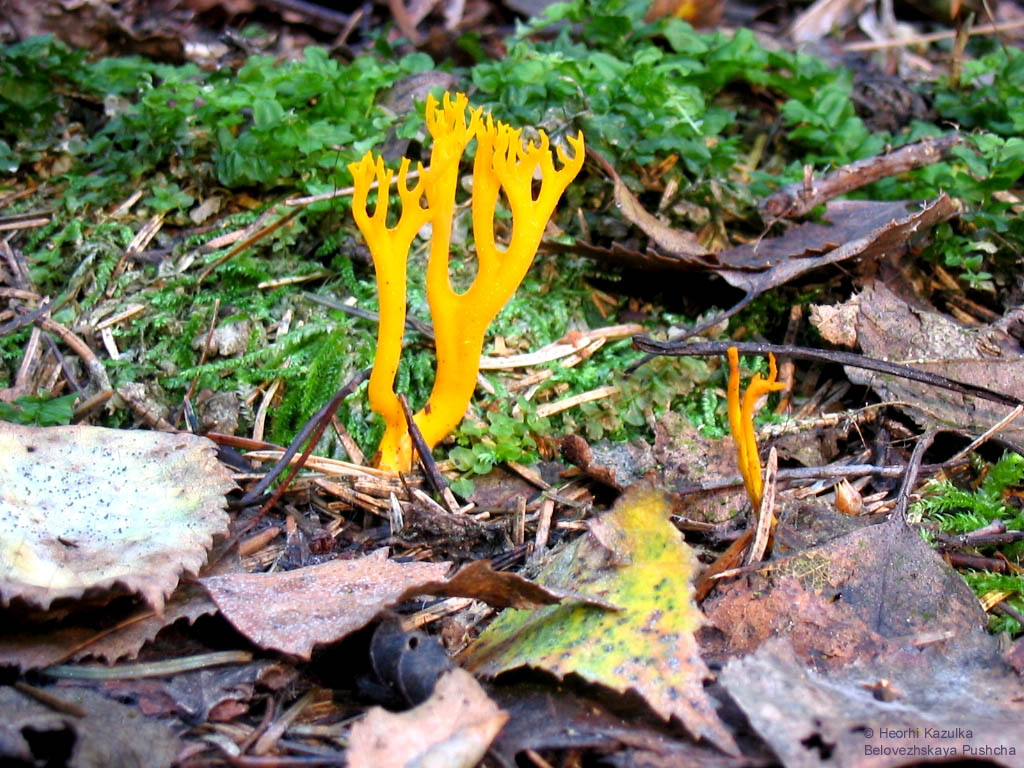
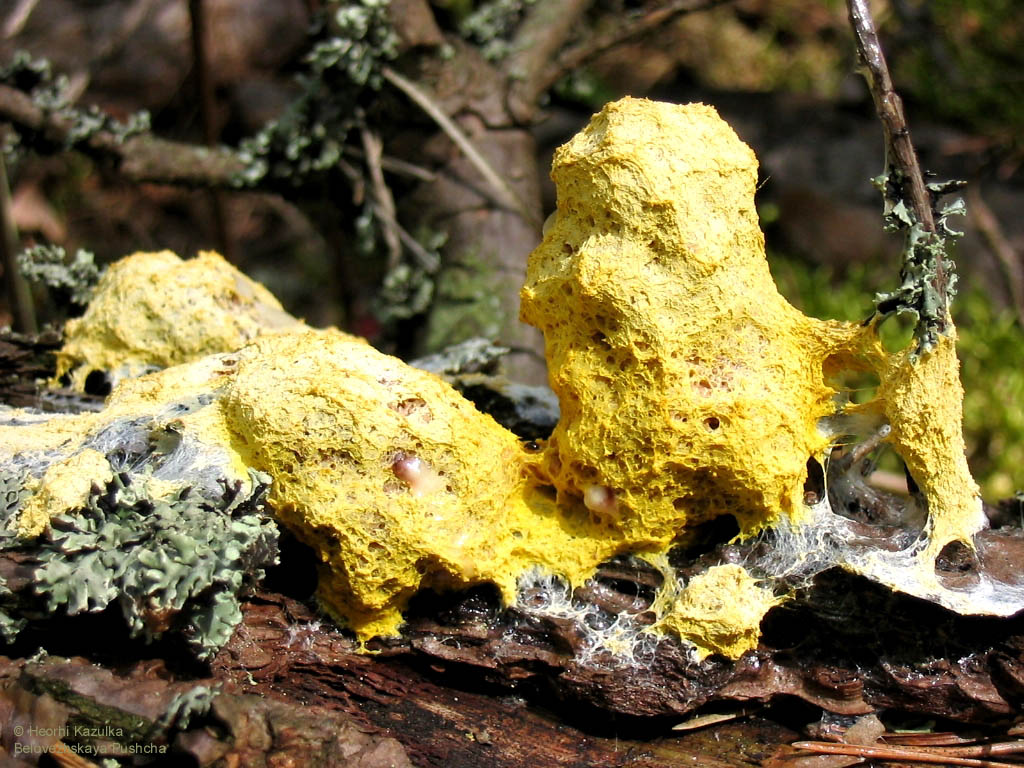
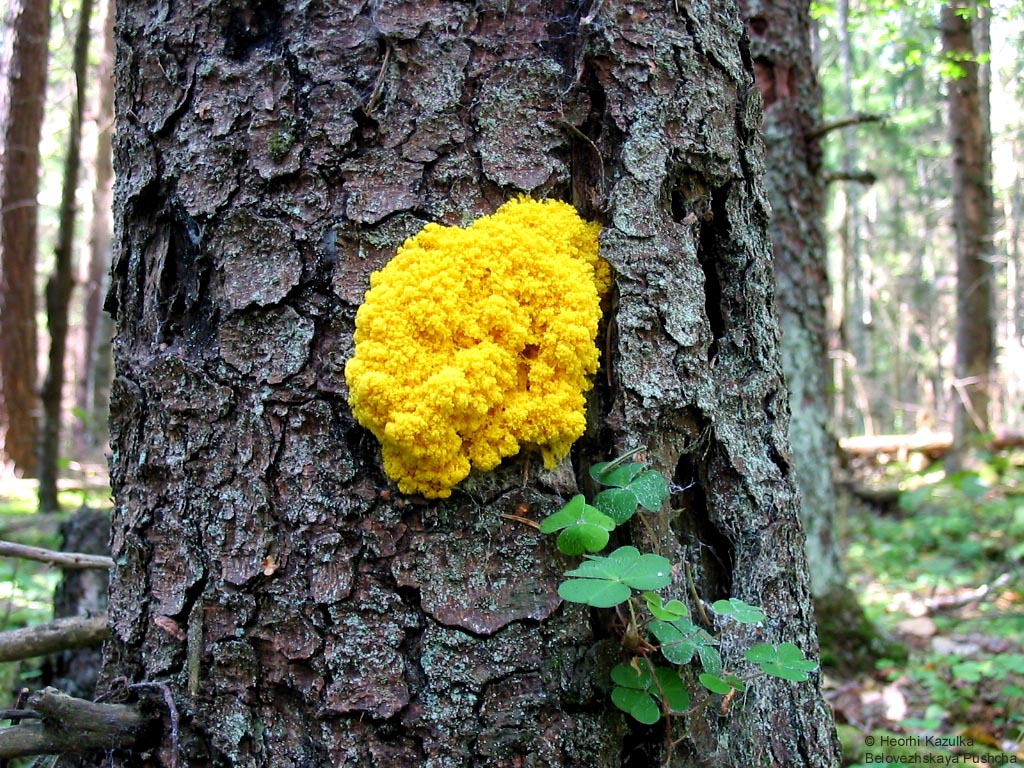
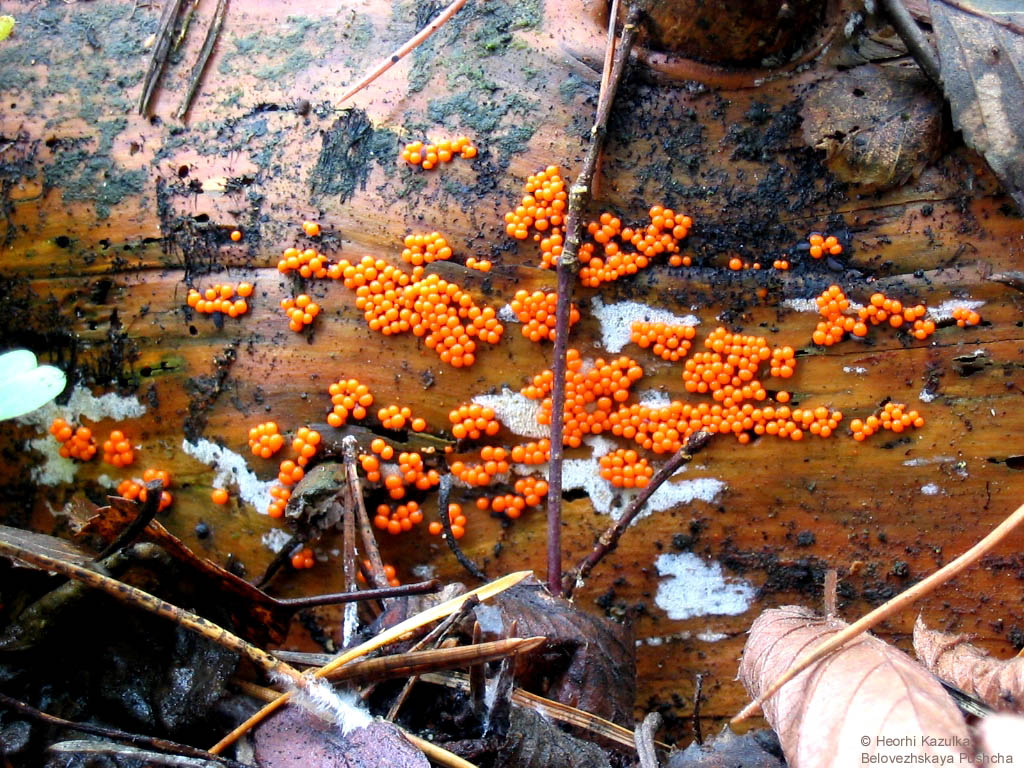
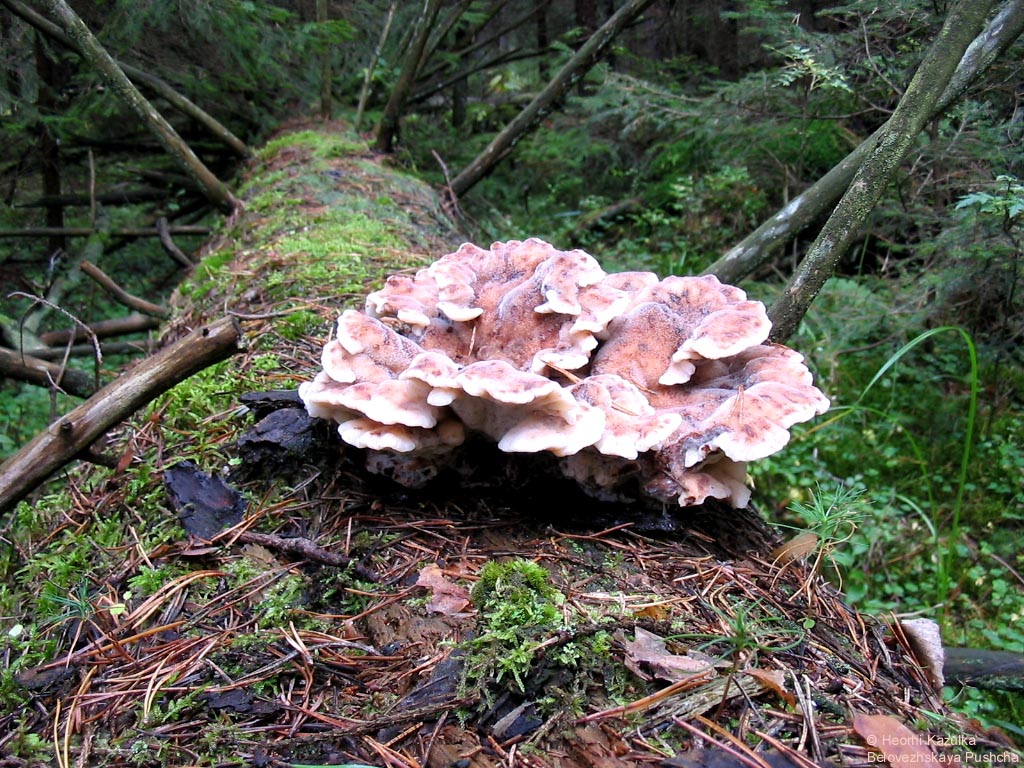
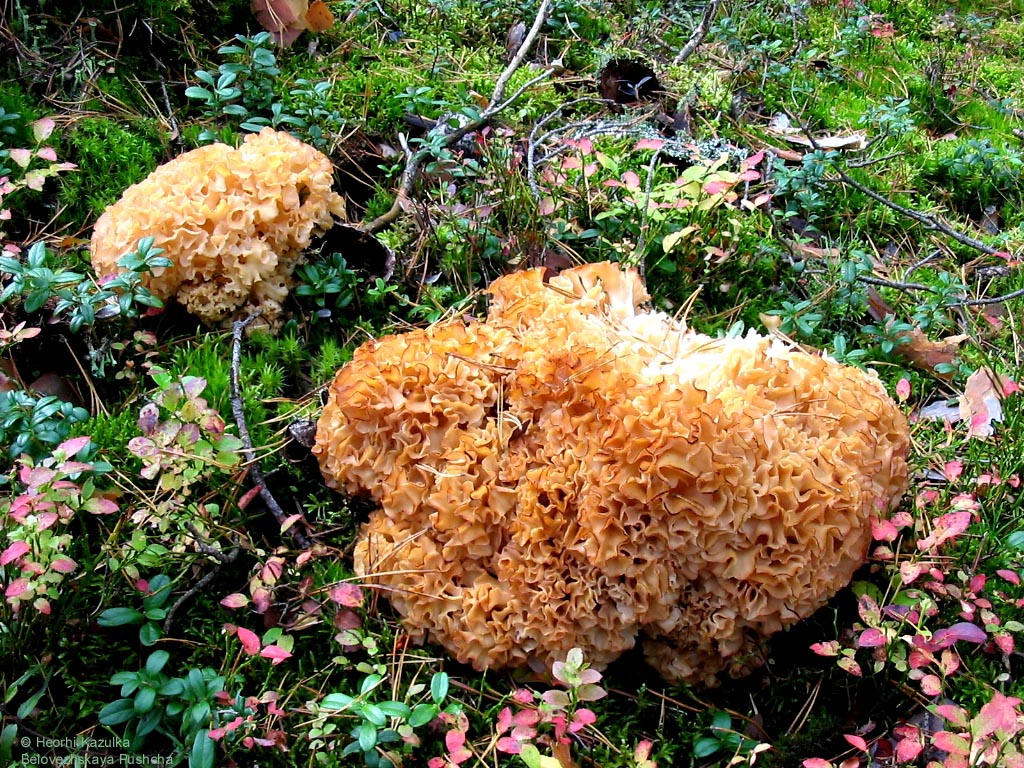
| Diversity of funguses is amazing | ||
This is all right. However, there is one more circumstance which is important as well. In 1991 the epoch of a young and independent Belarusian state and democracy started. The country cast off the "iron chains" of the communist system. It was a "breakthrough" to the West and a step to make the values of the West available for the society of Belarus. It was a period of euphoria of freedom and expected future changes. In this time the SHGG was reorganized into a National park. That is why the initiative of several people to obtain the recognition of Belovezhskaya Pushcha as a World Heritage Site was crowned with success. The status of World Heritage Site improved the image of the young Belarusian state in the eyes of Europe. As a matter of fact this status did not change anything in practical terms. In truth nature within the borders of the Wilderness Protection Zone is always under strict protection, in-dependently of other titles, statuses and names. At the same time the area situated outside this Zone was utilized economically. In 1993 Belovezhskaya Pushcha gained another important mark of recognition: Biosphere Reserve, granted by UNESCO in the framework of Program "Man and Biosphere". Again, the essence of the manage-ment principles of the National Park did not change. This approach suited the man-agers who lead the Belovezhskaya Pushcha, as they focused on economic profits. Both statuses did not change anything in the economy and in the management sys-tem of Belovezhskaya Pushcha.
The time of independence of Belarus started 12 years ago and the notion has ap-peared that the illogicality concerning Belovezhskaya Pushcha as a World Heritage Site must be finished, or tomorrow it will be too late to do so. The Belovezhskaya Pushcha is under too strong human pressure. We are rapidly losing the fantastic wild wood. It is gradually transforming into a different and less valuable forest. The future of Belovezhskaya Pushcha Primeval Forest has become undetermined. Its sustain-ability has strongly decreased because of large-scale pseudo-melioration, the inten-sive hunting economy and due to extended periodical cuttings. The Belovezhskaya Pushcha Primeval Forest will not sustain future weak-grounded "experiments" related to its preservation. If the intensive economic activities will be conducted for another ten years only a little patch of the World Heritage object Belovezhskaya Pushcha will have remained. The ecological value and the primacy and antiquity of the other parts of the fabulous forest will be lost for centuries, if not for ever.
Today it is necessary to speak openly and directly: the Belarusian part of the World Heritage Site currently is too small to represent the whole diversity of land-scapes, biological variety and the forest types and forest associations of the Be-lovezhskaya Pushcha Primeval Forest. These elements are extremely valuable for the preservation of nature in Europe. Within the patch currently listed as a World Heritage Site there is not enough room for pure and unaltered natural succession and processes either.
The context and meaning of the statutory documents of UNESCO must be de-fined exactly and be brought into practice. These documents notify that the natural and conservational value of Belovezhskaya Pushcha are of exceptional importance. The forest is a stretch of ancient, virgin, palaearctic wood, which has endured little human disturbance in comparison to other lowland European forests. This means that not just 5,500 hectares, but the entire Belovezhskaya Pushcha Primeval Forest should be World Heritage property. The whole forest has the character of the given definition. At least the territory of Belovezhskaya Pushcha should largely be desig-nated as Wilderness Protection Zone. Today the area of virgin forest as defined in this paragraph covers over 70,000 hectares.
 |
 |
|
 |
 |
 |
 |
 |
 |
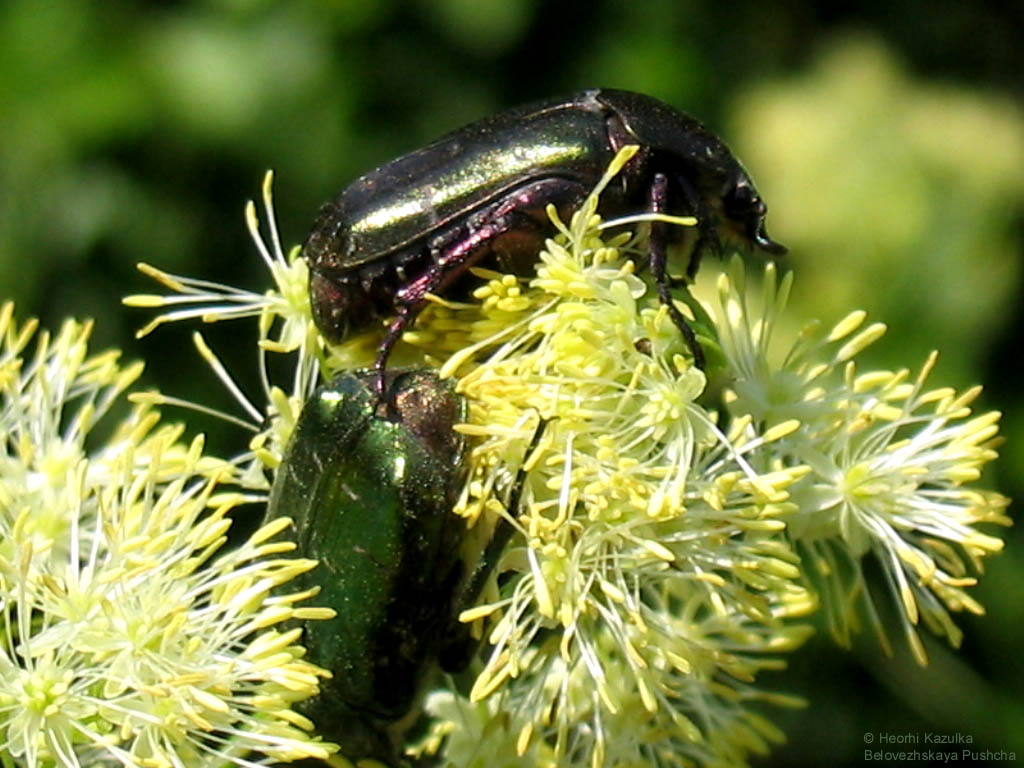
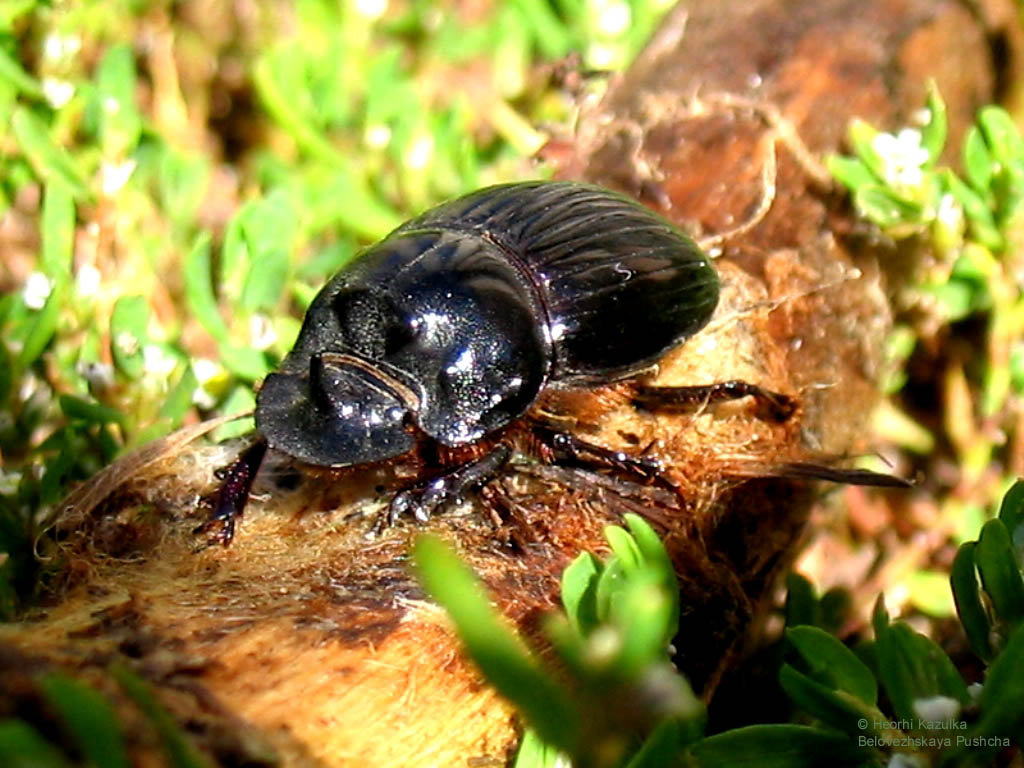
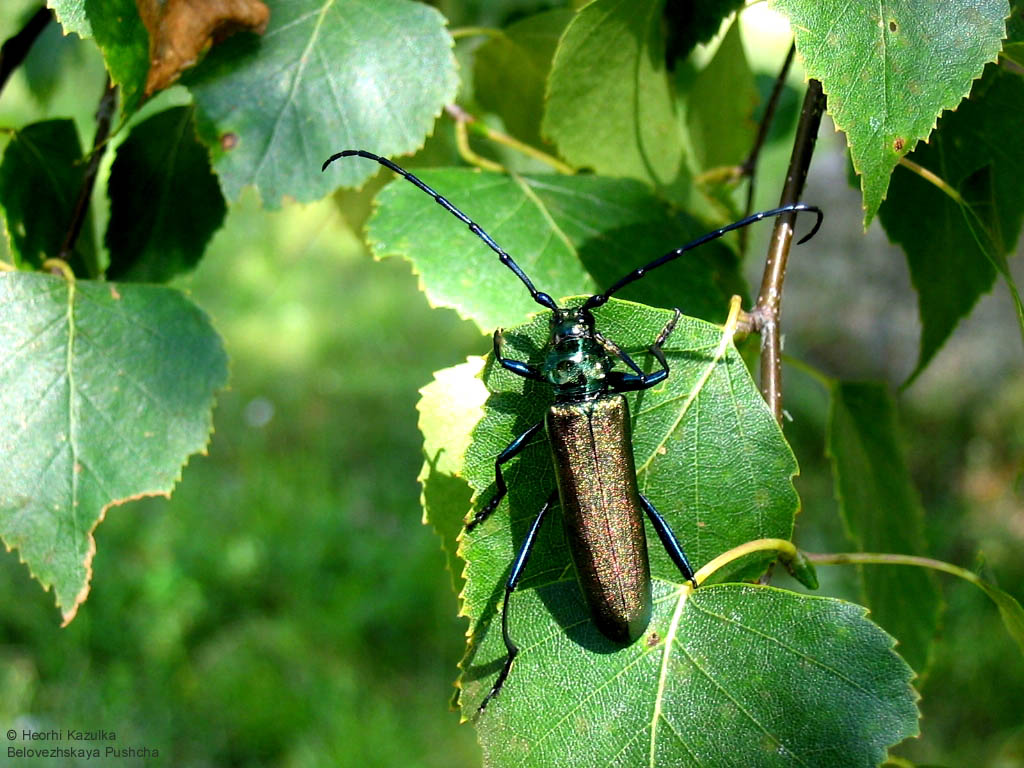
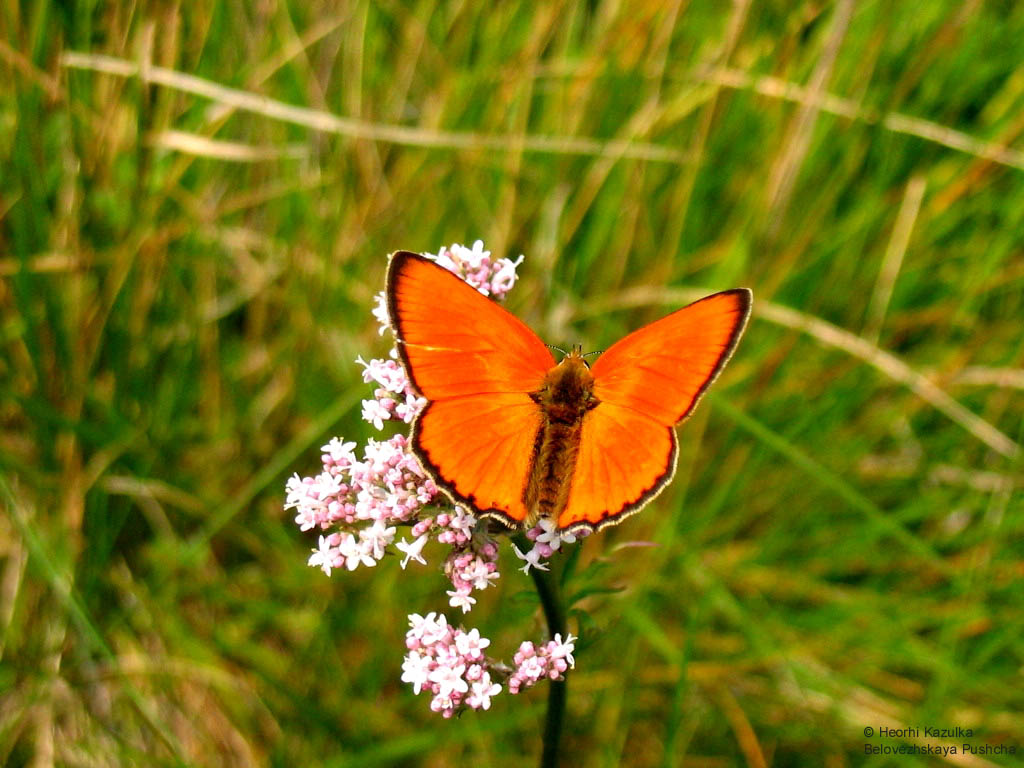
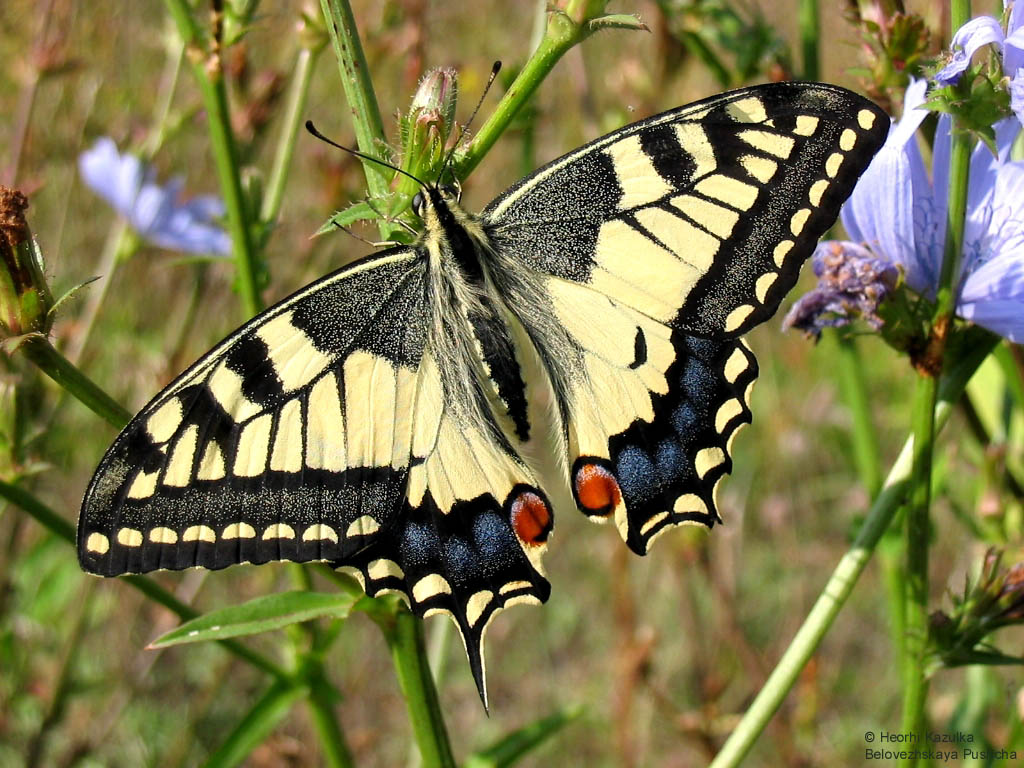
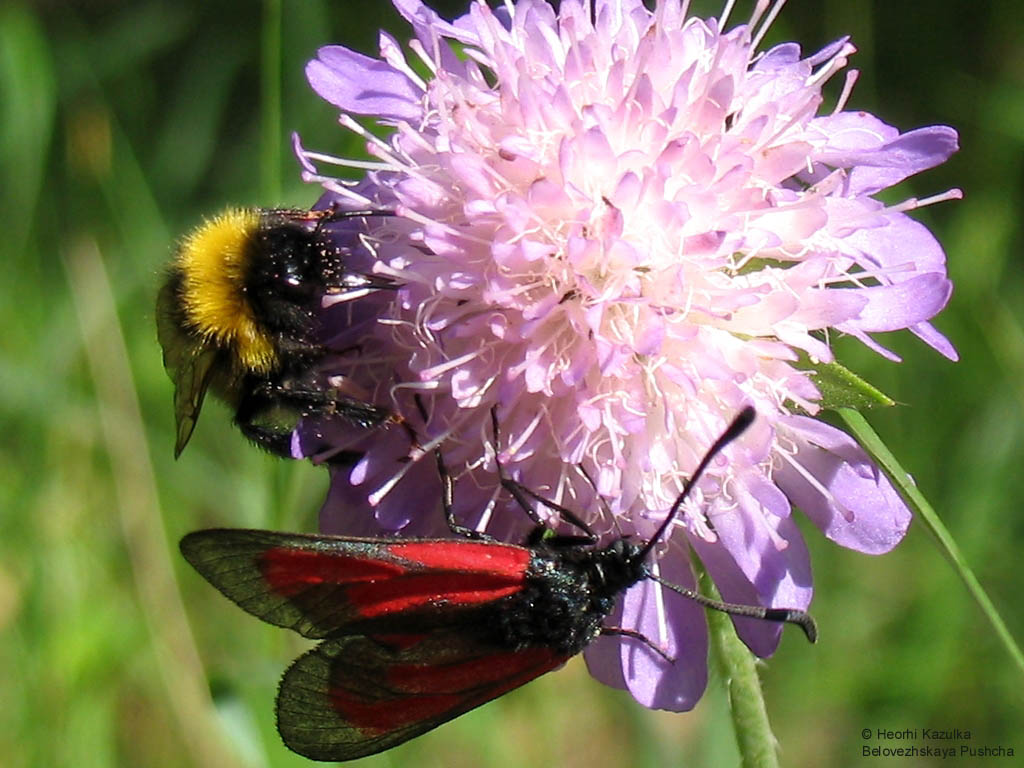
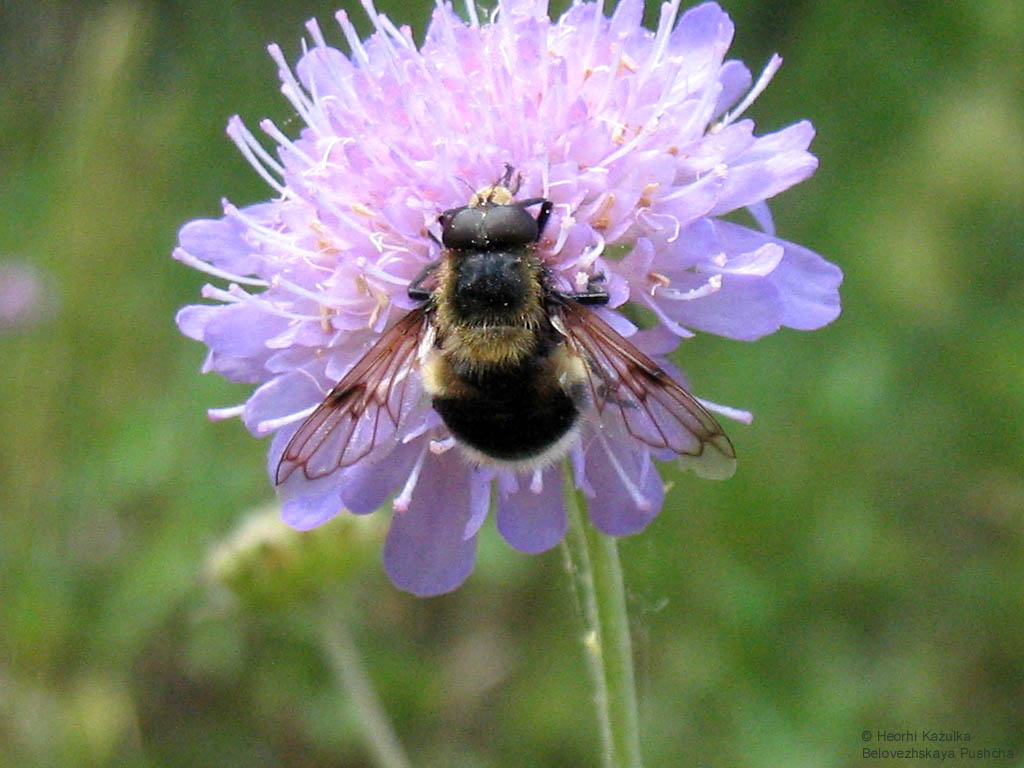
| Belovezhskaya Pushcha is a paradise for insects | ||
This is obvious and clear reasoning, even if it is a fact that the overall area of the relic primary forest will not obtain the status of a strict reserve, since people live and work in the Pushcha. They need firewood, construction materials and hay from the forest. Local people are used to picking mushrooms and berries for their own nutrition. Excluding areas around villages over an estimated area of a maximum of 20,000 hectares, 50,000 hectares make up the minimal surface which should become reserved strictly, based on lawful protection and scientific analysis. This area should logically gain the status of UNESCO World Heritage Site. The primary goals of this area are to serve the protection of the wild nature of the Belovezhskaya Pushcha Primeval Forest, ecological science, forest monitoring and ecological tourism. At the same time about 110,000 hectares of lands situated in other zones of the National Park can satisfy and serve the economic and remaining needs of the National Park and of the local population. This is certainly possible if the economy is organized more efficiently. The latter area includes three zones (the Regulated Nature Zone, the Regulated Recreational Use Zone and the Economic Activity Zone) and as before it would be allowed to harvest firewood and timber there, to pick berries and mushrooms, to make hay, to pasture cattle and to do other works which serve the needs of the National Park and the local people. All these uses are to be defined in statutory documents of the National Park and they have to follow the objectives of the zones mentioned above.
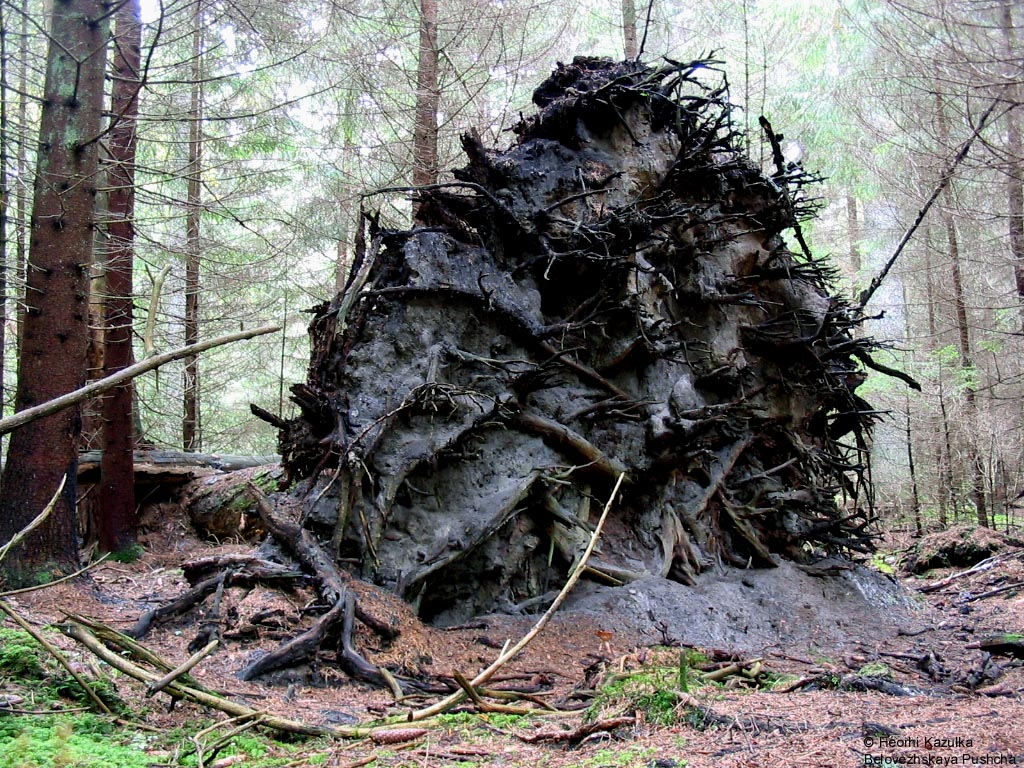 |
| A wild wood is impossible without huge fallen trees |
This should be the future of Belovezhskaya Pushcha, even if the entire extended area would not immediately be subordinated to the UNESCO as a World Heritage Site, but only the most precious and valuable parts of it. It should be like this also even if some places need time to get over recent hu-man impact, where the wild nature should restore itself. The process should be run in direction of opti-mal protection. In our opinion the main activity of the managers of the National Park should become its preservation, since Belovezhskaya Pushcha as a relic primeval forest is a unique natural treasure. Moreover, a delay in the expansion of the Wilderness Protection Zone is unacceptable. Otherwise economic activities in Belovezhskaya Pushcha will ultimately finally ruin the valuable relic forest and its unique biological diversity.
 |
 |
 |
 |
 |
 |
 |
 |
|
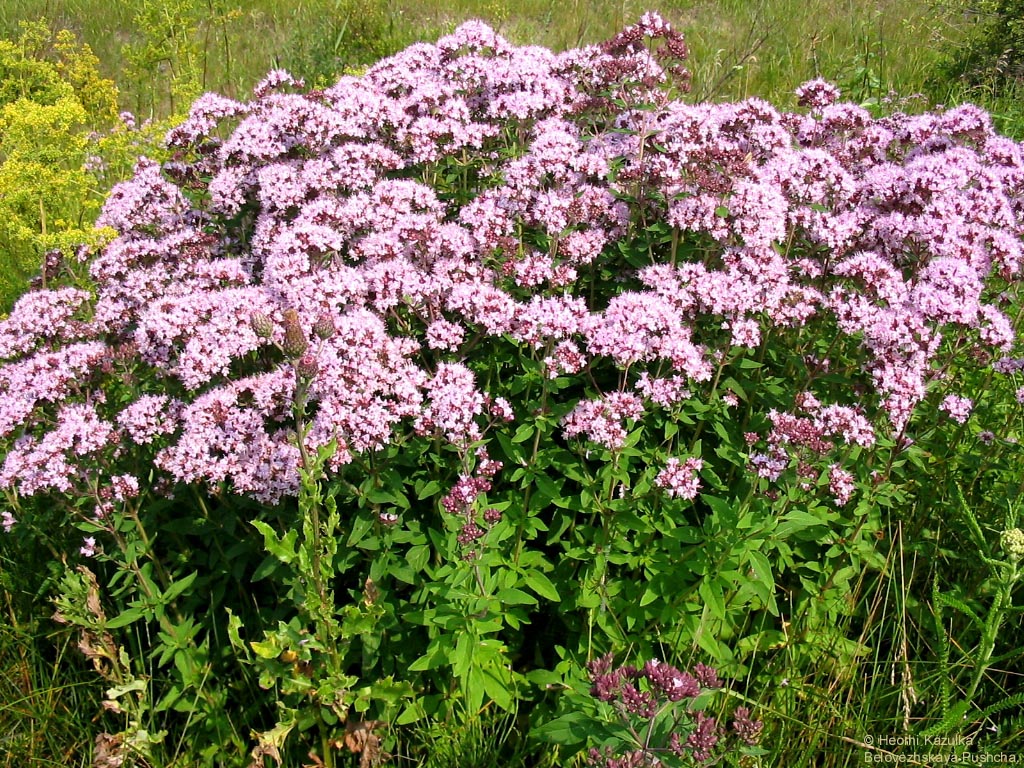
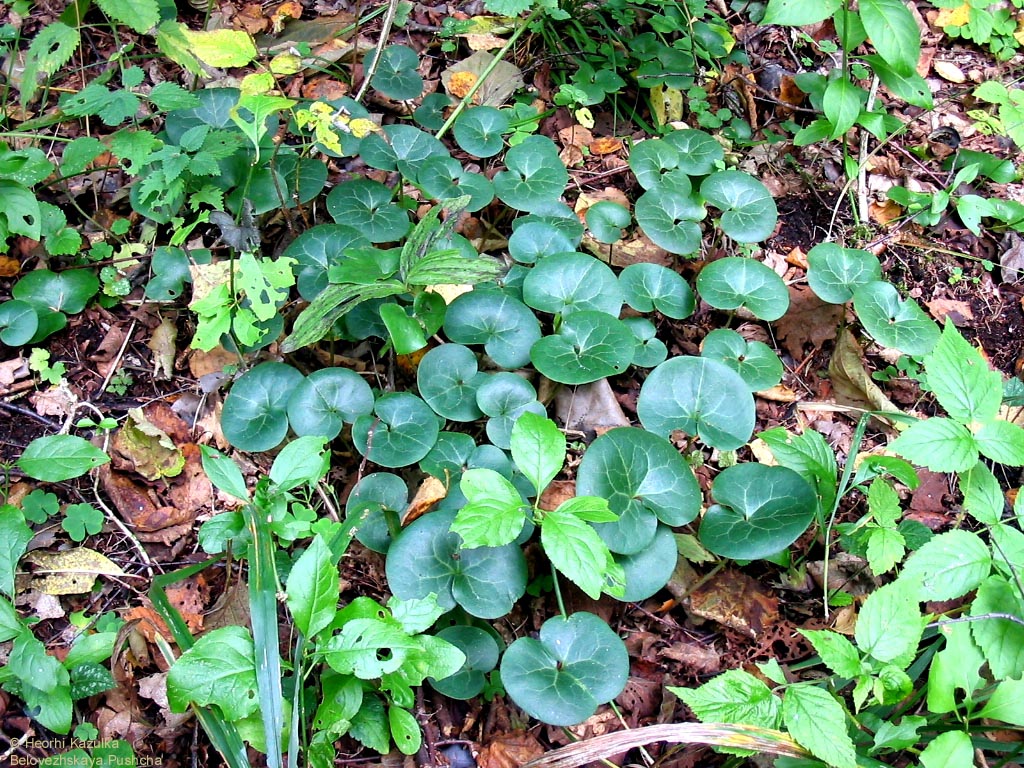
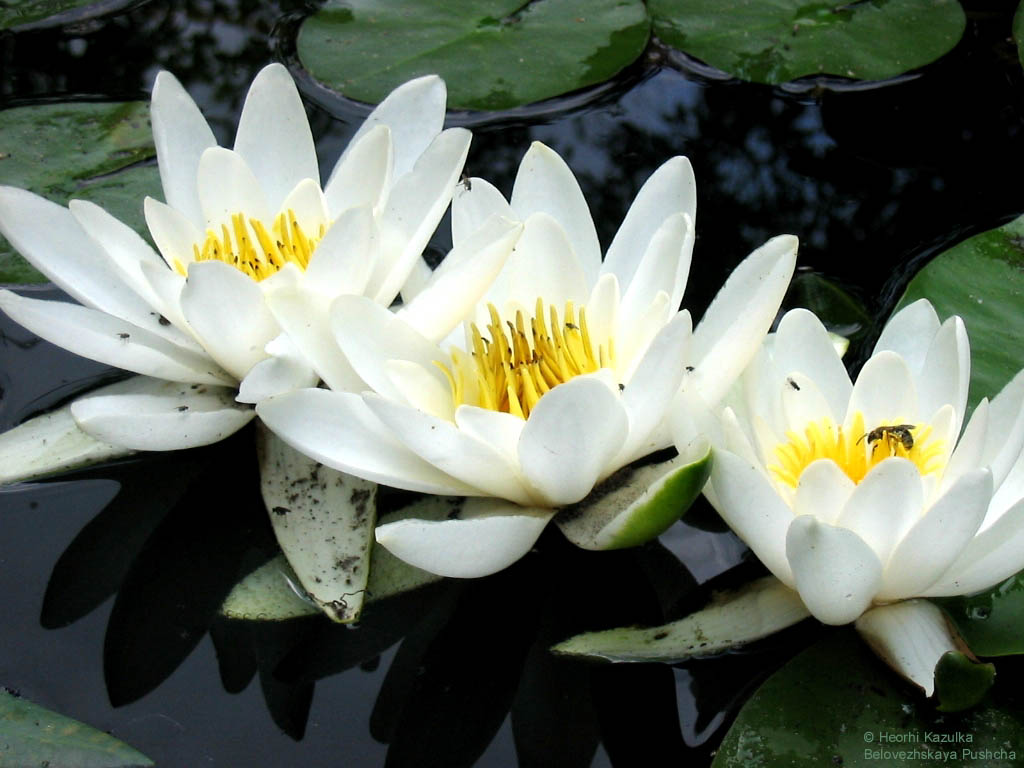
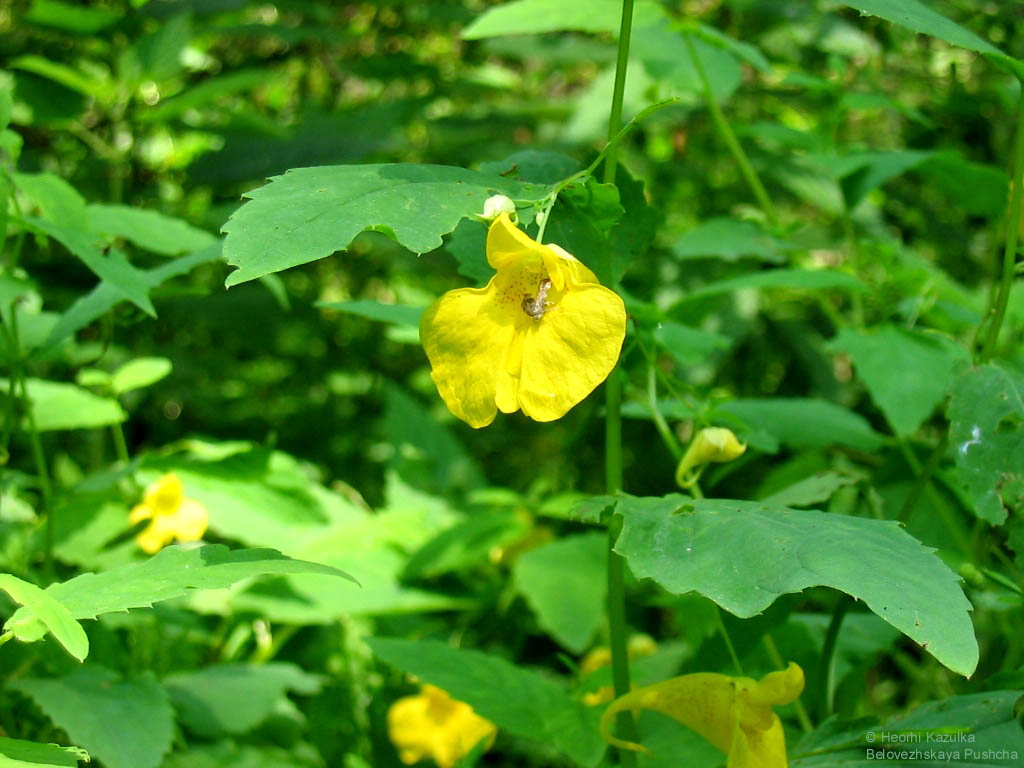
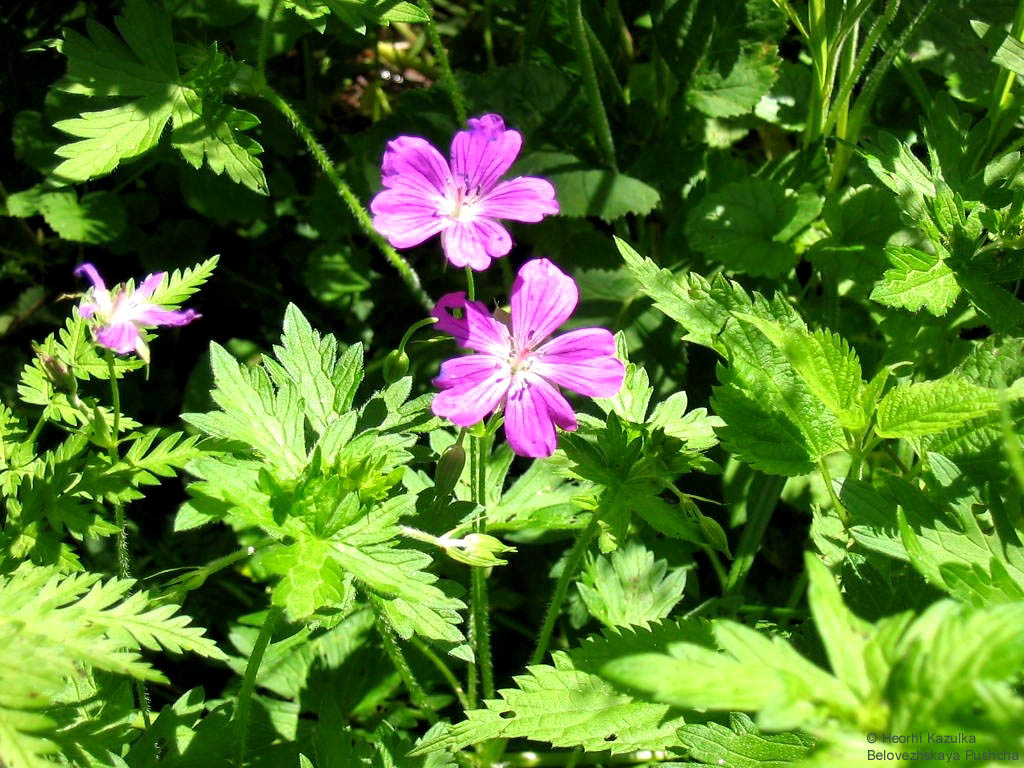
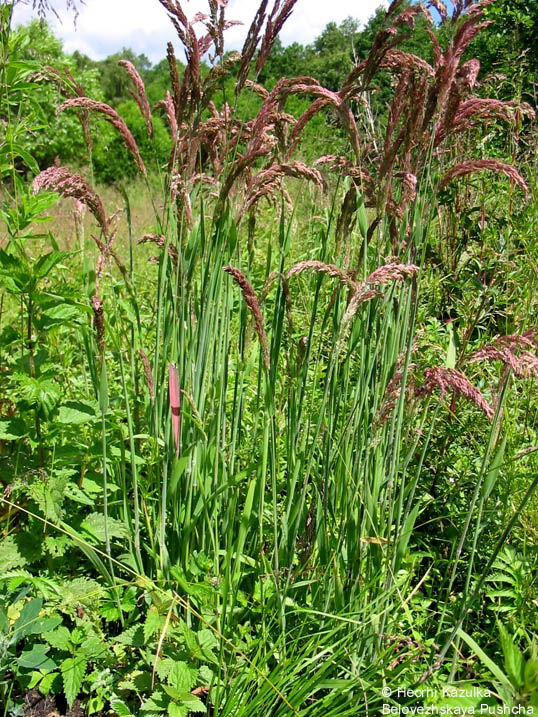
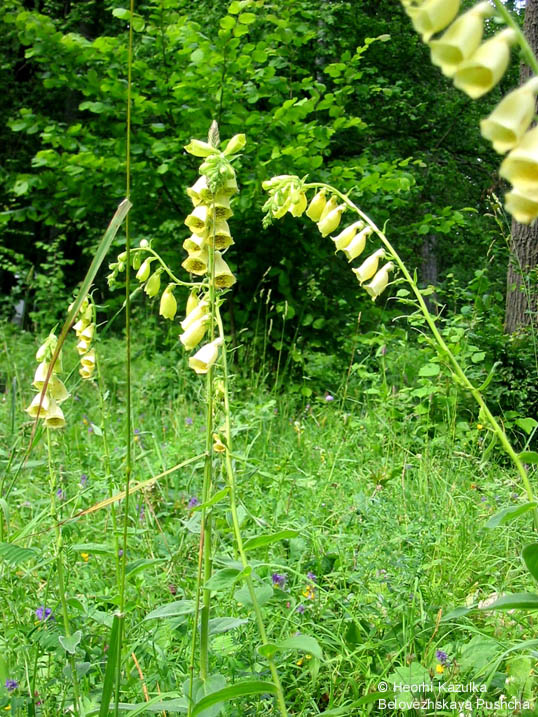
| A unique land of grasses and flowers | ||
The extension of the area of the World Heritage Site corresponds completely to our conception of long-term development of tourism in Belovezhskaya Push-cha and brings obvious benefits to this economic sector. The tourists, who first of all come from foreign countries, visit Belovezhskaya Pushcha to recognize its fabulous primeval forest, the last remnant of former primary lowland woods of Europe. However, they do not appreciate to see stumps, lunar landscapes and artificial line-set plantations of trees in places where clear cuttings have been conducted. Some sites of this enlarged area could be designated for ecological tourism and education, as the size of the area would allow for this in harmony with sustainable preservation of wild nature. Obviously, this business would have to be organized well. In this scenario we avoid serious damage caused by tourist impact. The situation in sites with a long practice in serving tourists confirms this notion. Bialowieza National Park (Poland) and the Bavarian Forest Biosphere Reserve (Germany) are examples of successful nature conservation and development of tourism. Tourism in its turn will bring the advantage of involvement of the local population in order to serve visitors, will allow to increase income of locals and will raise their interest in the future of Belovezhskaya Pushcha. As such this approach perfectly matches the idea of sustainable development of the region of Belovezhskaya Pushcha. The wild reserved nature and its preservation will certainly prosper. Beyond doubt, all the measures mentioned will raise the prestige of both the National Park and of the Republic of Belarus in the eyes of the international society.
 |
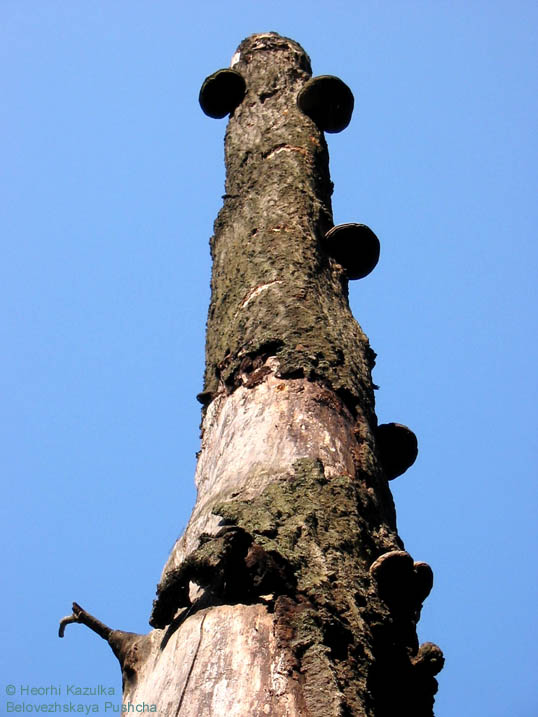 |
| Ancient trees . | . and tree-funguses are growing in the sky |
Figure 5 demonstrates an approximate scheme of the desired extension of the Wilderness Protection Zone and of the World Heritage Site Belovezhskaya Pushcha. It was compiled on the basis of the inclusion of the most valuable primary forest stands of Belovezhskaya Pushcha.
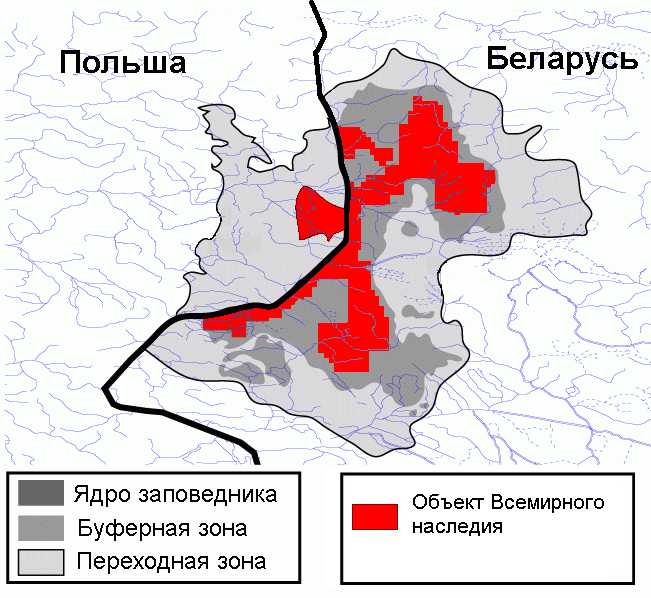
Figure 5. The approximate scheme of extension of the Wilderness Protection Zone and the World Heritage Site "Belovezhskaya Pushcha"
Thus extension of the Wilderness Protection Zone and the World Heritage Site of Belovezhskaya Pushcha seems to be the only worthy method since the natural re-sources of protected forest are currently used too intensively under the present con-ditions. The approach to this idea is the factual possibility to rescue the specific natural value of the Belovezhskaya Pushcha Primeval Forest and to save it for future generations.
To achieve practical implementation of the conception of extension of the Wilder-ness Protection Zone and the World Heritage Site Belovezhskaya Pushcha four main conditions must be met:
1. Presence of political will and desire of the Belarusian authorities and the responsible managers to follow the presented logic of preservation of the Belovezhskaya Pushcha and to put this concept into practice;
2. Wide support of scientists, experts in the field of nature protection, journalists and the public - all those who worry about the fate and the future of Belovezhskaya Pushcha;
3. Drawing up a program, plan and modelfor expansion of the Wilderness Protection Zone and the World Heritage Site. This condition involves all relevant experts and specialists who represent various scientific disciplines and other fields of interest;
4. Informing the local population in order to create a conscious attitude towards the conservation of the Belovezhskaya Pushcha and to support the idea of extension of the World Heritage Site.
Belovezhskaya Pushcha is not "just" a vast land of outstanding ecological value, it is a site with great humanitarian value as well. However, this is currently only weakly accepted by society. We do not doubt that the idea of preservation of Belovezhskaya Pushcha and its unique natural complex based on humanitarian values can seem unusual to some people. But the support of this idea by experts of UNESCO testifies the correctness of this approach to realize optimal preservation measures. The point is that it is a true challenge to give life to this idea for the sake of preservation of Be-lovezhskaya Pushcha for future generations.
 |
 |
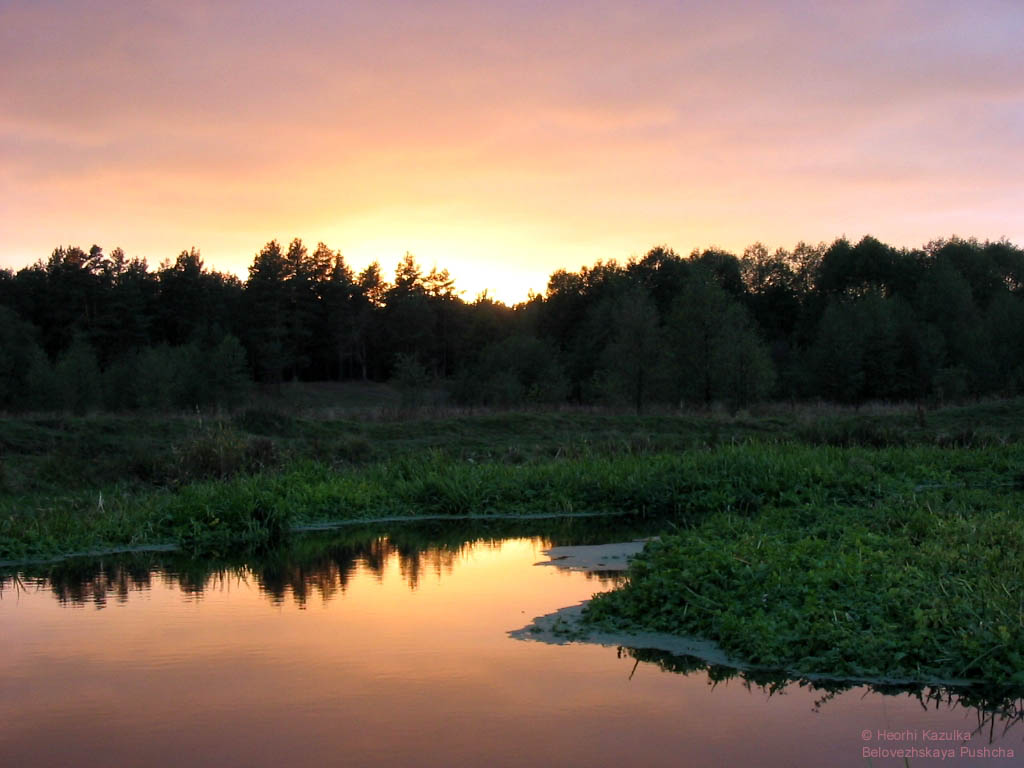
| A sunset at the Pravaya Lesnaya River |
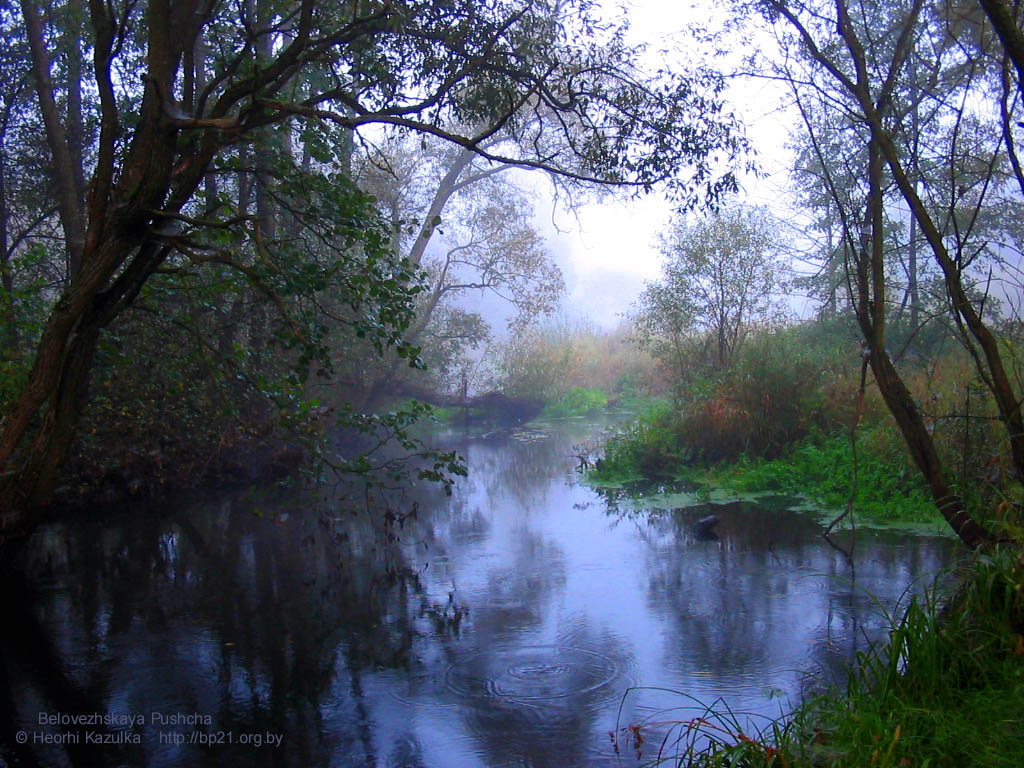
A foggy morning, the Pravaya Lesnaya River |
 |
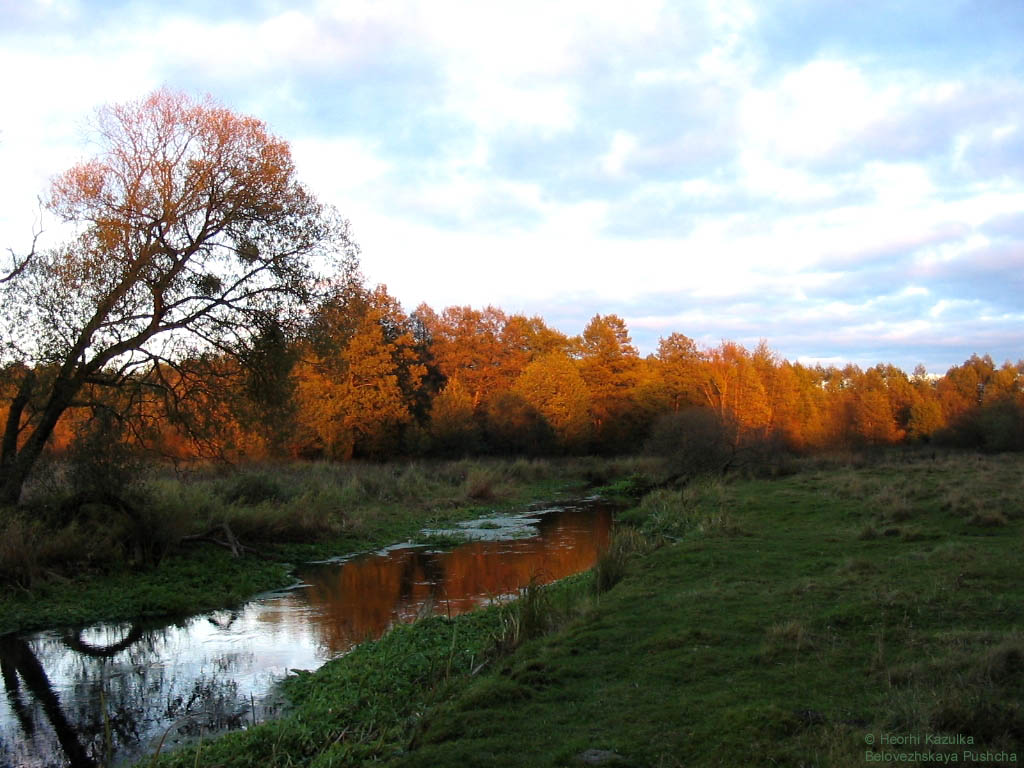 |
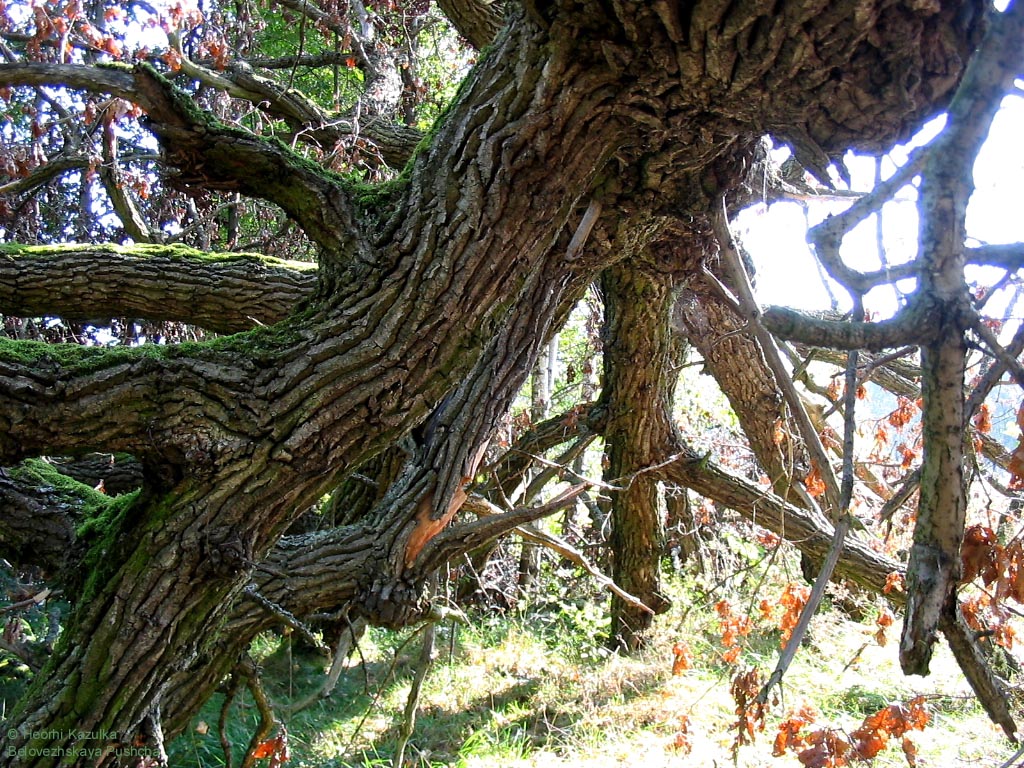
| A broken Oak tree | "Gold fire" of the protected forest |